
Table of Contents
How to use plate rolling machine? This is a correct and efficient user guide for plate rolling machines, based on actual workshop operating experience. It is suitable for beginners and covers the operating procedures, techniques, and common mistakes.
1. Preparations before use plate rolling machine
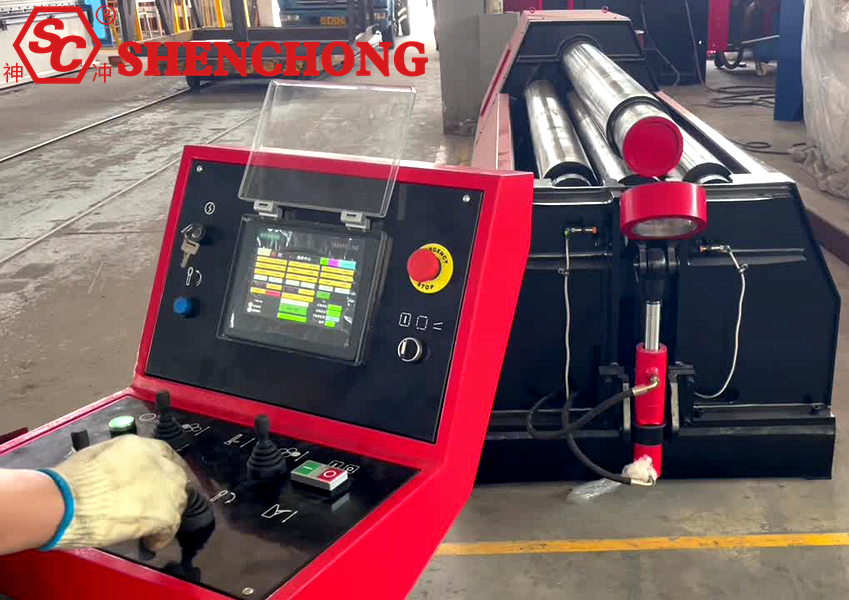
1) Equipment Inspection
- Hydraulic oil level is normal and there are no leaks.
- Electrical, emergency stop buttons, and limit switches are effective.
- All roller surfaces are clean and free of welding slag and iron filings.
- Rollers rotate smoothly without abnormal noises.
- Operating with faults is prohibited, especially the hydraulic and synchronization systems.
2) Sheet Metal Inspection
Material Type: Carbon Steel / Stainless Steel / Aluminum Sheet
Are the actual thickness and width within the equipment’s capacity?
The sheet metal should be as straight as possible, avoiding severe warping.
Reminder:
“Maximum coil thickness ≠ Long-term stable working thickness”
It is recommended that long-term use be ≤ 80–90% of the rated capacity.
2. Standard Operating Procedure (General Steps)
How to use plate rolling machine? The following is applicable to three-roll and four-roll plate rolling machines (details may vary slightly)
Step 1: Adjust Roller Position
- Adjust the lower roller/side roller to its initial position.
- Set an appropriate pre-pressure amount according to the plate thickness.
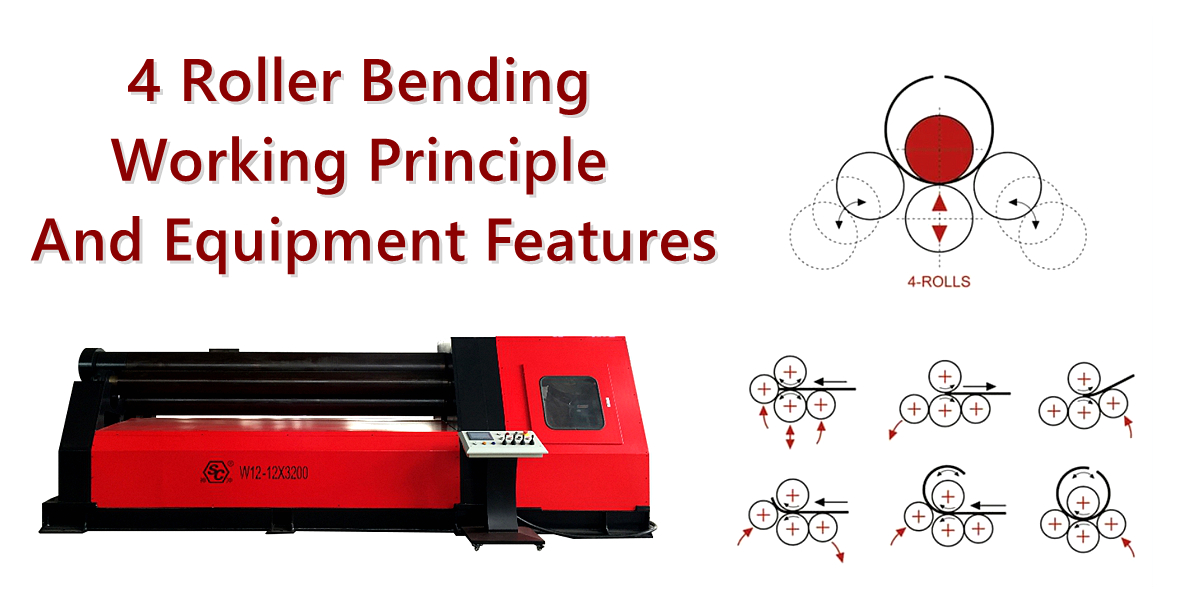
- Four-roll machine: The lower roller presses the plate tightly, and the side rollers pre-roll.
Principle:
- First apply light pressure → then gradually increase pressure.
Step 2: Loading and Centering
- Place the plate in the center, aligning it left and right.
- Keep the plate edges parallel to the rollers.
- For wide plates, it is recommended to have 2 people or use a hoisting system.
Inaccurate centering = skewed cylinder, flared end, rework.
Step 3: Pre-bending (Critical Quality Step)
- Pre-bend one end first.
- Flip the plate and pre-bend the other end.
- Reduce the straight edge length and increase the roundness.
Empirical value:
- The pre-bent straight edge should be controlled within 1.5 to 2 times the plate thickness.
Step 4: Final Rolling
- Start the main roller rotation.
- Gradually raise the side roller/upper roller. Adjust in multiple small circles to avoid pressing all at once.
Incorrect practice:
- Pressing too hard all at once → Poor roundness, damaged rollers, and slippage of the sheet material
Step 5: Roundness Correction
- Check roundness and diameter.
- Fine-tune and rewind 1-2 turns if necessary.
- Correct any tapered or off-round shapes promptly.
Step 6: Unloading
- Retract the side rollers/upper rollers.
- Open the flip bearing (applicable models).
- Gently remove the workpiece.
Do not strike or pry the finished product!
3. 6 Practical Tips for Efficient Use Plate Rolling Machine
1) Slower Speed for Thick Plates, Steadier Speed for Thin Plates
- Thick Plates: Low Speed+ Multiple Pressure Applications
- Thin Plates: Anti-slip, Anti-wrinkling
2) Different Materials Require Different Treatment
- Stainless Steel: High Springback → Over-coiling 3-5%
- Aluminum Plates: Easily Damaged → Clean Rollers, Reduce Pressure
3) Roundness Requires "Multiple Round Corrections"
A perfect roundness isn’t achieved in one go, but through repeated fine-tuning.
4) Remember Commonly Used Parameters
It’s recommended to create a “Rolling Plate Parameter Record Sheet”:
- Material
- Thickness
- Roller Position
- Final Diameter
➡ Apply directly next time, increasing efficiency by 30%+
5) Long Plates Must Be Prevented from Deviation
- Observe both ends of the plate constantly.
- Stop the machine immediately and adjust if deviation is detected.
6) Batch Processing: Test Roll First
- The first piece serves as a sample.
- Continue production only after it passes inspection.
4. Comparison of common mistakes and consequences
Incorrect Operation | Direct Consequences |
Excessive Pressure in One Operation | Poor roundness, equipment damage |
No Pre-bending | Excessively long straight edges |
Misalignment of Sheet Material | Cylinder skewing |
Overloading | Bent rollers, hydraulic failure |
Rolling Sheet with Foreign Objects | Roller surface damage |
5. Safety Operating Points (Must be followed)
The following actions are strictly prohibited:
- Putting hands between rollers
- Correcting sheet metal while it is being rolled
- Forcing excessively thick or wide sheets to be processed
- Operating large sheets by one person
Recommendations:
- Wear protective gloves
- Familiarize yourself with the emergency stop location
- Use lifting or auxiliary supports for large sheets
6. Common Operating Points for Plate Rolling Machines
1) Key Points To Use W11 Three-Roll Plate Rolling Machine
① Structure and Features (Understand before operating)
- Upper roller fixed
- Two lower rollers (or one moving at a time) for lifting and forming
- Simple structure, low price, wide applicability
- Relatively weak pre-bending capacity, slightly longer straight edges
Suitable for:
Medium-thick plates, general rolling, workpieces with less stringent requirements for straight edges
② W11 Standard Operating Points (Must Read)
Feeding must be “leveled and aligned”:
- The plate must be parallel to the upper roller
- The exposed length on both sides should be consistent
- A slight deviation will cause the entire roll to be off-center
Pre-bending relies on “multiple light pressures”:
- Light pressure at one end → Flip the plate → Light pressure again
- Do not attempt to press it into place in one go
- Accept a small amount of straight edges, compensate for with subsequent rounding
Common mistakes:
- Large pressure at once → Poor roundness + strain on the rollers
Rolling should be done slowly:
- Start at low speed
- Adjust one roll at a time
- Small adjustment range each time
W11 Key principles:
- “Multiple turns, small pressure, slow progress”
Rounding requires “repeated rewinding”:
- Turn clockwise one full turn, counterclockwise half a turn, observe the roundness and make fine adjustments.
③ W11 Usage Precautions
- Not suitable for extremely short straight edges.
- Not suitable for high-speed batch production of thin plates.
- Suitable for thick plates, structural parts, and cylindrical components.
2) Key Points To Use W12 Four-Roll Plate Rolling Machine
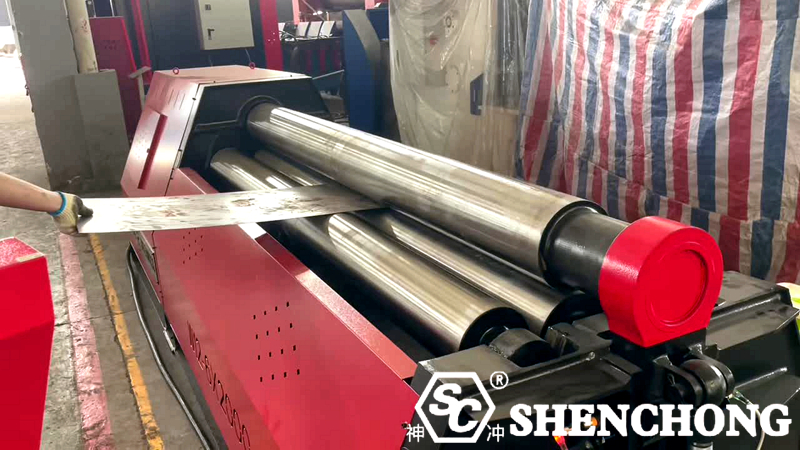
① Structure and Advantages
- Main drive by upper and lower rollers
- Independent lifting of side rollers
- Strong pre-bending capacity, extremely short straight edges
- Automatic centering, high efficiency
Suitable for:
- High-precision cylinders, batch production, stainless steel, thin plates
② W12 Standard Operating Points (Important)
Feeding: “Clamp first, then pre-bend”:
- The lower roller first clamps the plate tightly
- Confirm the plate is firmly clamped and does not slip
- Then perform pre-bending with the side rollers
- If the plate slips, all subsequent rolls will be wasted
Pre-bending in one step, but the pressure must be accurate:
- One end pre-bending completed
- Flip the plate → Pre-bend the other end
- The side roller stroke is completed in one go, without repeated adjustments
Experience:
- Stainless steel pre-bending amount ≈ Theoretical value + 3~5%
High efficiency in formal rolling:
- Main roller rotates
- Side rollers gradually rise
- Continuous rolling is possible, without frequent flipping
W12 Core Advantages:
“Accurate pre-bending, fast rounding, and excellent roundness”.
Rounding is primarily achieved through “side roller fine-tuning”:
- Adjust the side roller that is off-center.
- Do not leave the lower roller stationary or press the upper roller too hard.
③ W12 Usage Precautions
- Do not neglect clamping force.
- Asynchronous operation of the two side rollers will cause a conical shape.
- Always test roll one piece before mass production.
3) Quick overview of the operational differences between W11 and W12 plate rolling machines
Comparison Items | W12 Four Rollers | |
Pre-bending capability | Generally | Good |
Straight edge length | Relatively long | Extremely Short |
Feeding difficulty | Medium | Low |
Rounding efficiency | Medium | High |
Operational error tolerance | Low | High |
Suitable for batch production | Generally | Perfect for |
7. Summary
1) Before starting the machine
- Check oil level
- Test emergency stop
- Clean rollers (no welding slag, iron filings)
Do not start the machine without checking.
2) Loading
- The plate must be straight, centered, and parallel.
- The exposed length on both sides should be the same.
- The edge of the plate should be parallel to the roller.
- Large plates must be handled by two people or hoisted.
3) Pre-bending (most critical)
W11 (three rollers):
- Light pressure → Flip the plate → Light pressure again.
- Don’t strive for perfect bending in one go.
- Leaving a little bit of straight edge is fine.
W12 (four rollers):
- Clamp first → Pre-bend.
- The lower roller must be firmly pressed.
- The side rollers should press perfectly in one go.
- Remember to “press a little more” for stainless steel.
4) Rolling
- Start at slow speed.
- Adjust one rotation at a time.
- Apply small pressure.
- Do not press all the way down at once.
5) Rounding: Remember this action
- Rotate one full rotation clockwise → Rotate half a rotation counterclockwise → Check roundness.
- If it’s not round, make minor adjustments and do another round.
6) Unloading
- Retract the side roller/upper roller.
- Open the flip bearing.
- Remove smoothly.
- Do not knock, pry, or pull forcefully.
7) Mistakes beginners "absolutely must not make"
- Putting your hand inside the roller shaft.
- Pushing the plate while rolling.
- Forcing the processing of excessively thick materials.
 English
  Spanish
  Portuguese
  Russian
  Arabic
  French
  Italian
  German
  Polish
  Thai
Thai  Vietnamese
  Lithuanian
  Czech
Czech  Korean
  Japanese
  Chinese