
Table of Contents
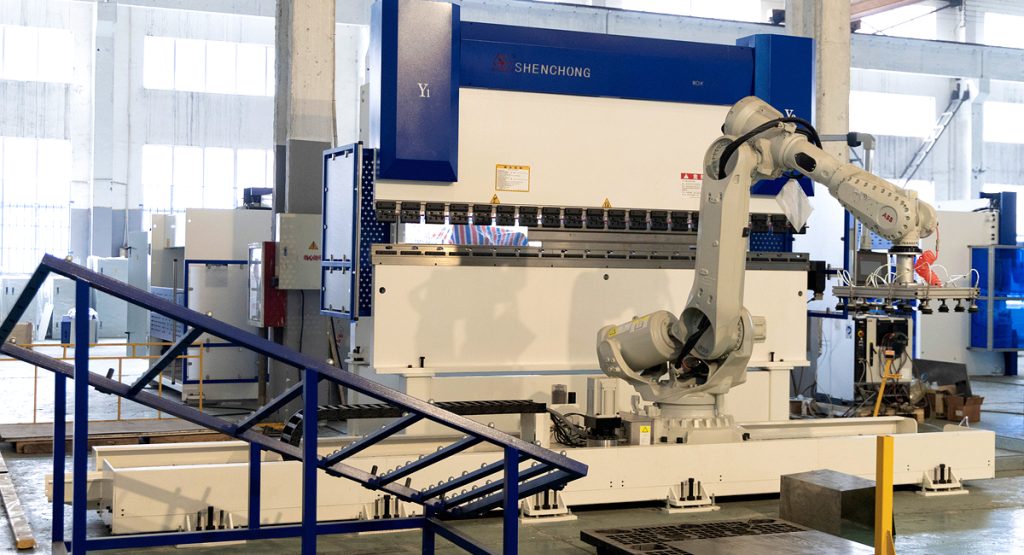
WDK 170T 4000 Robotic Press Brake + ABB Robot Bending Unit = Automated Bending Solution for Medium to Large Sheet Metal Workpieces (High Flexibility + High Consistency + Unmanned Production)
Suitable for:
- Medium to heavy plates (mainly 1–6mm, some up to 8mm)
- Medium to large-sized workpieces (up to 4000mm)
- Multi-variety / Medium to large batch / Large batch orders
1. WDK 170T 4000 Robotic Press Brake With ABB Bending Unit Structure
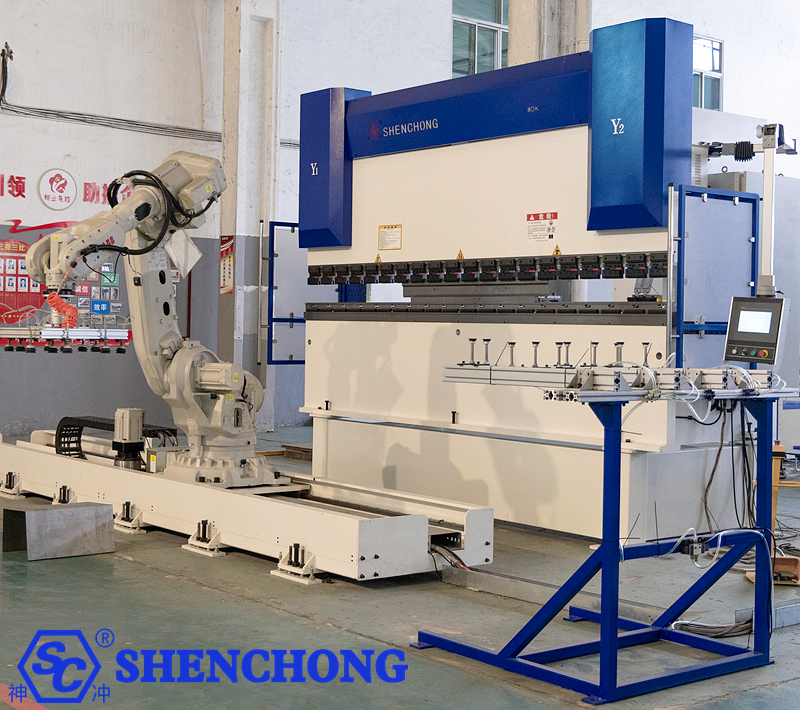
1) Bending Main Unit (WDK-170T 4000)
Typical Configuration (Industry-Common Parameters):
- Nominal Pressure: 170T (≈1700kN)
- Bending Length: 4000mm
- Slider Accuracy: ±03mm
- Structure: Hybrid Hybrid System
Core Values:
- Long workpiece one-time forming
- High-precision synchronous control
- Supports complex multi-stage bending
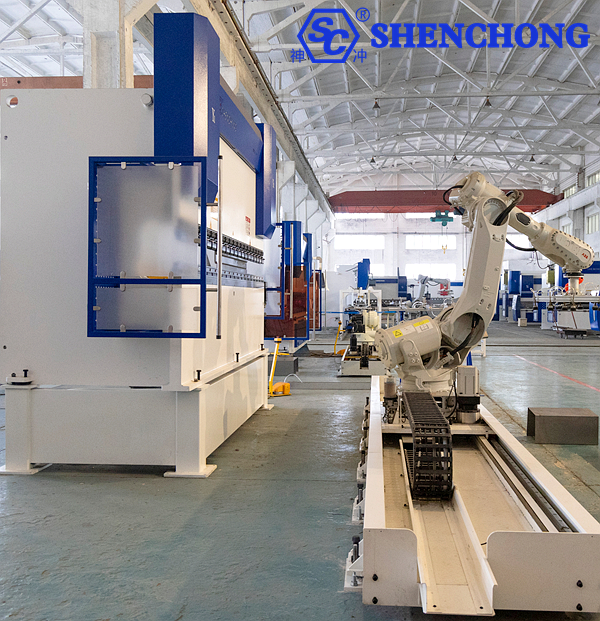
2) Industrial Robot (ABB 7-Axis Robotic Arm)
Common Configurations:
- Model: ABB IRB 4600 / 6700 (selected according to load)
- Degrees of Freedom: 7 axes
- Load: 20–60kg (expandable)
- Radius: 2.0–5m
Functions:
- Automatic loading/unloading
- Multi-station flipping
- Secondary positioning/ Heavy Grip
- Multi-stage Bending Collaboration
System Capabilities:
- Continuous Automatic Operation
- High Repeatability Positioning Accuracy (±05mm)
3) Automatic Loading and Unloading System
- Panel Material Stacking (Magnetic/Vacuum Optional)
- Positioning Table (Correction + Correction)
- Outgoing Sorting Area
Key Values:
- Ensuring Consistent Robot Grip
- Achieving Unmanned Continuous Production
4) Gripper System (End Effector)
- Vacuum Chuck / Electromagnetic Chuck / Hybrid Gripper
- Multi-station Automatic Gripper Changer (Optional)
Supported:
- Large Panels / Small Parts
- Different Materials (Carbon Steel / Stainless Steel / Aluminum)
5) Control System (Bending + Robot Linkage)
- Bending System: Delem / ESA / SC EL
- Robot System: ABB IRC5
- Offline Programming System (Optional)
Features:
- Graphical Programming
- Automatic Avoidance / Collision Prevention
- Automatic Process Optimization
Industry Trend:
- “Offline Programming + One-Click Import” can reduce downtime to near zero
6) Safety System
- Laser Protection
- Safety Fence + Light Grating
- Dual-Loop Safety Control
2. Workflow (Complete Automated Cycle)
- Robot grips sheet metal
- Positioning table corrects position
- Feeds to bending machine
- Bending (Y1/Y2 synchronous)
- Robot flips/re-grips
- Multiple continuous bending
- Automatic unloading of finished product
Achievements:
- Unmanned continuous production
- Automatic multi-process completion
3. Core Performance Analysis
1) Improved Production Efficiency (Core Selling Point)
- Continuous Production (Can Operate 24 Hours)
- Efficiency Improvement: 2-3 times that of manual labor
- OEE can reach over 80% (Automated Production Line)
Essence:
“Man waiting for machine → Machine waiting for material → Machine never stops”
2) Consistency and Quality
- Eliminating human error
- High angle consistency
- Strong batch stability
Especially suitable for:
- Standardized batch orders
- High-quality foreign trade customers
3) Labor Replacement Capability
- One person can manage multiple machines
- Reduce reliance on skilled bending workers
Current industry pain point:
“Difficulty in recruiting workers → Automation is a necessity”
4) Energy Consumption and Maintenance
- Hybrid oil-electric structure (energy saving)
- Low heat generation, long oil life
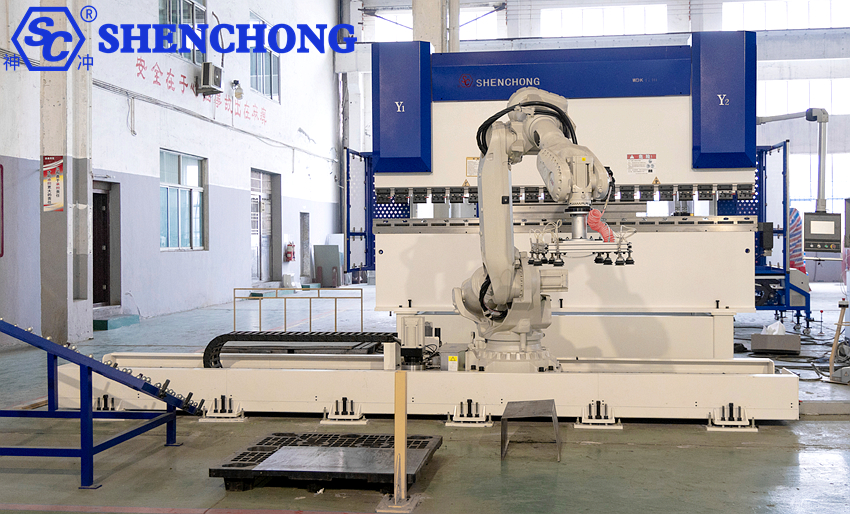
SC WDK 170T 4000 robotic press brake bending unit is a core intelligent bending equipment for medium and large sheet metal enterprises, realizing the leap from manual dependence to unmanned production. The SC WDK-170T 4000 robotic bending unit integrates a high-precision servo hybrid press brake bending machine with an ABB seven-axis industrial robot, achieving full automation of the entire process from loading, positioning, bending, flipping, and unloading.
Designed for medium to large-scale sheet metal processing scenarios, the system boasts high flexibility, high efficiency, and high consistency, completely replacing traditional manual bending methods and helping companies build a truly replicable standardized production capacity system.
 English
  Spanish
  Portuguese
  German
  Arabic
  Italian
  Russian
  French
  Polish
  Vietnamese
  Thai
Thai  Czech
Czech  Japanese
  Chinese