
Table of Contents
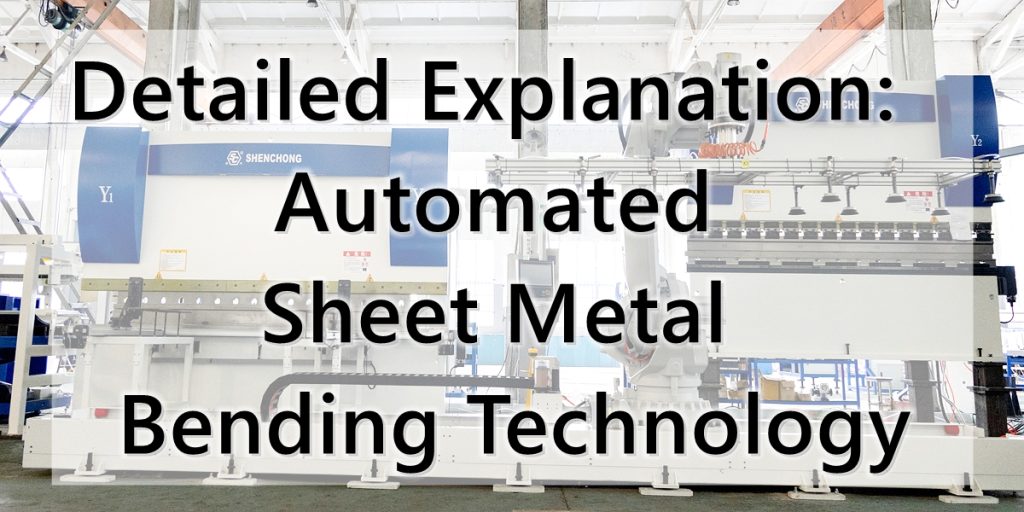
Automated sheet metal bending technology deeply integrates high-precision CNC press brake bending machines with automated loading and unloading systems, follow-up material handling systems, and robotic or gantry-based automated devices to achieve fully automated operation of the sheet metal process, from loading, positioning, bending, flipping to unloading.
The system employs multi-axis servo control and intelligent bending software to achieve high-precision, multi-variety, and continuous production, comprehensively improving the level of automation in sheet metal processing.
1. Technology Overview Of Automated Bending Technology
Automated sheet metal bending technology, based on traditional CNC plate bending machines, integrates multiple advanced technologies such as CNC systems, servo drives, automatic feeding/unloading, follow-up supports, robotic or truss automation, and intelligent software algorithms to achieve automation, continuous operation, high precision, and high consistency in the sheet metal bending process.
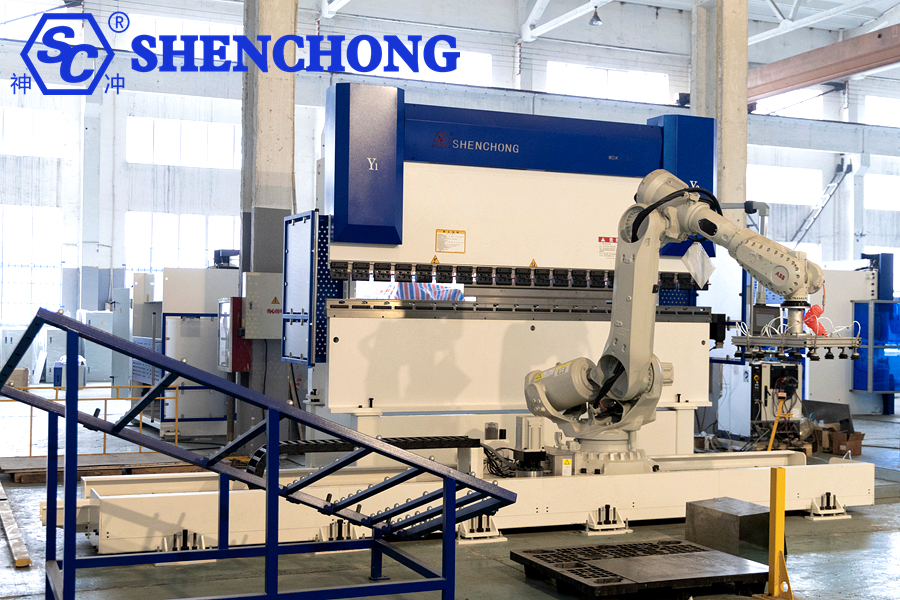
Its core objectives are:
- Reducing manual intervention
- Improving bending accuracy and stability
- Increasing production cycle time and equipment utilization
- Achieving batch, flexible, and intelligent production.
This technology is widely used in:
- Sheet metal processing centers
- Automated production lines
- Smart manufacturing plants
- Large-volume or high-consistency parts production scenarios
2. Basic Working Principle of Automated Metal Sheet Bending
Automatic bending systems typically follow this process:
Automatic Sheet Loading:
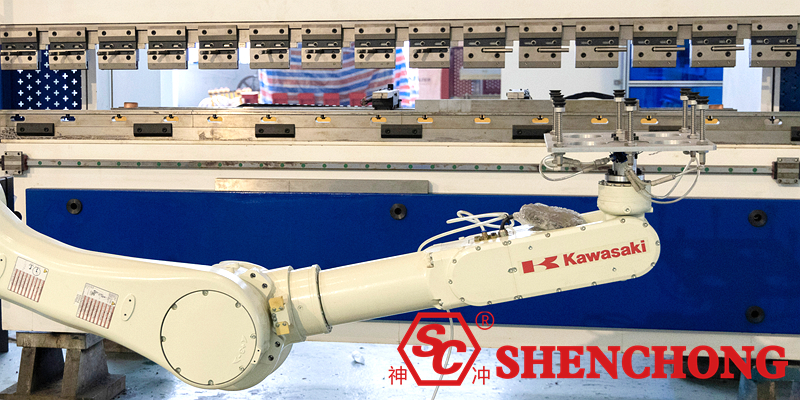
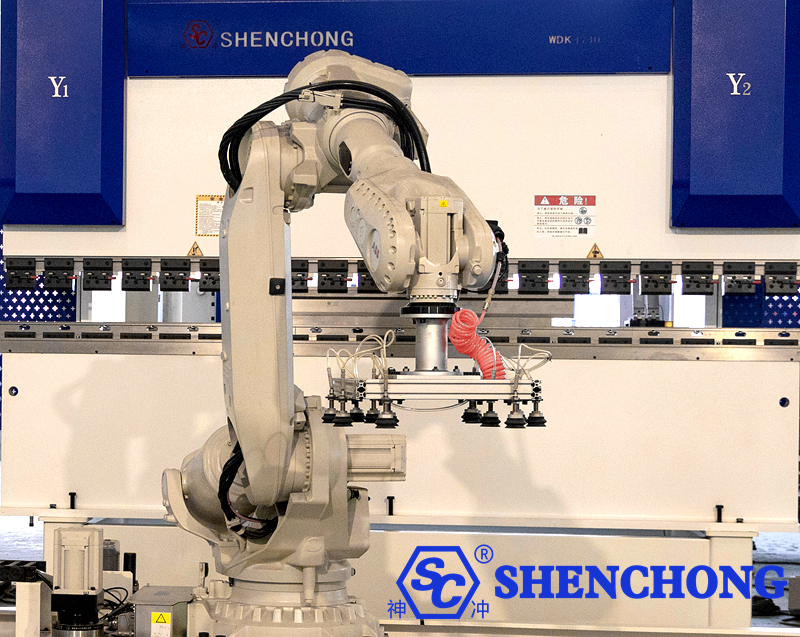
Sheets are automatically retrieved from the material bin using a robotic arm, vacuum suction cup, or gantry system.
Positioning and Centering:
High-precision positioning is achieved using CNC back gauges (X, R, Z axes, etc.).
Automatic Bending Execution:
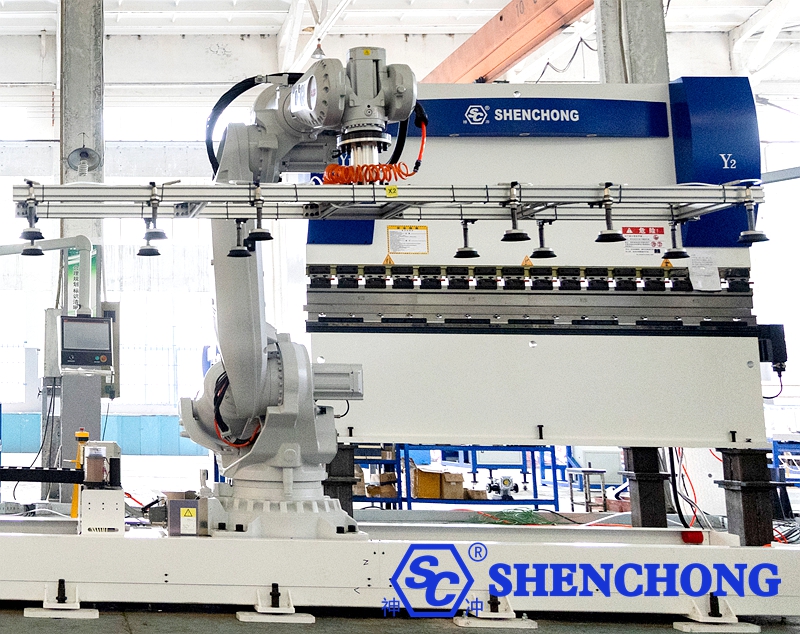
Bending sliders (Y1/Y2) descend synchronously to complete the bending.
Follow-up Support:
The follow-up support system automatically follows the angle changes of the sheet metal to prevent sagging.
Automatic Flipping/Changing:
A robot or flipping mechanism changes the surface of the work piece.
Automatic Unloading and Stacking:
Finished products are automatically stacked or moved to the next process. The entire process can be operated unattended or with minimal human intervention.
3. Core Components of an Automated Sheet Metal Bending System
1) CNC Bending Machine (Core Equipment)
The foundation of automatic bending remains a high-performance CNC bending machine. Common types include:
- Hydraulic CNC press brake machine
- Hybrid servo CNC press brake machine
- Pure electric servo CNC press brake machine
Key technologies:
- Y1/Y2 dual-cylinder synchronous control
- High-rigidity frame (finite element analysis design)
- High-precision ball screws and linear guides
2) CNC System (Control Brain)
High-end automatic bending systems typically employ specialized bending CNC systems, such as:
- ESA series
- SC EL series
- DELEM series
Main functions:
- Multi-axis linkage control (Y, X, R, Z, V, W, etc.)
- Automatic bending angle compensation
- Die library management
- Automatic program generation and simulation
- Collision detection
3) Servo Drive and Follow-up Technology
- Advantages of Servo Control
- Fast response speed
- High positioning accuracy
- Stable repeatability
- Significant energy saving effect
- Follow-up Bending Technology
The follow-up material support system adjusts the material support height and angle in real time according to the bending angle, achieving:
- Balance of sheet metal center of gravity
- Preventing deformation and scratches
- Improving the bending quality of large-size, thin sheet metal parts
4) Automatic Loading and Unloading and Robot System
Automatic Bending Unit with Robotic Arm
- Industrial Robot (ABB, KUKA, FANUC, etc.)
- Vacuum suction cup or gripper
- Automatic flipping and station changing
Truss-type Automatic Bending System
- Suitable for large-size sheet metal
- Stable structure, consistent cycle time
- Relatively low maintenance cost
5) Intelligent Software and Data System
Modern automatic bending technology is highly software-based:
- Offline programming (CAD/CAM)
- Automatic optimization of bending sequence
- Interference detection and simulation
- MES/ERP integration
- Production data acquisition and analysis
Achieving true:
Equipment executes programs, system manages production.
6) Technical Positioning and Core Value
Automatic sheet metal bending technology is a key equipment foundation for modern sheet metal manufacturing to move towards intelligence and high efficiency.
The automated sheet metal bending system, centered on a high-performance CNC bending machine, deeply integrates CNC control technology, servo drive technology, follow-up bending technology, and automated loading/unloading and robotic systems to achieve automated, continuous, and highly consistent sheet metal bending production.
The system precisely controls slider synchronization, back gauge positioning, and material follow-up, ensuring stable and controllable bending angles, dimensional accuracy, and surface quality, significantly reducing manual intervention and operational reliance.
This technology is particularly suitable for medium- to high-volume production of complex, multi-pass bending work pieces, not only improving production efficiency but also laying the foundation for enterprises to build stable and replicable high-quality sheet metal manufacturing capabilities.
4. Key Technical Challenges And Solutions
1) Bending Accuracy Control
Challenges:
- Material batch variations
- Uneven sheet thickness
- Springback variations
Solutions:
- Automatic angle compensation
- Adaptive pressure control
- Material database
2) Multi-Process Automated Collaboration
Challenges:
- Complex workpiece flipping paths
- High risk of interference from multiple bends
Solutions:
- 3D bending simulation
- Intelligent path planning
- Anti-collision system
3) Flexible Production Capability
Challenges:
- Frequent small-batch, multi-variety switching
Solutions:
- Quick mold change system
- Automatic mold recognition
- Fast program recall
5. Core Advantages of Automated Metal Sheet Bending
- Precision Advantage
High repeatability
Excellent batch consistency
- Efficiency Advantage
24-hour continuous operation
Significantly reduced cycle time per piece
- Cost Advantage
Reduced reliance on manual labor
Reduce human error and rework
- Safety Advantage
Human-machine isolation
Reduce risk of workplace injury
6. Development Trends of Automatic Bending Technology
With the advancement of intelligent manufacturing and Industry 4.0, automated metal sheet bending technology is rapidly upgrading from “CNC equipment” to “intelligent manufacturing systems,” and its future development exhibits the following core trends:
1) Intelligent and AI-driven self-learning bending becomes mainstream
Future bending equipment will shift from “parameter-execution type” to “self-learning optimization type.”
The control system will automatically optimize pressure, stroke, compensation, and process parameters based on historical bending data to achieve adaptive bending.
AI algorithms can predict springback, automatically optimize bending sequence, and dynamically correct angle errors, improving consistency and reducing scrap rates.
Digital twin technology will enable virtual simulation of the bending process, allowing for simulation before production, approaching “zero trial bending.”
Future bending equipment will gradually possess “automatic process decision-making capabilities,” shifting from operator experience reliance to data-driven manufacturing.
2) Rapid Growth of Robotic Bending Units and Unmanned Production Lines
Automated sheet metal bending units are becoming standard configurations in mass production:
Bending machines, robots, automatic loading and unloading, and automatic angle measurement systems form complete units. Automatic die change systems (ATC) enable unmanned tool changing. Multi-robot collaborative bending enables the production of complex parts. Unmanned “lights-out factories” are gradually being implemented. Currently, the proportion of robot interface configurations in newly built automated bending systems continues to rise, and automated bending significantly improves cycle time and consistency.
3) Servo Electric and Hybrid Hybrid Technologies Become Mainstream Drive Methods
Future bending equipment drive systems will significantly shift towards high efficiency and energy saving:
- Servo electric bending machines: energy savings of up to 50%, higher precision, and lower maintenance costs.
- Hybrid hydraulic bending machines: balancing large tonnage capacity with energy-saving effects.
High-speed servo response improves bending cycle time. Energy efficiency and environmental regulations are driving the gradual upgrade of traditional hydraulic presses to servo or hybrid drive systems.
4) Digital Interconnection and Smart Factory Integration
Bending equipment will fully enter the era of interconnectivity:
- CNC systems will enable 3D visual programming and offline programming.
- Equipment will be connected to MES/ERP systems.
- Cloud-based remote monitoring and fault prediction maintenance will be implemented.
- Real-time production data analysis will optimize production line efficiency.
- Digital bending will become a crucial process node in smart factories.
5) High-Precision Sensor Closed-Loop Control Becomes Standard Configuration
Next-generation automatic bending equipment will be widely equipped with:
- Online laser angle measurement
- Automatic compensation system
- Automatic sheet thickness recognition
- Real-time closed-loop bending control
Through the closed-loop system, bending accuracy can be stably controlled at the ±0.1° level, significantly reducing manual adjustments.
6) Enhanced Flexible Manufacturing and Multi-Variety Small-Batch Production Capabilities
Future bending equipment will emphasize flexibility:
- Quick mold change system
- Automatic workpiece program recognition
- Automatic multi-task scheduling
- Unmanned small-batch bending
This will meet the diverse production needs of industries such as new energy vehicles, chassis and cabinets, and construction machinery.
Trend Summary (Industry Assessment)
Automatic bending technology will develop in five directions in the future: intelligentization, automation, digitalization, energy saving, and flexibility. Bending equipment will no longer be a single machine tool, but an intelligent bending manufacturing unit (Smart Bending Cell), becoming the core process equipment in automated sheet metal production lines.
7. Summary
Automated sheet metal bending technology is one of the core technologies for the transformation of traditional bending processes to intelligent manufacturing. It not only solves the problems of efficiency, accuracy, and labor costs, but is also a key link in achieving standardization, digitalization, and intelligence in sheet metal production. In the future manufacturing system, automated bending will no longer be a “high-end option,” but will become a basic capability in sheet metal processing.
- Core Advantages
Automated bending systems possess significant advantages in high precision, high efficiency, and high stability. Servo synchronous control and automatic angle compensation technology ensure consistent bending angles, while automatic loading and unloading and follow-up material handling technology significantly reduce manual intervention, increase production cycle time, and reduce human error. Simultaneously, the system supports offline programming and rapid mold change, adapting to the flexible production needs of small-batch, multi-variety production, effectively reducing overall production costs.
- Application Advantages and Industry Value
Higher Precision · Higher Efficiency · Lower Cost
Automated sheet metal bending technology brings multi-dimensional manufacturing upgrades to enterprises:
- Precision Advantages: High repeatability, excellent batch product consistency, effectively reducing rework rates and quality fluctuations.
- Efficiency Advantages: Automated continuous operation significantly shortens the cycle time per unit, greatly improving the overall utilization rate of equipment.
- Cost and Safety Advantages: Reduces the intensity and number of manual operations, lowers human error and safety risks, and achieves stable and sustainable production.
- Flexible Production Capabilities: Quick mold changeover and program invocation easily handle the demands of multi-variety, small-batch, and customized orders.
This technology is widely used in electrical control cabinets, new energy equipment housings, engineering machinery sheet metal, rail transportation, elevators, stainless steel equipment, and high-end customized sheet metal fields, and is one of the core equipment for building intelligent sheet metal factories and automated production lines.
 English
  Spanish
  Portuguese
  German
  Arabic
  Italian
  Russian
  French
  Chinese
  Vietnamese
  Thai
Thai  Polish
  Japanese
  Czech
Czech