
Table of Contents
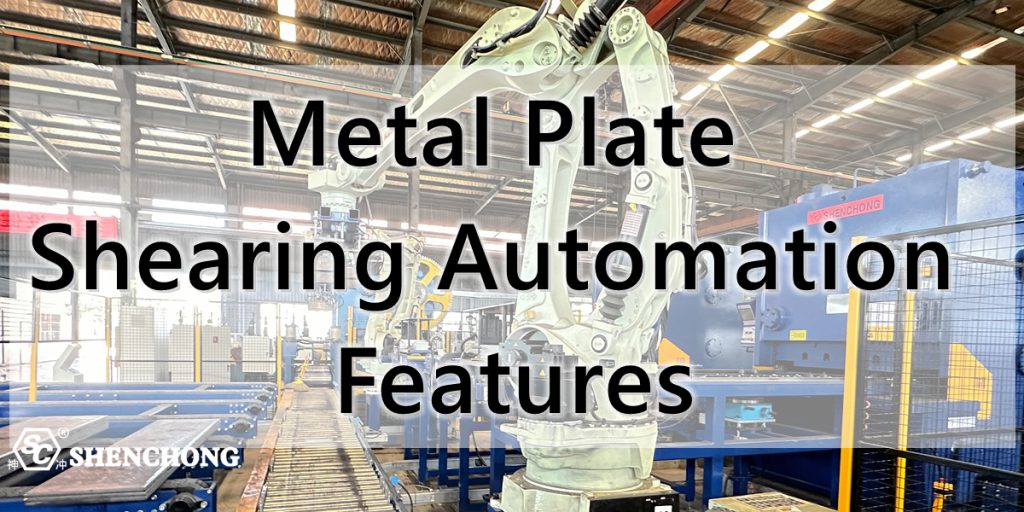
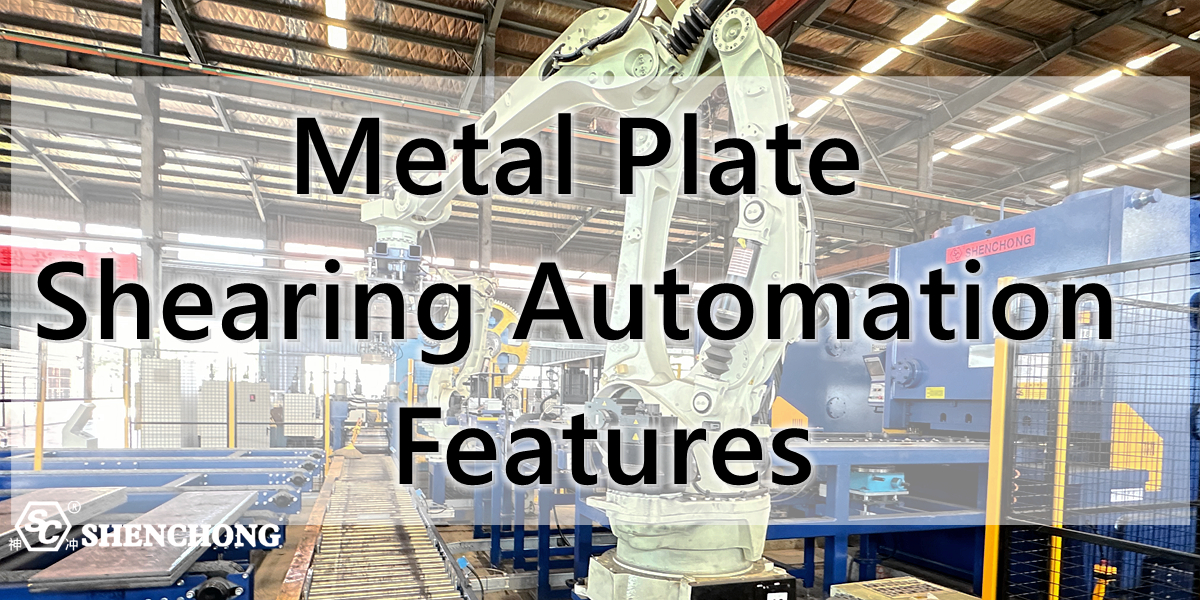
Metal Plate Shearing Automation combines traditional shearing processes with automated control, CNC technology, front/rear feeding systems, and intelligent detection, significantly improving sheet metal processing efficiency and quality.
Automated metal shearing connects traditional manual feeding, alignment, shearing, and stacking processes using mechanical/CNC systems, forming a continuous, high-precision, low-labor shearing production line. It integrates “equipment + sensing + control + material handling” into a unified whole, resulting in comprehensive improvements in capacity, quality, safety, and cost.
1. What is Metal Plate Shearing Automation?

Metal sheet shearing automation refers to upgrading the traditional manual metal shearing process into an automated, intelligent, and continuous production method through technologies such as CNC systems, automatic feeding/positioning devices, robots, and intelligent detection and conveying systems. It is widely used in sheet metal processing, automotive manufacturing, construction machinery, home appliances, aerospace, and other fields.
Plate shearing automation technology integrates CNC shearing machines, automatic feeding systems, positioning and conveying systems, automatic sorting systems, and control software into a single unit, achieving fully automated production from sheet metal feeding, positioning, shearing to finished product sorting.
Metal Plate Shearing Automation Core Objectives:
- Reduce labor
- Improve shearing accuracy
- Increase production efficiency
- Achieve stable batch production
- Establish a digital production process
2. Main Components of Automated Metal Shearing
CNC/PLC System:
Enables dimension setting, shearing parameter programming, and automated operation.
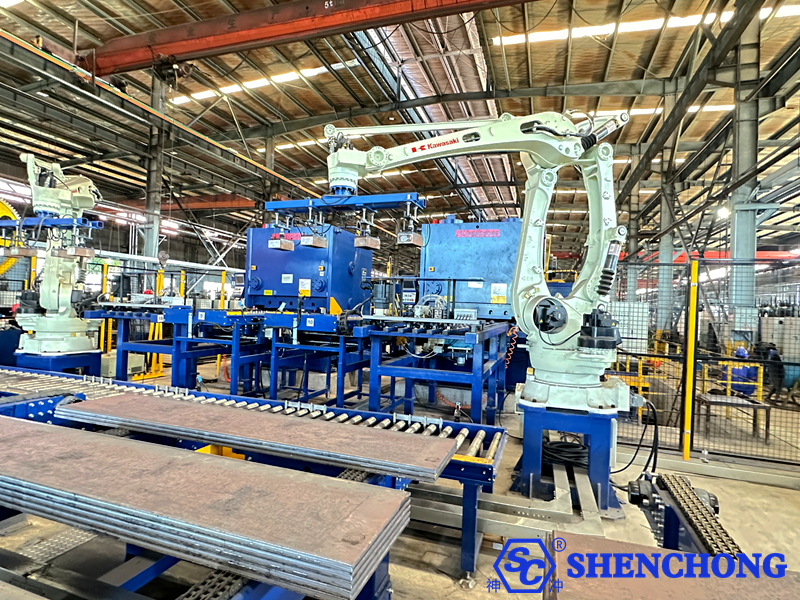
Automatic Feeding System:
Front feeding trolley, robot loading, and material storage linkage ensure rapid sheet positioning.
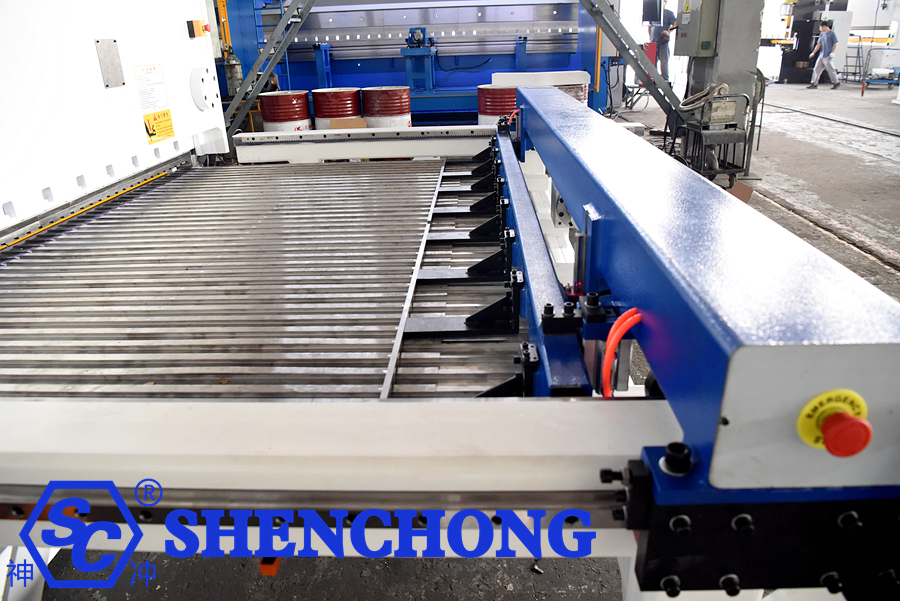
Automatic Positioning and Inspection:
Laser positioning and grating ruler measurement ensure shearing accuracy.
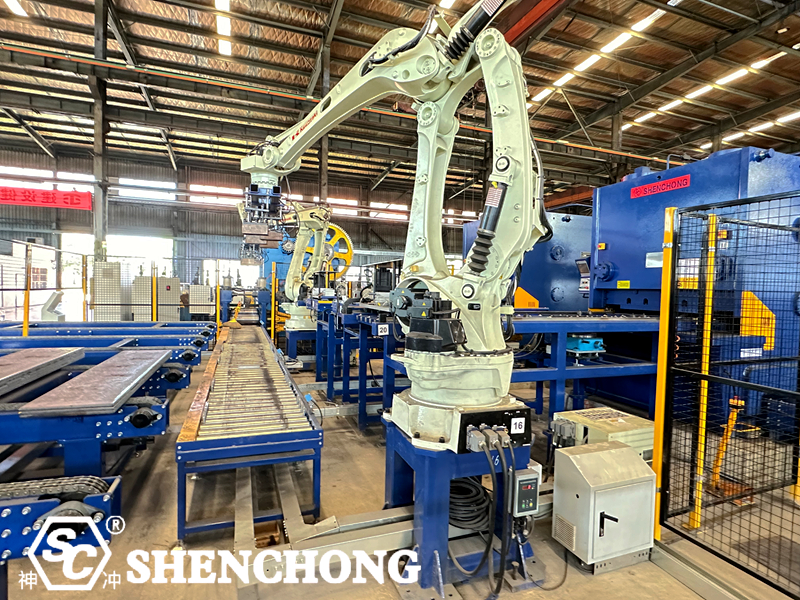
Automatic Unloading and Stacking:
Finished products are automatically collected and stacked by conveyor belts and robotic arms.
Safety Protection Devices:
Photoelectric protection and overload protection prevent human error.
Information System Integration:
Connects with MES/ERP systems to support production data traceability and remote management.
3. Key Technologies for Metal Shearing Automation
1) Automatic Sheet Separation Technology
Solving the problem of sheet adhesion:
- Dual sheet detection sensors
- Pneumatic sheet separation
- Magnetic separation
2) High-Precision Front Feeding Technology
Key:
- Servo drive
- Closed-loop control
- Real-time compensation
- Automatic calibration
3) Flexible Production Technology
Achieving:
- Automatic switching between multiple specifications
- Automatic program calling
- Small-batch, multi-variety production
4) Unmanned Production Control
Functions:
- Automatic scheduling
- Automatic alarm
- Automatic statistics
- Remote operation and maintenance
4. Features of Automated Metal Plate Shearing
Metal plate shearing automation connects manual feeding, positioning, clamping, shearing, unloading, waste disposal, and quality inspection into a continuous or semi-continuous production line using feeding mechanisms, transmission (roller conveyors/belts), robotic arms/gantry cranes, PLC/CNC systems, and safety systems, thereby achieving high-capacity, stable-size, and lower-labor-cost shearing operations.
- Automatic Control
Utilizes a CNC/PLC system, enabling parameterized settings and one-button operation.
Supports batch and continuous shearing, reducing manual intervention.
- High-Precision Shearing
Equipped with automatic positioning devices and laser/grating ruler detection, ensuring high dimensional accuracy and repeatability.
Produces clean shear cuts, reducing the need for secondary processing.
- Multifunctional Integration
Can be configured with front feeding, rear feeding, automatic stacking, and conveying modules.
Can be integrated with laser cutting, bending, and warehousing systems to form a flexible production line.
- High Safety
Photoelectric protection, overload protection, and a fully enclosed protective structure ensure operational safety.
Prevents direct worker contact with the cutting edge, reducing the risk of workplace injuries.
- Energy Saving and Environmental Protection
Hybrid electric or servo drive systems result in low energy consumption.
Automatic stop/standby modes improve energy efficiency.
- Strong Adaptability
Can process sheets of different thicknesses and materials (carbon steel, stainless steel, aluminum, etc.).
Suitable for multi-variety, small-batch, and large-batch production needs.
- Intelligent and Information-based
Integrates with MES/ERP systems for automated work order management and production data traceability.
Features remote monitoring, fault diagnosis, and maintenance reminders.
The characteristics of metal plate shearing automation can be summarized as “automation, precision, safety, intelligence, and energy saving,” not only improving efficiency and quality but also supporting smart manufacturing in factories.
5. Advantages of Automatic Shearing For Metal Sheet
Traditional shearing machines rely on manual feeding, resulting in low efficiency and a high error rate (manual feeding error is approximately ±1mm). Automated feeding shearing machines use servo motors to drive rollers for feeding (accuracy up to ±0.1mm), and are equipped with a PLC control system to achieve full automation.
For example, after introducing an automated feeding shearing machine, a car parts factory increased its single-shift output from 200 pieces to 320 pieces, a 60% increase in efficiency.
- High Production Efficiency
Automated feeding, positioning, and unloading ensure continuous and stable operation, significantly increasing processing speed.
- High Shearing Precision
The CNC system precisely controls dimensions, minimizing positioning errors and ensuring consistent finished products.
- Reduced Labor Costs
Reduced manual operation steps decrease reliance on skilled workers and reduce labor input.
- Enhanced Safety
Automated operation avoids worker contact with the blade edge; the inclusion of light gratings and overload protection further enhances safety.
- High Material Utilization
Precise shearing and optimized layout reduce waste and error losses.
- Intelligent Management
Integrates with MES/ERP systems for work order scheduling, data traceability, and remote monitoring.
- Energy Saving and Environmental Protection
Utilizes servo drive or hybrid electric technology for energy saving and reduced consumption, resulting in greener and more environmentally friendly operation.
The biggest advantages of metal plate shearing automation are improved efficiency, reduced costs, enhanced quality and safety, and support for factories to upgrade towards intelligent manufacturing.
6. Common Faults and Troubleshooting
Inaccurate Feeding / Length Error:
Check encoder/grating, belt slippage, back gauge positioning accuracy, and clamping inadequately.
Material Misalignment / Warping:
Strengthen support, reduce feed speed, improve clamping strategy, or introduce vacuum/magnetic clamps.
Blade Edge Burrs / Unclean Shearing:
Check blade clearance, tool wear, excessive material thickness, or abnormal material hardness.
Sensor False Alarms / Failure to Trigger:
Clean sensor surface, check wiring, and avoid strong glare or metal dust interference (use shielded photoelectric sensors).
Hydraulic/Servo Abnormalities:
Check hydraulic oil temperature, filter, leakage, servo parameter tuning (PID), and encoder feedback abnormalities.
Frequent Safety System Triggers:
Check light curtain alignment, ensure accurate door interlock installation, and eliminate false triggering sources.
7. Summary
What are the core technology modules of automated shearing?
- Automatic feeding: gantry/robotic arm/vacuum suction cup, automatic positioning and feeding
- CNC shearing: CNC control of shearing length, number of cuts, and sequence
- Follow-up clamping: Adaptive clamping, anti-warping, minimal burrs
- Automatic receiving: Conveyor belt, flip-plate, or sorting system
- Intelligent control: Parameter formulation, status monitoring, fault alarm
Core Advantages: Why Should Enterprises Choose Shearing Automation?
- Leap in Efficiency: Continuous feeding + automatic shearing, achieving 8-12 shearing operations per minute (traditional equipment only 3-5 operations).
- Cost Savings: Reduces the number of operators by 2-3, saving over $150,000 in annual labor costs (based on an annual salary of $60,000).
- Stable Quality: Laser positioning + hydraulic buffer technology, achieving shearing repeatability accuracy of ±05mm, reducing scrap rate to below 0.5%.
- Safety Upgrade: Enclosed operation + infrared sensing, reducing workplace accidents by 90%.
Application Scenarios: Which Industries Benefit Most?
- Sheet Metal Processing: Batch cutting of stainless steel and aluminum sheets (thickness 0.5-6mm).
- Automotive Manufacturing: High-precision blanking of car doors and chassis parts (accounting for 35% of demand).
- Home Appliance Industry: Rapid prototyping of refrigerator panels and washing machine casings.
- New Energy: Customized processing of photovoltaic brackets and battery casings.
The core of metal plate shearing automation technology is to achieve a high-efficiency, high-precision, and low-manpower sheet metal shearing production mode through automated feeding, servo feeding, CNC shearing, and automatic sorting.
 English
  Spanish
  Portuguese
  German
  Arabic
  Italian
  Russian
  French
  Chinese
  Vietnamese
  Thai
Thai  Polish
  Japanese
  Czech
Czech