
Table of Contents
Plate laser cutting machine is core equipment used for high-precision and high-efficiency processing of sheet metal, and have become one of the mainstream equipment in the sheet metal processing industry.
Below is a very detailed purchasing guide for plate laser cutting machines (suitable for both industrial users and factories/studios making purchasing decisions), covering everything from basic concepts, key parameters, and model classification to purchasing strategies, cost analysis, and selection suggestions, helping you comprehensively grasp the key points of choosing a laser cutting machine.
1. Basic Principles And Applications of Plate Laser Cutting Machine
Sheet laser cutting utilizes a high-energy-density laser beam focused on the surface of the sheet material, causing localized melting or vaporization. The cutting seam is then removed by gas blowing, achieving high-precision non-contact cutting.
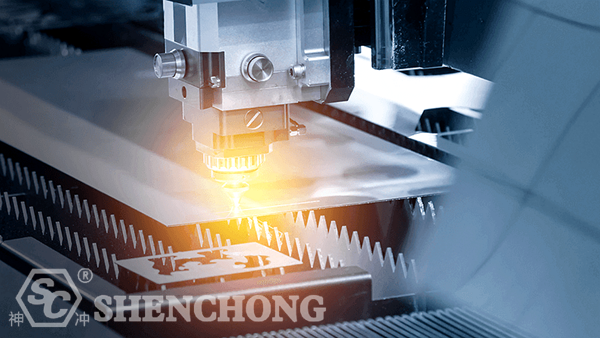
Compared to traditional mechanical cutting, it offers the following advantages:
- Non-contact cutting → No mechanical stress on the material
- High precision and smooth edges → Reduced post-processing
- Automated production capability → High efficiency and good repeatability
- Suitable for various materials → Metals and non-metals (depending on the laser type)
2. Core Technical Specifications of Laser Cutting Machines
The most crucial aspect when purchasing plate laser cutting machine is understanding these parameters:
1) Laser Type
Types | Key Features | Main Applicable Materials |
Fiber Laser | Compact structure, high energy efficiency, and fast cutting speed | Steel, stainless steel, aluminum, copper, and other metals |
CO₂ Laser | Excellent cutting effect on non-metals (plastics, wood, acrylic) | Wood, paper, acrylic, fabric |
UV/Green Laser | Low heat-affected zone, suitable for fine structures | Thin materials, special materials (glass, compounds) |
For sheet metal cutting (the most common requirement), high-power CNC fiber laser cutting machines are generally the first choice.
2) Laser power (W/kW)
Determines the maximum cutting thickness and speed:
Power range | Typical cutting capacity |
1,000–3,000 W | ≤ 10–15 mm steel plate, high-precision thin plate |
4,000–6,000 W | 15–20 mm medium-thick plate |
> 6,000 W | ≥ 20 mm thick plate, high-efficiency industrial cutting |
Higher power is not necessarily better: it should be matched to your actual material thickness and production needs, otherwise it will be a waste of money and energy.
3) Working Dimensions (Cutting Area)
Common Specifications (Length × Width):
- 1300×2500 mm → Common size for small to medium batch production
- 1500×3000 mm / 2000×4000 mm → General industrial grade
- Larger sizes → Special large-part processing scenarios
Selecting the appropriate working area based on commonly used sheet metal dimensions can avoid wasting space or limiting the cutting range.
4) Accuracy and Repeatability
- Positioning accuracy: Typically requires ±0.03 mm or finer.
- Repeatability: Ensures consistency of batch parts.
- Dynamic focusing, autofocus, and other functions can improve cutting quality and speed.
These directly affect the perpendicularity, precision, and subsequent assembly accuracy of the cutting edge.
5) Auxiliary Gas System
Common gases include:
- Oxygen (O₂) → Increases steel plate cutting speed
- Nitrogen (N₂) → Keeps edges clean and reduces oxidation
- Compressed air → Economical choice, but slightly less effective.
Gas quality and the control system have a significant impact on cutting quality.
6) Control System and Software
A good control system improves efficiency and ease of use:
- Supports common formats: DXF, DWG, AI, etc.
- Path optimization and nesting functions save materials.
- Remote monitoring/automatic diagnostics improve production efficiency.
A user-friendly and stable control platform is strongly recommended.
7) Automation and Production Line Integration (Optional but Highly Valuable)
- Automated loading and unloading (robots or robotic arms): Improves utilization, reduces manual labor, and is suitable for high-volume or hazardous environments.
- Material changing station/dual workbench: Changes materials while cutting, increasing capacity.
- Material racks and conveyor lines: Automated production lines for loading robots and stamping/bending processes.
- Scrap recycling/collection system: Chip bins, automatic material collection belts.
Consider future scalability (robot interface, MES/ERP integration) when purchasing plate laser cutting machine.
3. Selection Steps and Strategies
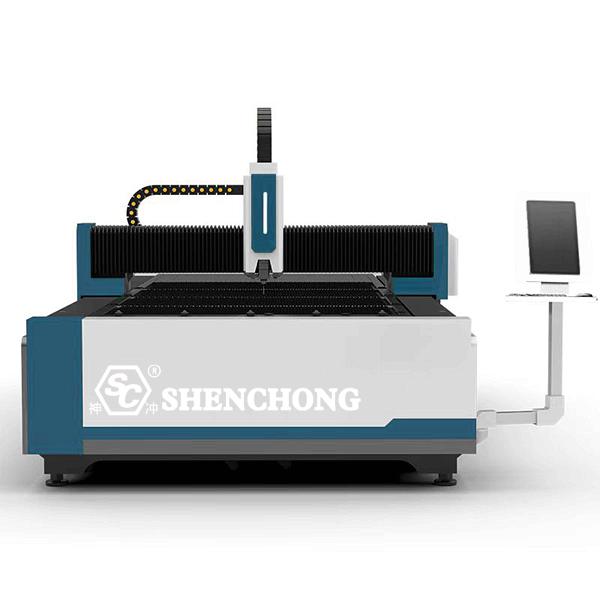
1) Confirm your needs (the most important first step)
- Before looking at equipment, clarify the following questions—they determine the machine type, power, level of automation, budget, and return on investment (ROI).
- Commonly cut materials and thickness range (e.g., cold-rolled carbon steel 1–8 mm, 304 stainless steel 1–4 mm, aluminum/copper 1–3 mm).
- Daily/weekly production capacity requirements (per shift, monthly cutting hours, number of pieces).
- Cutting accuracy and surface quality requirements (burr-free, sensitivity to heat-affected zone (HAZ), edge roughness Ra, etc.).
- Workpiece size range (maximum sheet width, minimum piece size, whether efficient small-piece loading is required).
- Automation requirements (automatic loading and unloading, material changing station, conveyor, material collection, robotic assembly).
- Budget and target payback period (total equipment price + installation + training + annual operating costs, estimated payback period).
- Workshop conditions (electricity, ventilation, fire protection, floor space, door width, ground load-bearing capacity, noise limits, safety requirements).
2) Matching the Right Laser Model
Generally categorized as:
- Lightweight/Small to Medium-sized Lasers
Suitable for: Small batch production, workshops, parts processing
Advantages: Lower cost, smaller footprint
- Industrial-grade High-power Lasers
Suitable for: Mass production, thick plate cutting
Features: High efficiency, strong stability
- Automated Integrated Production Lines
Suitable for: Smart factories, integration with ERP/MES
Advantages: Unmanned operation, labor savings
Laser Power and Cutting Capacity (How to Match Needs)
Common fiber laser powers: 500 W, 1 kW, 1.5 kW, 2 kW, 3 kW, 6 kW, 12 kW, etc.
General Reference (for selection direction only):
- 500 W: Thin plates (≤3 mm), small batch production, precision workpieces.
- 1–1.5 kW: Conventional medium to thin plates (≤6 mm), high-performance production.
- 2–3 kW: Medium to thick plates (6–12 mm), high efficiency.
- ≥6 kW: Thick plate cutting (≥12 mm) or high-speed mass production.
Note:
Different materials and gases (oxygen/nitrogen) have a significant impact on cutting thickness and quality. Selection should be based on the target material/thickness, considering not only the maximum thickness but also the cutting speed and edge quality.
3) Brand and After-Sales Service
The market offers a wide variety of brands, ranging from domestic to international (such as HGLaser and Bond Laser), with varying performance.
When choosing a brand, consider:
- Technical strength and manufacturing experience
- Participation in industry standard setting
- After-sales service coverage (including spare parts and maintenance)
- User case studies and reputation.
Industry data shows that leading plate laser cutting machine manufacturers in the market have more mature technology and more reliable service.
4) Cost and Cost-Effectiveness Assessment
In addition to the purchase price, consider:
- Electricity and auxiliary gas costs
- Maintenance and spare parts replacement (optical path, nozzles)
- Operator training and software upgrades
- Depreciation and ROI (analyzing over a 2-4 year payback period is recommended).
4. Common Misconceptions and Purchasing Recommendations
❌ Don’t just look at the laser power – the higher the better. High-power models are wasteful for thin plate cutting. Appropriate matching of material thickness is crucial.
❌ Don’t ignore quality just because of price. Cheap equipment may have hidden costs in terms of precision, stability, and after-sales support.
✅ Prioritize overall solutions. Features such as automatic loading and unloading, software optimization, and intelligent monitoring help improve long-term efficiency.
5. Summary
Plate Laser Cutting Machine Selection Summary Table (Quick Reference):
Needs Scenarios | Recommended Model Types | Key Specifications |
Small processing workshops | Small to Medium Power Fiber Optic Filter Machine | 1.5–3 kW, 1300×2500mm |
Large-volume sheet metal production | High Power Fiber Optic Filter Machine | ≥6 kW, large workstation |
Multi-material cutting | Multi-head/Hybrid System | Compatible with different materials |
Automated production lines | Automatic Loading and Unloading System | Integrates with production systems |
Practical Selection Examples (Recommended Configurations Based on Usage Scenarios):
– Small Sample/Custom Processing Studio (Small Batch, Diverse Variety)
- Laser Source: 1 kW Fiber Optic
- Table: 1500×3000 mm (3015)
- Gas Assist: Air or Nitrogen (Depending on Material)
- Priorities: Low footprint, lower investment, easy maintenance
– Medium-Sized Sheet Metal Processing Plant (Regular Medium-Thin Plate Batch)
- Laser Source: 2–4 kW Fiber Optic
- Table: 2000×4000 mm or 1500×3000 mm (Depending on Sheet Size)
- Configuration: Exchange table or automatic loading/unloading arm + nitrogen system (stainless steel/aluminum)
- Priorities: Speed/cost balance, part repeatability accuracy
– Heavy-Duty/Thick Plate/High-Production Line (Structural Components, Steel Structures)
- Laser Source: 6 kW and above (or higher)
- Table: Large format + automatic rack + high-speed cooling and safety system
- Gas Assist: Oxygen (thick carbon steel) or combined with process
- Priorities: Rigid structure, thermal management, long-term stable operation
 English
  Spanish
  Portuguese
  German
  Arabic
  Italian
  Russian
  French
  Chinese
  Vietnamese
  Thai
Thai  Polish
  Japanese
  Czech
Czech