
Table of Contents
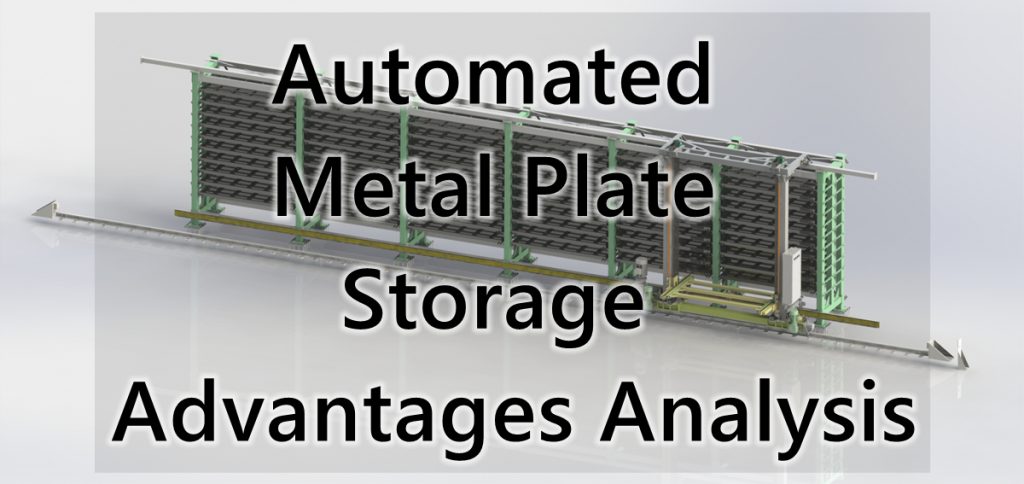
Automated metal plate storage is an intelligent logistics system that combines automated warehousing, intelligent handling, information management, sheet identification, production scheduling, and automated loading and unloading.
It is not merely an upgrade from traditional “storing steel sheets,” but a crucial infrastructure connecting raw material warehousing → intelligent storage → production material requisition → laser cutting/shearing → bending → welding → finished product management.
For metal sheet processing companies producing steel, stainless steel, aluminum, and copper sheets, the greatest value of automated warehousing can be summarized as: less space required, less manpower needed, reduced material searching, reduced waste, increased turnover, precise management, and providing a foundation for automating the entire sheet metal production line.
1. What problems does automated metal plate storge actually solve?
Traditional sheet metal warehouses typically suffer from several problems:
- Numerous sheet metal specifications, making classification difficult.
- Different materials are easily mixed.
- The same material may have different thicknesses and sizes.
- Large quantities of sheets are laid flat, taking up a lot of space.
- Overhead crane and forklift handling rely on manual labor.
- Finding a sheet requires manual searching.
- Inaccurate material inventory quantities.
- First-in, first-out (FIFO) is difficult to implement.
- Surplus material management is difficult.
- Material retrieval efficiency is low during urgent production orders.
- Easily damaged or scratched during handling. Safety risks exist when personnel and heavy equipment operate simultaneously.
- Inability to establish effective data connections with ERP, MES, WMS, and other systems.
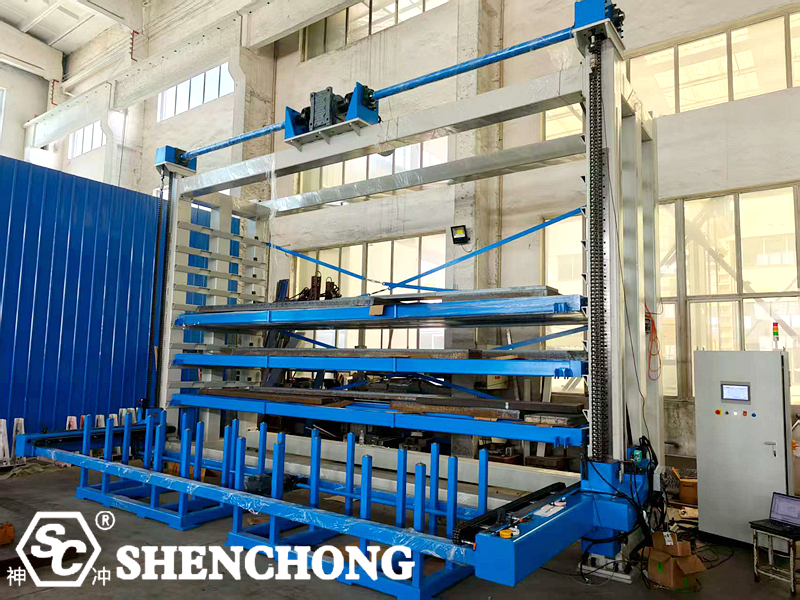
The core of automated warehousing is to gradually transform these tasks of “manual searching, manual handling, manual recording, and manual judgment” into:
System identification → System allocation → Automated handling → Precise positioning → Automated outbound processing → Data recording
2. Core Advantages of Automated Metal Sheet Warehousing
1) Significantly Reduced Factory Space
This is the most obvious advantage of automated sheet metal warehouses.
Traditional sheet metal storage often uses ground stacking:
Sheet metal → Timber stacks → Sheet metal → Timber stacks → Re-stack
Due to the large size of steel plates, forklift, overhead crane, and manual operation aisles need to be reserved, thus a large amount of space is actually occupied by “aisles” and “operation areas.”
Automated retrieval systems use multi-level storage:
First floor → Second floor → Third floor → … → Multiple floors
With the same building area, space utilization can be significantly improved.
For example:
Traditional flat warehouse: 1000㎡ → Mainly relies on ground stacking
Automated retrieval system: 1000㎡ → Forms vertical storage through multi-level storage
Therefore, the value of automated warehousing is particularly evident in companies with high factory land costs and limited workshop space.
Core Value: Transforming a “flat warehouse” into a “reliable warehouse,” trading height for area.
2) Reduce Manual Handling
Traditional sheet metal handling typically requires:
- Crane operators
- Forklift operators
- Warehouse managers
- Material preparation personnel
- Production line operators
Especially for large steel plates, which often weigh hundreds of kilograms or even several tons.
Automated warehousing can utilize:
- Stacker cranes
- Servo lifting mechanisms
- Automatic conveying mechanisms
- Robots
- Electric pallet trucks
- Gantry systems
- Automatic loading mechanisms
To automatically store and retrieve sheet metal.
For example:
System issues task
↓
WMS confirms sheet metal location
↓
Stacker crane moves automatically
↓
Reaches target location
↓
Automatic material retrieval
↓
Transported to outbound location
↓
Handed over to laser cutting machine/production line
The entire process reduces manual intervention.
3) Achieve "Precise Material Finding"
One of the biggest hidden costs of traditional warehousing is: material finding.
For example, a company’s inventory might include:
- Q235 6mm
- Q235 8mm
- Q235 10mm
- Q235 12mm
- 304 Stainless Steel 3mm
- 304 Stainless Steel 5mm
- Aluminum Plate 4mm
- Aluminum Plate 6mm
Manual management could easily lead to:
“Knowing this plate exists, but not knowing where it is.”
Automated warehousing, however, can establish digital material records.
Each storage location has clearly defined information:
Information | Contents |
Material | Q235 |
Thickness | 8mm |
Length | 4000mm |
Width | 2000mm |
Quantity | 5 sheets |
Weight | XXXX kg |
Inbound Time | XXXX |
Storage Location | A-03-08 |
Status | Available |
Order Ownership | XX order |
Operators only need to input:
“Q235 / 8mm / 4000×2000” The system can then quickly locate the item.
4) Improve Inventory Management Accuracy
Traditional warehouses often experience issues such as: the system displays 10 sheets, but only 8 are actually stored.
Or: materials are in the warehouse, but the system doesn’t record them.
Automated warehousing establishes a correspondence between storage location, materials, quantity, time, and order.
It can achieve:
Inbound Records:
- What material?
- When was it received?
- Which storage location?
- Quantity?
- Weight?
Outbound Records:
- When was it shipped?
- Quantity shipped?
- For which order?
- Who operated it?
- Which production line was it sent to?
This creates a complete material flow record.
5) Reduce Sheet Metal Damage
Metal sheets, especially:
- Stainless Steel
- Aluminum
- Galvanized Sheet
- Mirror Sheet
- Brushed Sheet
- Color Coated Sheet
These have high requirements for surface quality.
Traditional manual handling may result in:
- Dragging
- Collision
- Scratches
- Bending
- Corner bumps
- Multiple sheet materials adhering to each other
- Forklift collisions
Automated warehousing, through fixed handling paths and standardized actions, can reduce these problems.
Especially for high-value sheets, reducing even a single scratch can prevent significant material loss.
6) Improved Production Efficiency
The true value of automated metal plate storge is not just “storing sheets.” More importantly, it’s about enabling sheets to quickly reach processing equipment according to production needs.
For example:
Smart Warehousing
↓
Automated Outbound
↓
Laser Cutting
↓
Automated Sorting
↓
Bending
↓
Welding
↓
Assembly
Warehousing systems are increasingly becoming part of the production line.
This is especially important for companies with high order volumes, diverse product types, and small batch production.
7) Automatic Loading and Unloading With Laser Cutting Machines
This is a very important application scenario for automated metal plate storge system.
Typical Process:
Intelligent Sheet Metal Storage
↓
System Receives Production Task
↓
Automatic Material Selection
↓
Automatic Outbound
↓
Conveying System
↓
Automatic Loading
↓
Laser Cutting Machine
↓
Automatic Unloading/Sorting
↓
Residual Material Return
This reduces manual handling.
For laser cutting equipment with different sheet sizes such as 3015, 4020, 6020, and 6015, system integration can be customized according to actual production needs.
8) Intelligent Residual Material Management
This is an advantage that many companies easily overlook.
In traditional production, after cutting a 4000×2000mm steel plate, a piece might remain:
1800×900mm
If this piece of material is directly piled in the residual material area, it easily leads to:
“There’s material, but we don’t know where it is.”
The automated system can re-register the residual material.
For example:
Surplus material number: YL-20260904-001
Material: Q235
Thickness: 8mm
Dimensions: 1800×900mm
Location: B-05-12
When the next production requires materials around 1800×900mm, the system can prioritize using surplus materials.
9) Reduce material waste
By combining automated warehousing with production software, the following closed-loop process can be achieved:
Inventory materials → Layout → Production → Surplus materials → Reuse
For example:
Order requires: 20 sheets of Q235 8mm steel plates
The system first checks:
- How much new plate inventory is there?
- How much surplus material inventory is there?
- Which surplus materials can be used?
- Then it optimizes the layout.
This can reduce:
- Scrap materials
- Surplus materials
- Duplicate purchases
- Inventory backlog
10) Improve Warehouse Safety
Traditional sheet metal warehouses present several significant risks:
① Falling Heavy Objects: Improperly stacked sheet metal may slip and fall.
② Forklift Collisions: Forklifts may collide with personnel or equipment during operation.
③ Overhead Crane Lifting Risks: There is a risk of swaying and falling when lifting large steel plates.
④ Human Error: Manual handling of sheet metal of different specifications is prone to errors.
Automated metal plate storge can improve overall safety levels through:
- Safety Fences
- Photoelectric Protection
- Access Control
- Safety Sensors
- Collision Avoidance Systems
- Automatic Alarms
- Area Access Management
- Equipment Interlocking
11) Reduce Forklift and Overhead Crane Usage
Traditional Warehouse:
Forklift → Finding Material → Handling → Adjusting → Storage
Automated Warehouse:
System Commands → Automated Handling → Automated Positioning
This means businesses can reduce some forklift and overhead crane operations.
This brings not only reduced labor costs, but also:
- Forklift maintenance costs
- Fuel/electricity costs
- Equipment depreciation
- Crane maintenance
- Personnel training
- Safety management costs
12) Implementing First-In, First-Out (FIFO)
Long-term storage of different metal materials may result in:
- Rusting
- Oxidation
- Surface contamination
- Packaging aging
- Material deformation
The automated system can automatically arrange the outbound sequence based on:
Inbound time
For example:
Materials received in August 2026 can be outbound first.
This reduces long-term inventory backlog.
For certain special materials, outbound can also be managed according to:
Batch management / Order management / Material management / Quality requirements.
13) Integration with ERP, MES, and WMS
Modern automated metal plate storge system is not an isolated system.
It can connect with:
- ERP
- MES
- WMS
- APS
- CAD/CAM
- Laser cutting software
- Production management system
for data integration.
Formation:
ERP
↓
Orders
↓
MES
↓
Production Planning
↓
WMS
↓
Smart Warehousing
↓
Automated Outbound Delivery
↓
Laser Cutting
↓
Production Data Feedback
Ultimately forming a digital production closed loop.
14) Achieving Digital Inventory
Traditional Warehouse: “The warehouse manager knows the inventory.”
Smart Warehouse: The system knows the inventory.
Enterprise managers can view:
- Current Inventory
- Inventory Quantity
- Inventory Weight
- Material Distribution
- Thickness Distribution
- Storage Location Utilization
- Inbound/Outbound Records
- Obscured Materials
- Surplus Inventory
- Material Consumption Trends
This allows enterprise management to gradually shift from “experience-based management” to “data-based management.”
15) Reducing Overall Operating Costs
The cost-benefit analysis of automated warehousing should not be limited to “saving a few warehouse managers.”
It should comprehensively consider:
Space Costs + Labor Costs + Handling Costs + Inventory Costs + Material Losses + Safety Costs + Production Waiting Costs.
For example, a traditional warehouse might experience the following:
- Finding materials takes 10 minutes
- Moving materials takes 15 minutes
- Waiting for the crane takes 10 minutes
- Manual material preparation takes 15 minutes
A single material requisition could take tens of minutes.
With automation:
System order placement → Automatic location → Automatic outbound delivery → Delivery to the production line
The entire process can be significantly reduced.
3. Which companies are particularly suitable for this system?
Automated sheet metal storage system is especially suitable for:
① Sheet metal processing plants: Many material varieties and frequent orders.
② Laser cutting plants: High sheet metal turnover rate.
③ Steel structure companies: Large sheet metal specifications and weights.
④ Construction machinery manufacturing companies: Large inventory of thick and large plates.
⑤ Electrical cabinet manufacturing companies: Many material specifications and large batches.
⑥ Automotive parts companies: High requirements for material traceability and production cycle time.
⑦ Home appliance manufacturing companies: Many material varieties and high automation requirements.
⑧ Stainless steel processing companies: High-value materials and high surface quality requirements.
4. Core Components of Automated Sheet Metal Warehousing
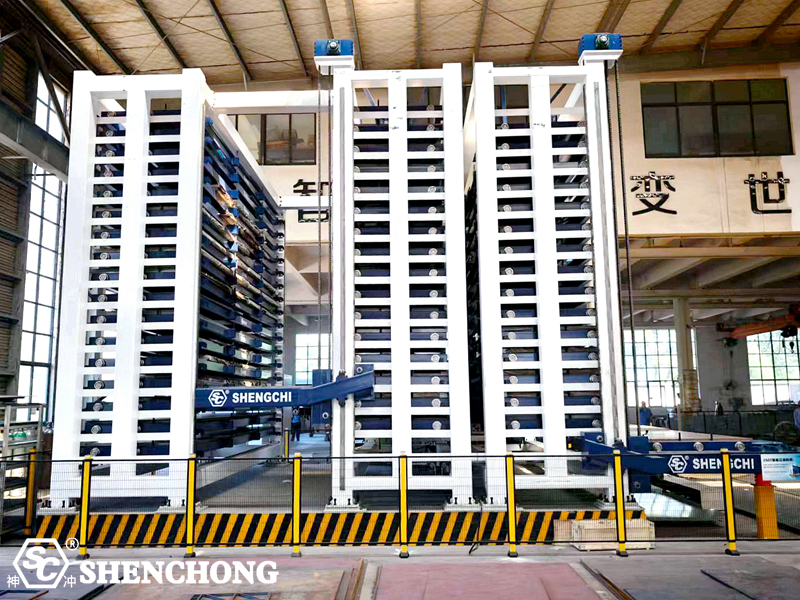
A complete system typically includes:
1) Automated racking: Stores sheet metal.
2) Automated stacking mechanism: Performs lifting and horizontal movement.
3) Automated conveyor system: Connects warehousing and production equipment.
4) Sheet Material Handling Mechanism: Responsible for picking up and transferring sheet materials.
5) Control System: Responsible for coordinating the entire system’s operations.
6) Warehouse Management System (WMS): Responsible for inventory and location management.
7) Manufacturing Execution System (MES) Interface: Responsible for production task and data exchange.
8) Security System: Includes photoelectric sensors, fencing, access control, and emergency stop mechanisms.
9) Barcode/RFID Identification: Enables material identification and tracking.
5. Comparison of Automated Warehousing and Traditional Warehousing
Item | Traditional warehousing | Automated Warehousing |
Space Utilization | Low | High-level system positioning |
Material Locator | Manual search | Automatic handling |
Handling Methods | Forklift/overhead crane | Digitalization |
Inventory Management | Manual recording | Automation |
Inbound/Outbound | Manual | Traceability |
Surplus Material Management | Difficulty | Strong |
Material Traceability | Weak | Low-level |
Labor Requirements | High | High-level multiple safety protections |
Handling Efficiency | General | Real-time |
Safety | Reliance on personnel | Integrable |
Data Statistics | Lag | High-level system positioning |
ERP/MES Integration | Less | Automatic handling |
Smart Manufacturing Capabilities | Low | Digitalization |
6. The True Core Value: Upgrading from "Warehouse" to "Intelligent Logistics Center"
The most important significance of automated sheet metal warehousing is not simply “stocking up more steel plates,” but rather making the warehouse the logistics hub of the entire smart factory.
This can lead to:
Intelligent Raw Material Warehousing
↓
Automated Outbound Processing
↓
Laser-Assisted Automated Loading and Unloading
↓
Automated Sorting
↓
Robotic Bending
↓
Robotic Welding
↓
Finished Product Warehousing
Ultimately achieving: Synchronized operation of material flow, information flow, and production flow.
7. Future Development Directions
Future sheet metal warehousing will further develop in the following directions:
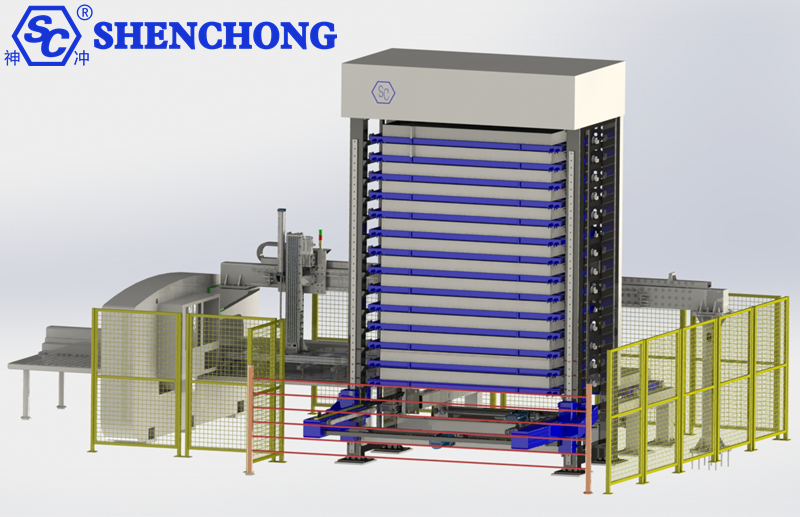
① Higher Layers
From traditional multi-layer storage to a dozen or even more layers.
② Higher Load Capacity
Targeting:
- Thick steel plates
- Heavy steel plates
- Large-size sheet metal
Developing heavy-duty intelligent warehousing.
③ Fully Automated Loading and Unloading
Direct connection between warehousing and:
Laser cutting machines, shearing machines, bending centers.
④ AI Intelligent Production Scheduling
The system automatically schedules production based on:
Orders + Inventory + Equipment Status + Material Status.
⑤ Intelligent Utilization of Leftover Materials
Automatically identifies the size of leftover materials and prioritizes their reuse.
⑥ Unmanned Logistics
In the future, it can gradually reduce:
Manual forklifts + manual handling + manual material searching.
8. Summary
Automated metal plate storage system, with three-dimensional storage, intelligent management, automated handling, and digital tracking as its core, upgrades the traditional “manual warehouse” into an intelligent logistics center connecting materials, equipment, and production plans.
- High-density storage
- Precise inventory management
- Automated inbound and outbound operations
- Intelligent leftover material management
- Reduced manual handling
- Increased material utilization
- Improved production efficiency
- Reduced overall costs
- Ensured operational safety
- Connected to a digital factory
 English
  Spanish
  Portuguese
  Russian
  Arabic
  French
  Italian
  German
  Polish
  Thai
Thai  Vietnamese
  Lithuanian
  Czech
Czech  Korean
  Japanese
  Chinese