
Table of Contents
Judging the metal sheet bending machine quality cannot be based solely on its tonnage, price, or appearance. It requires a comprehensive evaluation from multiple dimensions, including structure, precision, stability, control system, hydraulic system, processing consistency, lifespan, safety, and after-sales support.
Because a cnc plate bending machine is not just for show. It will be used under high loads for extended periods. Its quality directly determines the consistency of product angles, the rate of surface scratches on workpieces, machine setup efficiency, scrap rate, die life, production cycle time, and subsequent maintenance costs.
1. The Importance of Metal Sheet Bending Machine Quality
In the sheet metal processing industry, press brake bending machines are one of the core pieces of equipment that determine product forming quality, processing efficiency, and enterprise competitiveness.
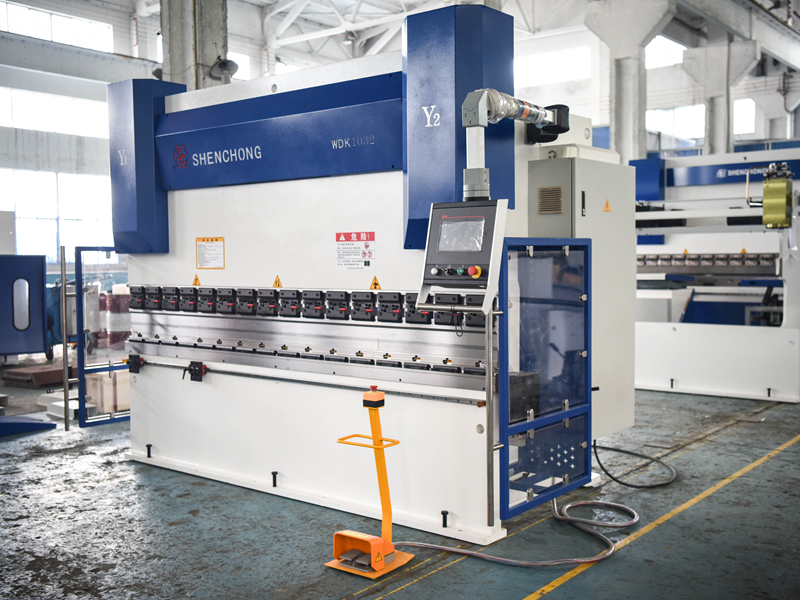
Especially as the sheet metal industry develops towards high precision, automation, and intelligence, the requirements for bending machines have moved beyond simply “being able to bend,” encompassing:
- Stability?
- Precision?
- Durability?
- Energy efficiency?
- Intelligence?
- Suitability for future automation upgrades?
- Does it truly improve enterprise profitability?
Many customers easily fall into a misconception when purchasing bending machines: “Only looking at tonnage, price, and brand.”
In reality, what truly determines the quality of a bending machine is the overall system engineering capability, not just a single parameter.
This article will provide a comprehensive and in-depth analysis from multiple dimensions, including structure, hydraulics, electrical systems, control systems, precision, stability, automation, lifespan, and after-sales service.
2. What constitutes a truly high-quality press brake bending machine?
A high-quality metal sheet bending machine is not simply one that can “bend”.
A truly excellent plate bending machine needs to simultaneously meet the following requirements:
Dimensions | Requirements |
Accuracy | Long-term stable and high precision |
Rigidity | No deformation under heavy load |
Synchronization | Consistent height of left and right cylinders |
Repeatability | High batch consistency |
Speed | Fast and efficient |
Stability | Stable continuous operation for extended periods |
Durability | Long service life |
Automation Compatibility | Upgradeable robot/material storage system |
Operability | Easy to learn and use |
Energy Efficiency | Low energy consumption |
Safety | Multiple protections |
After-sales Service | Timely response |
Truly good equipment is not “cheap when you buy it”, but “still profitable ten years later”.
3. The Core Factor in Judging Bending Machine Quality: Frame Structure
The machine frame structure is the “skeleton” of the metal sheet bending machine.
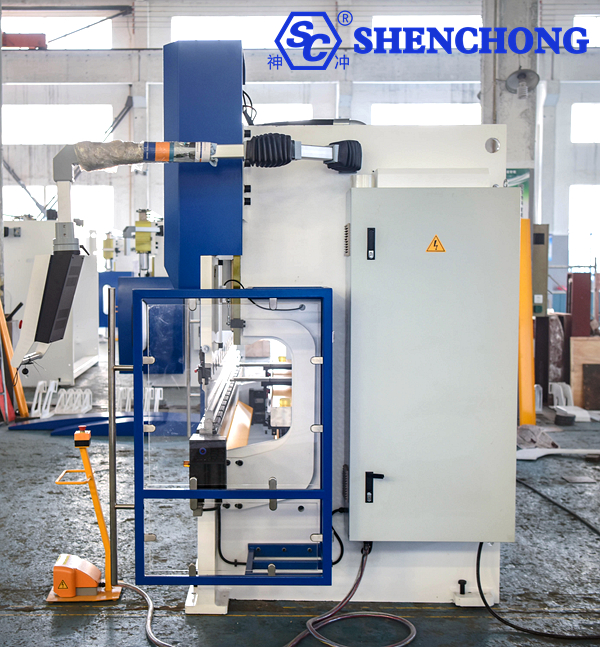
1) Frame Steel Quality
High-Quality Bending Machine:
- Uses Q235B/Q355 high-strength steel plates
- Main structure integrally welded
- Sufficient steel plate thickness
- Reasonable stress distribution
Common Problems with Inferior Equipment:
- Cutting corners
- Thin steel plates
- Insufficient reinforcing ribs
- Rough welding
Results:
- Deformation after prolonged use
- Precision drift
- Unstable angles
2) Overall Welding Process
Excellent Equipment:
- CO₂ shielded welding
- Robotic welding
- Full welding process
- Uniform weld seam
Key Observation Points:
Weld Seam:
- Smooth
- Continuous
- No porosity
- No slag inclusions
- No cracks
Inferior Equipment:
- Incomplete welding
- Spot welding
- Rough weld seam
Late-stage consequences:
- Frame cracking
- Reduced rigidity
- Deteriorated precision
3) Overall Tempering and Stress Relief
This is the most easily overlooked but extremely crucial aspect.
Why is tempering necessary?
Post-welding:
- Residual stress exists inside the steel.
- Slow deformation will occur with long-term use.
High-end manufacturers:
- Heat treatment of the entire machine.
- Vibration aging.
- High-temperature annealing.
Low-end manufacturers:
- No treatment.
- Direct machining.
Consequences:
After six months of use:
- Angle begins to deviate.
- Inconsistent precision at both ends.
- Severe deflection in the middle.
4. The Most Critical Quality Core of a Bending Machine: Hydraulic System
The hydraulic system determines:
- Stability
- Synchronization
- Service Life
- Failure Rate
Methods for Judging Quality of Hydraulic System
1) Cylinder Quality
Characteristics of a High-Quality Cylinder:
– High Machining Precision
Requirements:
- Precision Honing of the Inner Hole
- Low Surface Roughness
Otherwise:
- Easily Damaged Seals
- Oil Leakage
- Creep
– Seal Quality
High-Quality Brands:
- NOK
- SKF
- Parker
Inferior Seals:
- Easily Aging
- High-Temperature Oil Leakage
- Unstable Pressure
– Piston Rod Chrome Plating Quality
High-Quality:
- Thick Hard Chrome Layer
- Mirror Finish
Low-Quality:
- Easily Rusts
- Easily Scratched
2) Hydraulic Valve Assembly Quality
The hydraulic valve is one of the “brains” of the bending machine.
International High-End Brands:
- Bosch Rexroth
- HOERBIGER
- Atos
Good Valve Assemblies:
- Fast response
- Stable pressure
- High repeatability
Poor Valve Assemblies:
- Pressure fluctuations
- Uneven angle
3) Hydraulic Pump Quality
Excellent Hydraulic Pumps:
- Low noise
- Stable pressure
- Low heat generation
Observation:
- After startup:
- Abnormal noise
- Excessive vibration
Rapid rise in oil temperature
5. Core Indicators for Judging Bending Machine Precision
This is one of the most important concerns for customers.
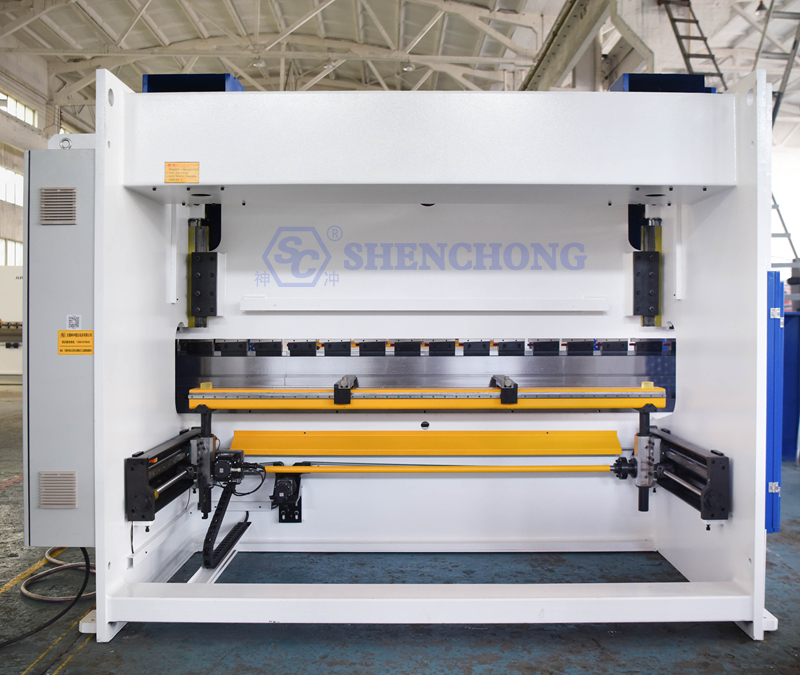
What to look for in bending machine precision?
1) Repeatability
This is the most crucial indicator.
Excellent equipment:
- ±01mm~±0.03mm
Ordinary equipment:
- ±1mm and above
Impact:
- Batch consistency
- Product qualification rate
2) Angle Consistency
Test method: Continuously bend 10 pieces.
Observation:
- Are the angles consistent?
- Are both ends consistent?
Poor equipment:
- First piece 90°
- Second piece 88°
- Third piece 92°
This type of equipment cannot be mass-produced.
3) Y-axis Synchronization Precision
The left and right hydraulic cylinders must be absolutely synchronized.
Otherwise:
- Workpiece twisting
- One side angle is large
- One side angle is small
High-end equipment:
Uses:
- Grating ruler closed-loop control
- Electro-hydraulic synchronization system
Instead of:
- Torsion axis synchronization
6. Difference Between Electro-hydraulic Synchronization and Torsion Shaft Synchronization
1) Torsion Shaft Synchronization
Old-style structure.
Features:
- Low cost
- Moderate accuracy
- Mechanical synchronization
Disadvantages:
- Limited accuracy
- Prone to wear
- Not suitable for high-end machining
2) Electro-hydraulic Synchronization
Modern high-end solution.
Features:
- Dual linear encoder feedback
- Real-time CNC correction
- High speed and high precision
Advantages:
- Stable angle
- High long-term accuracy
- Suitable for automation
Currently mainstream in the high-end market:
Electro-hydraulic synchronous or hybrid servo press brake
7. Control System Determines Equipment Grade
The CNC system is the true “brain” of the metal sheet bending machine.
How to Judge the Quality of CNC System?
1) System Brand
Mainstream:
- Delem
- ESA
- Cybelec
- EL15T
2) Graphical Capabilities
High-End Systems:
- 2D/3D Programming
- Automatic obstacle avoidance
- Automatic calculation and unfolding
Low-End Systems:
- Data input only
3) Automatic Compensation Support
Excellent Systems:
Automatic Calculation:
- Deflection
- Thickness Change
- Springback Compensation
Guarantee:
- Consistency of Long Workpieces
4) Smooth Operation
Observe:
- No lag
- Touch sensitivity
- System stability
8. Methods for Judging the Mechanical Precision
1) Clearance between Guide Rail and Slider
Inspection:
- Is there any shaking?
- Is there any uneven wear?
Large clearance: Inevitably, the precision will be poor.
2) Screw Quality
Back gauge precision is extremely critical.
Excellent Equipment:
- Taiwan HIWIN
- PMI
- THK
Usage:
- Ball screw
- Linear guide
3) Back Gauge Stability
Test: Continuous high-speed operation.
Observation:
- Is there any vibration?
- Is there any deviation?
Poor Equipment:
The back gauge will:
- Large return error
- Left and right synchronization issues
9. The Importance of Machine Tool Deflection Compensation Systems
When bending long workpieces:
The middle section will inevitably experience downward deflection due to force.
Without compensation:
The following will occur:
- Larger angle in the middle
- Smaller angle at both ends
What are some good compensation systems?
1) Mechanical Compensation
Compensation is achieved through wedge blocks.
Advantages:
- Stable
- Simple maintenance
2) Hydraulic Compensation
Compensation is achieved through hydraulic cylinders.
Advantages:
- High degree of automation
Disadvantages:
- Complex maintenance
10. How To Test Metal Sheet Bending Machine Actual Quality?
This is the most important step in procurement.
Tests Required for On-Site Trial Runs:
1) Continuous Bending Test
Continuous Bending:
- 20 pieces
- 50 pieces
- 100 pieces
Observation:
- Angle drift
- Changes after temperature rise
2) Off-center Load Test
Bending only on one side.
Observation:
- Is the machine body twisted?
- Is the accuracy changed?
This is crucial for verifying rigidity.
3) Full Load Test
Approaching the maximum tonnage test.
Observation:
- Does an alarm sound?
- Is there insufficient pressure?
4) High-Speed Test
Observation:
- Shaking
- Abnormal noise
- Impact
11. Methods for Judging the Lifespan
Excellent Equipment:
Lifespan Up to:
- 10 years
- 15 years
- 20 years
What Factors Determine Lifespan?
1) Hydraulic System Lifespan
Key:
- Oil Temperature Control
- Sealing Quality
2) Frame Lifespan
Key:
- Welding
- Heat Treatment
3) Electrical Lifespan
Look at:
- Component Brands
- Wiring Process
International Brands:
- Schneider
- Siemens
12. Automation Capabilities Determine Future Value
Future Trends:
- Automation
- Unmanned Operation
- Intelligent Operation
Therefore Must Consider:
Support:
- Robot Linkage
- Automatic Material Following
- MES System
- Intelligent Metal Storage
How to Determine if a Bending Machine is Suitable for Automation?
1) System Openness
High-End Systems:
Support:
- Ethernet
- OPC
- Industrial Bus
2) Repeatability
Robot Bending:
Highly dependent on repeatability.
3) Speed Stability
Robot Cycle Time Requirements:
Speed must be stable.
13. Energy Consumption Also Important Quality Indicator
Low-end Hydraulic Presses:
- Long-term high power consumption
- Severe heat generation
High-end Servo Energy-saving Systems:
Energy saving:
- 30%
- 50%
- 60%
- Even more
How to determine if a bending machine is energy-efficient?
Observation:
1) Does the motor run at high speed continuously?
- Traditional equipment:Continuously working.
- Servo equipment: Outputting on demand.
2) Is the oil temperature too high?
High oil temperature:
Indicates:
- High energy consumption
- Low system efficiency
14. Safety Crucial Component Of Metal Sheet Bending Machine Quality
Truly high-end equipment: Not only highly efficient.
More importantly:
- Safety
- Stability
Essential safety systems for bending machines:
1) Laser protection
Prevents hand-crushing accidents.
Mainstream:
- DSP
- MSD
2) Emergency stop system
Must:
- Rapid response
- Multi-position layout
3) Safety interlocks
Including:
- Access control
- Light curtain
- Safety PLC
15. How to Judge a Manufacturer's Level Through Details?
Truly High-End Manufacturers:
Excellent in details.
What details to observe?
1) Oil Piping Layout
Excellent:
- Neat and tidy
- Securely fixed
Poor Equipment:
- Messy oil pipes
2) Electrical Cabinet Layout
Excellent:
- Clear coding
- Reasonable heat dissipation
3) Paint Quality
High-End Equipment:
- Sandblasting
- Primer
- Baking
Won’t:
- Easily peel off paint
Brand Doesn't Equal Metal Sheet Bending Machine Quality
Many people are blindly trusting brands.
But in reality:
Even within the same brand:
There are:
- High-end configuration
- Low-end configuration
Therefore:
You must look at:
- Actual configuration
- Actual craftsmanship
Not just the logo.
16. Common Mistakes When Purchasing Bending Machines
1) Focusing Only on Price
Low-priced equipment:
Later Stages:
- More maintenance
- Poor precision
- Low yield rate
- Ultimately more expensive.
2) Focusing Only on Specifications
Specifications can be “written”.
What truly matters: Actual testing
3) Neglecting After-Sales Service
Bending machines are long-term equipment.
After-sales service is extremely crucial.
17. How to determine if a manufacturer is reliable?
1) Does it have a real factory?
Not just an assembler.
2) Does it have processing capabilities?
Including:
- Gantry machining
- Heat treatment
- Assembly workshop
3) Does it have case studies?
Focus on:
- Major client cases
- Automation case studies
4) Does it have a long-term after-sales team?
A genuine manufacturer:
- Has professional engineers
- Has a training system
18. Differences between different grades of bending machines
Grading table:
Tier | Features |
Low-end | Torsion shaft synchronization, conventional hydraulic system |
Mid-range | Electro-hydraulic synchronization, basic CNC |
High-end | Fully closed-loop, high-speed, high-precision |
Top-tier Intelligent | Robot + MES + automatic mold changing |
Summary of Typical Characteristics of High-Quality Bending Machines
Truly excellent bending machines typically possess the following characteristics:
Structural Aspects:
- Integral welding
- Tempering for stress relief
- High rigidity structure
Hydraulic Aspects:
- International brand valve assemblies
- Stable hydraulic system
- Low temperature and low noise
Precision Aspects:
- Electro-hydraulic synchronization
- Closed-loop linear encoder
- Automatic compensation
Control Aspects:
- High-end CNC system
- Graphical programming
- Intelligent database
Automation Aspects:
- Support for robots
- Support for networking
- Support for smart factories
19. Ultimate Advice for Purchasing Bending Machine
Don’t just buy the “machine”, but buy:”Long-term stable production capacity”
The value a truly high-quality metal sheet bending machine brings:
- Higher precision
- Lower scrap rate
- Lower labor costs
- Higher production efficiency
- More stable delivery time
- Stronger market competitiveness
Therefore:
The core logic for judging the metal sheet bending machine quality is:
“Whether it can create value stably in the long term”?
Not: “Whether the initial price is the lowest”
Professional Procurement Machine Inspection Checklist (Practical Version)
Finally, here’s a truly practical “machine inspection focus”.
Upon arrival at the factory, the following must be checked:
Structural Components
- Frame thickness
- Weld quality
- Heat treatment certificate
Hydraulic Components
- Valve brand
- Oil leakage
- Oil temperature
Precision Components
- Repeatability
- Consistency of long workpieces
- Off-center load test
Control System
- Smoothness
- Graphical interface support
- Automatic compensation support
Automation Capability
- Robot interface support
- Network connectivity support
After-sales Service Capability
- Local service available
- Training provided
20. Conclusion
The future competition in press brake bending machines will no longer be just about:
- “Who has the largest tonnage”
- “Who has the lowest price”
But rather:
“Who is more stable, more intelligent, more efficient, and more automated”
A truly high-quality bending machine is essentially a combination of:
“Precision + Rigidity + Hydraulics + Control + Automation + Process Experience”
Therefore, when purchasing:
You must:
- Check the structure
- Check the precision
- Check the system
- Check the long-term stability
- Check the automation potential
 English
  Spanish
  Portuguese
  Russian
  Arabic
  French
  Italian
  German
  Polish
  Thai
Thai  Vietnamese
  Lithuanian
  Czech
Czech  Japanese
  Chinese