
Table of Contents
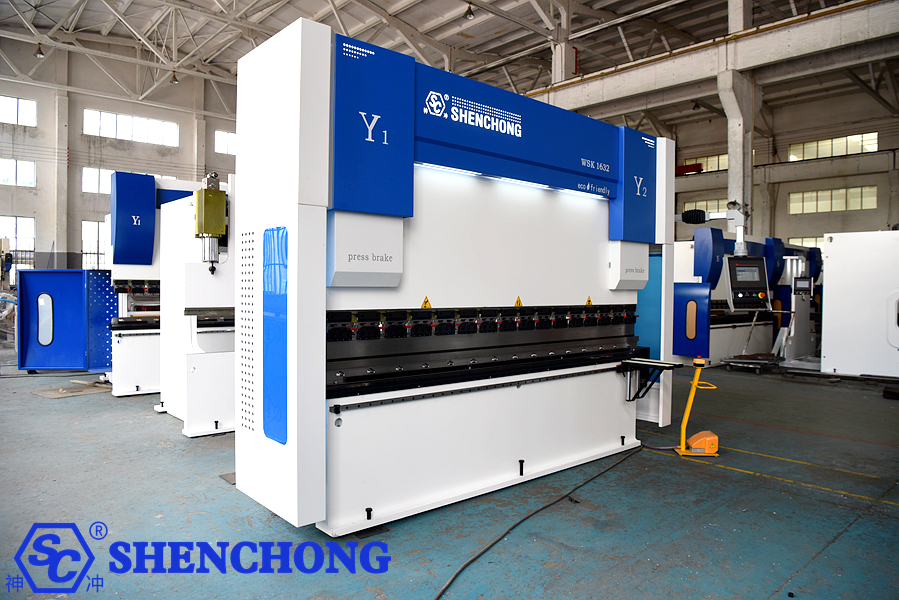
A Hydraulic Brake Press Machine is a high-precision processing equipment used for cold bending and forming of metal sheets. It uses a CNC system to control the slide stroke and back gauge position, enabling multi-angle, multi-process bending of the sheet metal.
Below is a systematic user and maintenance guide for CNC hydraulic brake press machines, covering everything from pre-start checks, operating procedures, and parameter settings to daily maintenance, fault prevention, and lifespan management. It is suitable for production, process, and equipment management personnel.
1. Basic Equipment Understanding (Quickly Understand the Core System)
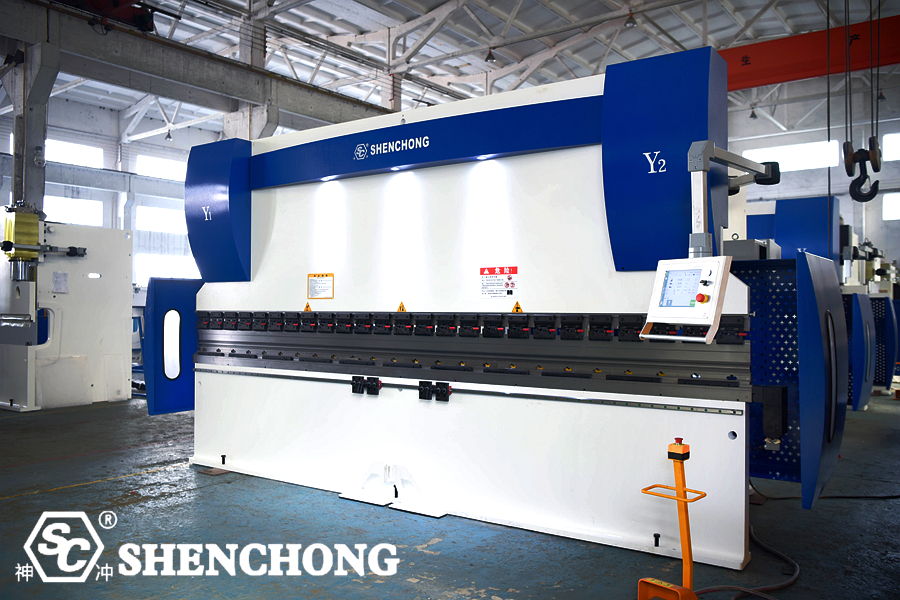
The hydraulic brake press machine mainly consists of the following systems:
1) Mechanical Structure System
- Frame (integral welding + tempering treatment)
- Upper slide (Ram)
- Worktable (with compensation device)
- Back gauge system (X/R/Z axes)
2) Hydraulic System
- Oil tank, oil pump, proportional valve/servo valve
- Hydraulic cylinder (left and right synchronous)
- Hydraulic pipelines and seals
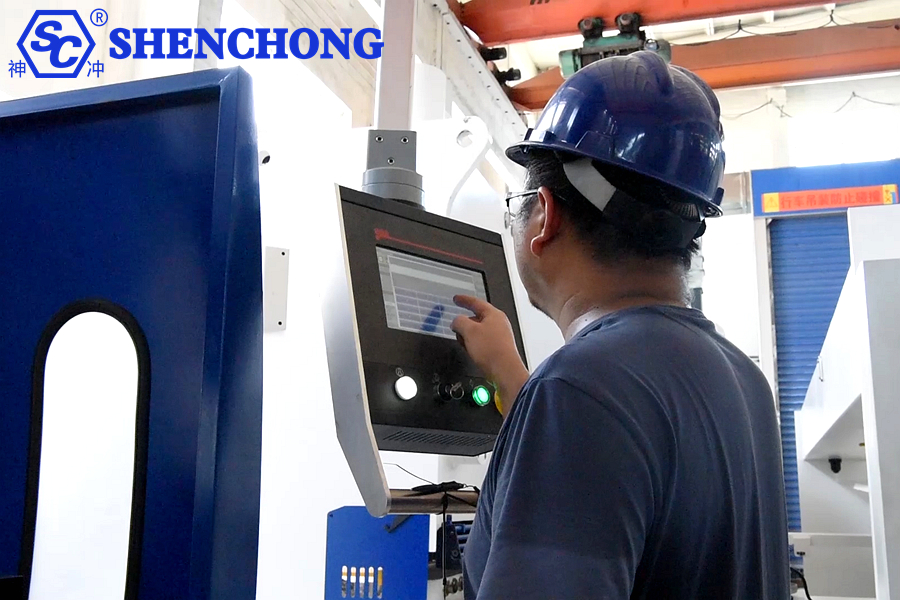
3) CNC System (Core)
Common Systems:
- EL15T / EL19T
- Delem (e.g., DA53T / DA66T)
- Cybelec (e.g., Cybtouch series)
Functions:
- Bending angle control
- Stroke control (Y1/Y2 axis synchronous)
- Back gauge positioning (X axis, etc.)
- Process programming
2. Standard Operating Procedures (Detailed Version)
1) Pre-Start Inspection (Mandatory)
Electrical Inspection
- Power supply voltage stable (within ±10%)
- Emergency stop button reset
- No abnormal alarms from control cabinet
Hydraulic System Inspection
- Oil level: Above 2/3 of the gauge
- Oil temperature: Recommended 15℃~55℃
- Check for leaks
Mold Inspection
- Upper/lower mold securely installed
- Mold free of cracks and chipped corners
- V-groove selection correct (generally V=8~12×plate thickness)
Backgauge Inspection
- Guide rails well lubricated
- No foreign objects obstructing the flow
2) Start-up Procedure
- Turn on main power
- Start CNC system
- Start oil pump motor
- Return equipment to reference point (zero)
- Check if each axis is running normally
Note: Formal machining is strictly prohibited if the axis has not returned to zero.
3) Programming and Parameter Setting Of Hydraulic Brake Press Machine
Common Parameters:
Bending Angle Control
- Set target angle (e.g., 90°)
- System automatically calculates Y-axis depth
Back gauge (X-axis)
- Controls bending dimension accuracy
- Accuracy up to ±1mm
Slider speed parameters
- Fast down
- Bending speed
- Return speed
Holding time
- Affects angle stability (0.5~2 seconds)
4) Trial bending and first piece confirmation (critical step)
Flow:
- Idle stroke check
- Single bending test
- Measure with angle gauge
- Fine-tuning parameters (angle compensation)
Common adjustments:
Angle too large → Reduce indentation depth
Angle too small → Increase indentation depth
5) Formal bending operation
Key points of operation:
Sheet positioning
Closely against back gauge
Prevent skewing
Bending sequence
Inside first, then outside
Avoid interference
Multiple bends
Pay attention to flange space
Prevent collision with mold
Safe operation
Keep hands away from danger zone
Use foot switch for control
3. Key Process Controls (Core Factors Affecting Accuracy)
1) Bending Compensation (Very Important)
Mechanical Compensation / Hydraulic Compensation
Function:
- Counteracts worktable deflection
- Ensuring consistent angles along the entire bending line
Recommendation:
- Compensation must be enabled for thick plates
- Correction must be applied to long workpieces
2) Die Selection Principles
Plate thickness | Recommended V-groove |
1mm | 8mm |
2mm | 16mm |
3mm | 24mm |
6mm | 48mm |
Principle:
V-groove = 8~12 × Plate thickness
3) Springback Control
Influencing Factors:
- Material (Stainless Steel > Carbon Steel)
- Plate Thickness
- Bending Angle
Solutions:
- Increase the pressing amount
- Use CNC angle compensation
4. Routine Maintenance (by Cycle)
1) Daily Maintenance
- Clean the hydraulic brake press machine tool (metal filings, oil stains)
- Check oil level
- Check air/oil temperature
- Check mold condition
- Simple lubrication of guide rails
2) Weekly Maintenance
- Clean the electrical control cabinet (dustproof)
- Check hydraulic lines
- Check back gauge accuracy
- Tighten bolts
3) Monthly Maintenance
- Replace or clean the filter
- Check hydraulic oil contamination
- Correct the back gauge
- Check synchronization accuracy (Y1/Y2)
4) Semi-annual/Annual Maintenance
- Replace hydraulic oil (recommended 3000~5000 hours)
- Check cylinder seals
- Calibrate overall machine accuracy
- Check electrical system aging
5. Key Points for Hydraulic System Maintenance (Core)
1) Hydraulic Oil Management
Recommended:
- Anti-wear hydraulic oil (46# or 68#)
Control Indicators:
- Cleanliness: NAS level 8 or below
- Temperature: 30~50℃ (optimal)
2) Common Problems
– Overheating
Causes:
- Continuous high-load operation
- Poor heat dissipation
Solutions:
- Add a cooler
- Stop the CNC press brake machine to cool it down
– Unstable Pressure
Causes:
- Proportional valve malfunction
- Oil contamination
– Synchronization Error (Y1/Y2)
Causes:
- Graphite ruler contamination
- Cylinder asynchrony
6. Hydraulic Brake Press Machine Bending Die Maintenance And Management
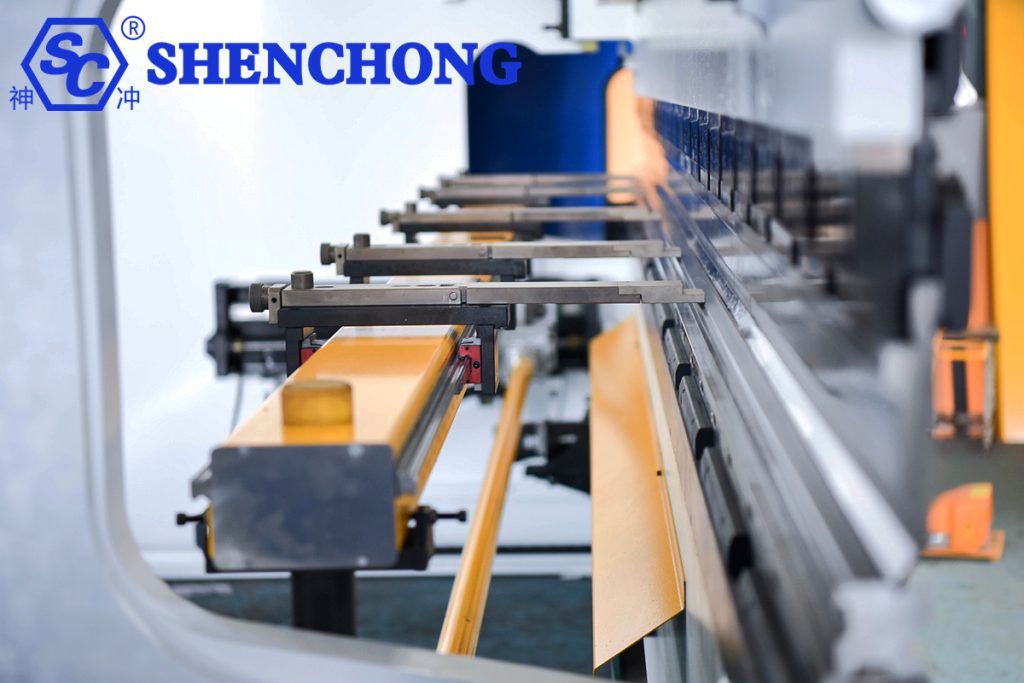
Die is one of the direct determinants of bending quality.
1) Pre-use Inspection
- Check for chipped cutting edges
- Check for indentations on the working surface
- Check for flatness of the mounting surface
- Check for misalignment at the joints of segmented dies
- Check for correct die numbering
2) Precautions During Use
- Do not overload the die
- Do not use an incorrect die to press a large plate thickness
- Do not subject the die to impact loading
- Prevent foreign objects from getting stuck in the die contact surface
3) Post-use Maintenance
- Clean oil and iron filings promptly
- Apply rust-preventive oil
- Store dies by category
- Manage dies of different sizes separately
- Register easily worn dies separately
4) Impact of Die Wear
Common manifestations of die wear:
- Unstable bending angle
- Heavier surface indentations
- Larger springback
- Poor dimensional repeatability
When the die is in poor condition, simply adjusting parameters is unlikely to solve the problem.
7. Key Maintenance Points for the Backgauge System
The backgauge determines dimensional accuracy, especially crucial for batch production.
1) Common Problems
- Inaccurate repositioning
- Left and right asynchrony
- Movement jamming
- Large backlash
- Dimensional drift
2) Key Maintenance Points
- Clean guide rails and lead screw
- Check timing belt or coupling
- Check servo motor status
- Check backlash
- Check mechanical limit switches
- Keep backgauge fingers clean and free from damage
3) Practical Usage Recommendations
- Use multiple supports for long materials
- Prevent top misalignment for soft materials and thin plates
- Perform first-piece verification after each shift change or material change
8. CNC System and Electrical System Maintenance
1) CNC System
Regularly perform the following:
- Program backup
- Parameter backup
- Process database organization
- User access control
- Alarm log review
Recommended to retain:
- Common plate thickness parameters
- Common material parameters
- Common mold parameters
- Common fault handling records
This will greatly improve efficiency during on-site personnel changes, material changes, and shift changes.
2) Electrical Cabinet Maintenance
Electrical cabinet should be protected against:
- Dust
- Oil mist
- High temperature
- Loose wiring
- Terminal oxidation
Measures include:
- Regularly cleaning fans and filters
- Checking heat dissipation
- Checking terminal tightness
- Checking servo driver alarms
- Checking contactor contact overheating
3) Sensors and Limit Switches
- Photoelectric, magnetic, and proximity switches should be kept clean and reliably fixed.
- If zeroing failure, positioning abnormalities, or operation interruptions occur, first check these components.
9. Key Points for Handling Common Materials
1) Low Carbon Steel
- Most common, relatively stable in bending.
- Suitable for establishing basic parameter templates.
2) Stainless Steel
Characteristics: High springback, high tonnage requirements, high surface finish requirements.
Suggestions:
- Appropriately enlarge the V-shaped opening.
- Keep the die surface clean.
- Avoid cutting edge damage.
- Increase the number of trial bends.
3) Aluminum Plate
Characteristics: Soft, easily damaged, sensitive surface.
Suggestions:
- Smooth die surface.
- Pay attention to protective film.
- Avoid excessively small V-shaped opening.
- Control indentation and tearing.
4) Galvanized Steel
- Prone to surface scratches and coating damage.
- Pay special attention to die cleaning and positioning/sliding.
5) High-Strength Steel
- High bending difficulty, high springback, high tonnage requirements.
- It is essential to verify the equipment tonnage, die strength, and safety margin.
10. Practical Methods for Bending Accuracy Control
1) Angle Control
Angle errors generally originate from:
- Inaccurate springback estimation
- Die wear
- Material batch variations
- Oil temperature variations
- Insufficient equipment rigidity
- Inappropriate deflection compensation
Solutions:
- Trial bending first
- Establish a material database
- Stabilize oil temperature
- Regularly calibrate and compensate the die
2) Dimension Control
Dimensional errors generally originate from:
- Back gauge deviation
- Unstable sheet metal positioning
- Sheet metal warping
- Inconsistent manual feeding
- Incorrect program settings
Solutions:
- Verify the back gauge
- Use positioning blocks
- Standardize operating procedures
- First piece confirmation
3) Angle Consistency for Long Workpieces
Common causes of differences between the middle and end angles of long workpieces:
- Insufficient compensation
- Frame deformation under stress
- Uneven die installation
- Sheet metal length too long
- Insufficient workpiece support
11. Key Strategies for Extending Equipment Life
Correct Operation > Any Maintenance:
- Avoid Overloading and Bending
- Avoid Uneven Loading
Mold Protection:
- Avoid Mold Collision
- Avoid Misalignment
Hydraulic System Cleaning:
- Contamination is the Biggest Killer
Regular Calibration:
- Maintain Stable Precision
12. Quick Reference Table for Common Faults (Practical)
Faults | Possible causes | Solutions |
Inconsistent angles | Insufficient compensation | Adjust compensation |
Inaccurate dimensions | Material obstruction error | Calibrate X-axis |
Abnormal noise | Insufficient lubrication | Add oil |
Oil leak | Seal aging | Replace seal |
System alarm | Parameter error | Reset program |
13. Maintenance During Long-Term Shutdowns
If the equipment will be shut down for an extended period, the following is recommended:
- Thoroughly clean the equipment.
- Remove the molds and apply anti-rust oil.
- Apply anti-rust treatment to the surfaces of guide rails, lead screws, and sliders.
- Maintain the hydraulic system at the specified oil level.
- Disconnect the main power supply.
- Cover critical parts with dustproof covers. Perform regular no-load checks.
- Prevent the electrical cabinet from getting damp.
If the ambient humidity is high, pay special attention to rust prevention for the electrical cabinet and molds.
14. Easily Overlooked but Crucial Details
1) Machine Level
- An uneven machine directly affects left-right synchronization, force distribution, and bending angle.
- Many people only adjust parameters without checking the level; the problem actually lies in the fundamentals.
2) Ambient Temperature
- Significant temperature differences cause changes in hydraulic oil viscosity, leading to inconsistent bending angles between morning and evening.
- Especially during initial startup in winter and prolonged operation in summer, parameters cannot be directly copied.
3) First Article Inspection
- A first article inspection is essential for any new batch, new material, new mold, or new operator.
4) Operator Habits
- Inconsistent material feeding posture
- Over-reliance on experience and failure to record parameters
- Lack of cleaning and maintenance
- Failure to report abnormalities
These are all important reasons why equipment accuracy gradually deteriorates.
15. Conclusion
The essence of a CNC hydraulic brake press machine:
= A comprehensive result of “hydraulic stability + CNC precision + die matching + standardized operation”
For a CNC hydraulic press brake bending machine to maintain long-term stability, four key things are crucial: standardized operation, correct die selection, a healthy hydraulic system, and proper regular maintenance.

 English
  Spanish
  Portuguese
  Russian
  Arabic
  French
  Italian
  German
  Polish
  Thai
Thai  Vietnamese
  Lithuanian
  Czech
Czech  Korean
  Japanese
  Chinese