
Table of Contents
Judging the 4-roll plate bending machine quality cannot be based solely on brand, price, or specifications. A comprehensive evaluation should be conducted from multiple dimensions, including structural design, material selection, manufacturing process, hydraulic system, electrical control system, processing accuracy, stability, service life, and after-sales service.
Four-roll plate rolling machines are crucial equipment in the field of metal sheet forming, widely used in industries such as pressure vessels, wind turbine towers, petrochemical storage tanks, shipbuilding, steel structure engineering, machinery manufacturing, and pipeline manufacturing. Since the price of these machines ranges from hundreds of thousands to millions of yuan, accurately judging their quality is one of the most critical issues in the procurement process.
1. What To Consider When Judging 4-Roll Plate Bending Machine Quality ?
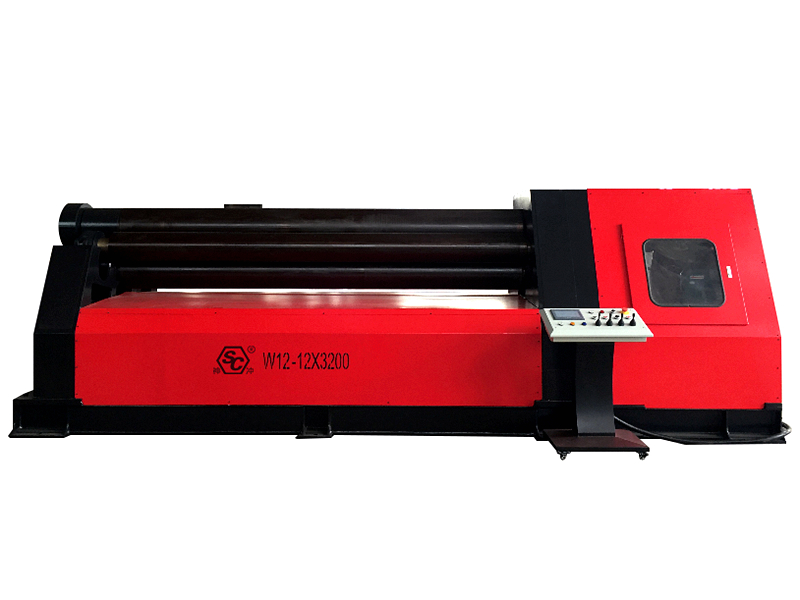
Many people judge the 4-roll plate bending machine quality by only looking at whether it looks new, whether the paint is shiny, or whether the brand is well-known. These are insufficient.
What you really need to look at are the following core indicators:
1) Is the rolling precision stable?
Does rolling the same plate today result in the same outcome as tomorrow? Are there significant differences in the rolling effect between different operators?
2) Is the pre-bending capacity strong?
One of the biggest advantages of a four-roll plate rolling machine is its pre-bending capability. If the pre-bending radius is small and the edges are not properly clamped, the subsequent workpiece is prone to having straight edges, affecting the quality of the finished product.
3) Is the formed roundness good?
Is the rolled cylinder truly round? Are there any ovals, local bulges, waves, or twists?
4) Is the equipment rigid enough?
Does the frame, rollers, bearing seats, and hydraulic system deform, vibrate, or deviate under heavy load?
5) Is the operation smooth?
Are the lifting, clamping, flanging, and rolling actions smooth? Are there any jamming, abnormal noises, or obvious impacts?
6) Is the automation and controllability reliable?
Is the control system clear? Are the parameters accurate? Is repeatability stable? Are the fault alarms reasonable?
7) Service life and maintenance costs
It’s not enough if it works well the day it’s purchased. it’s about whether it remains stable after one or three years of continuous production.
2. Judging From The Structure
The 4-roll plate bending machine quality is primarily determined by its mechanical body. Many problems cannot be solved through adjustments but are inherently determined by its structure.
1) Is the frame heavy and is the welding reasonable?
High-quality rolling machine frames typically have the following characteristics:
- Thick steel plates throughout, uniform and continuous welds, without obvious undercut, porosity, or slag inclusions.
- Reinforcing ribs are present in key load-bearing areas; it’s not simply “thick on the outside, hollow on the inside.”
- Good symmetry between the left and right sides of the frame, making it less prone to deformation under load.
- Sufficient aging treatment or vibration aging treatment is performed after welding to reduce internal stress.
If the frame design is poor, the following problems are likely to occur when rolling thick plates:
- Poor left-right synchronization
- Deformation of the opening under pressure
- One side of the workpiece is tight while the other is loose
- Decreasing precision over long-term use
2) Material and surface treatment of the four rollers
The core of a four-roll mill is the rollers.
Quality judgment should focus on:
- Excellent roller material: High-strength alloy steel should generally be used, and it should undergo proper heat treatment.
- Sufficient surface hardness: High surface hardness ensures good wear resistance and prevents damage from pressure and wear.
- Finely ground surface: Low roller surface roughness prevents the plate from slipping or scratching.
- Roller straightness and circular runout: If the roller itself is not straight, even the best subsequent control will be ineffective.
Simply put, the quality of the roller determines the “basic lifespan” and “forming stability” of the equipment. If indentations, scratches, chipping, or uneven wear quickly appear on the roller surface, it indicates a problem with the material, heat treatment, or machining accuracy.
3) Reliability of roller shaft support and bearings
When the plate rolling machine is working, the roller bearings are not subjected to ordinary rotational loads, but rather to huge radial pressure and alternating loads.
Therefore, it is necessary to check:
- Whether the bearing model is appropriate and whether it is a heavy-duty type
- Whether the bearing housing rigidity is sufficient
- Whether the sealing and dustproof design is complete
- Whether lubrication is convenient and whether there are centralized lubrication points
- Whether there is overheating, abnormal noise, or jamming under high loads
If the bearing design is poor, the equipment often experiences the following when rolling thick plates:
- High noise
- Increased temperature
- Axial movement
- Decreased accuracy after long-term use
3. Examine the core movements: Are the clamping, upper roller lifting, and lower roller movement precise?
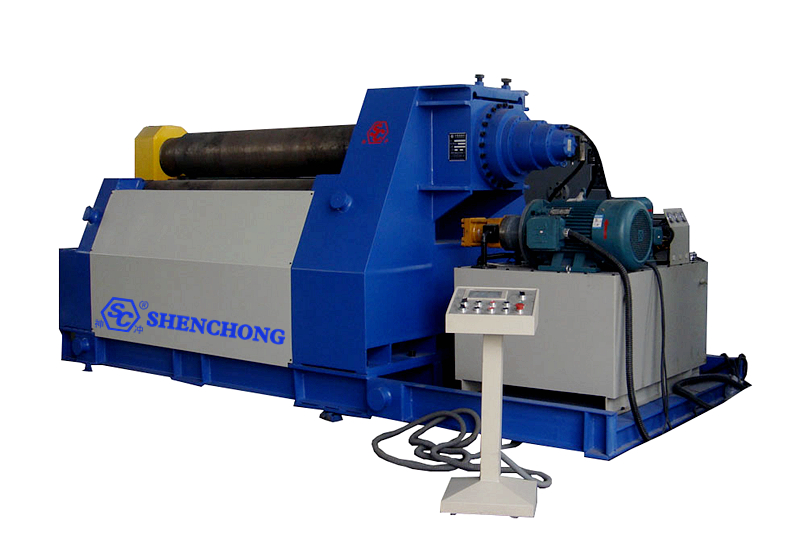
The quality of a four-roll plate bending machine hinges on its motion system, as it directly affects the pre-bending, rolling, and repeatability accuracy of the sheet metal.
1) Is the upper roller clamping stable?
A high-quality upper roller clamping action should possess the following characteristics:
- Sufficient clamping force
- Synchronous left and right, without bias
- No springback or slippage after clamping
- Smooth movement during height changes
If the clamping is unstable, the sheet metal will slip during the rolling process, causing:
- Uneven roundness
- Inconsistent pre-bent edges
- Workpiece end warping
- Excessive straight edge residue
2) Is the lower roller synchronized and symmetrical?
The lower roller of a four-roll mill typically provides support and drive, requiring:
- High left-right synchronization accuracy
- Accurate displacement control
- No drifting under load
- No asynchrony during long-term operation
If synchronization is poor, the most obvious problem is:
The workpiece bends on one side first and the other later, resulting in a rolled cylinder that is prone to skewing and twisting, making correction difficult.
3) Is the side roller movement delicate?
The side rollers are crucial components for pre-bending and forming on a four-roll mill.
A good equipment’s side rollers should possess the following characteristics:
- Wide adjustment range
- Precise positioning
- Sensitive response
- No wobbling under force
If the side roller control is rough, it will be difficult to press the edges into place during pre-bending, especially noticeable when rolling thin, short, or narrow plates.
4. The most important capability: Pre-bending effect
A major advantage of four-roll plate rolling machines compared to three-roll machines is their strong pre-bending capability. Therefore, when judging quality, it is essential to focus on whether it can press the beginning and end edges neatly.
1) Check for straight edge residue
The most direct indicator of a good pre-bending effect is the length of the straight edge.
High-quality equipment produces cylinders with shorter, even very small, straight edges at both ends; poor-quality machines have very obvious straight edges, affecting subsequent welding, assembly, and appearance.
2) Check for natural edge transition
Good pre-bending is not “hard bending,” but rather a uniform edge transition with a natural curve, without abrupt changes or creases.
If localized creases, dents, or waviness appear on the edge after pre-bending, it indicates an unstable rolling process or improper pressure control.
3) Observe the adaptability to different plate thicknesses
High-quality equipment does not only perform well on a single plate thickness but also maintains good pre-bending quality within a certain range.
Tests can be conducted on:
- Whether thin plates wrinkle easily
- Whether medium-thick plates can be pressed into place
- Whether the edges of thick plates still have sufficient forming capacity
5. Observe the rolling results
Finished product quality best reflects the quality of the finished product. For a truly good plate rolling machine, the final product must be inspected.
It is recommended to inspect from the following aspects:
1) Roundness
Roundness is one of the most crucial performance indicators for plate rolling machines.
Judgment methods include:
- Whether the cross-section of the cylinder is close to a standard circle
- Whether there is obvious ellipse
- Whether the radius of each point on the same cross-section is consistent
- Whether there is taper or waviness along the length direction.
Poor roundness is often not due to operator skill but rather insufficient synchronization, rigidity, or control precision of the equipment.
2) Straightness
For long cylindrical sheets, the straightness of the generatrix is crucial.
If the rolled sheet is “bulging in the middle and flat at both ends” or “twisted in the middle and off-center on both sides,” it indicates a problem with the equipment in terms of long material control, support rigidity, or pressure distribution.
3) End Alignment Accuracy
A good four-roll mill rolls the sheet with easier end alignment and less misalignment.
Large alignment deviations indicate:
- Poor roller parallelism
- Inaccurate lower roller synchronization
- Significant deformation of the frame under stress
- Slippage in the sheet material transmission
4) Surface Quality
A good plate rolling mill should not have obvious indentations, scratches, pressure points, or roughening on the sheet surface.
If the workpiece surface frequently has scratches, pay special attention to checking:
- Roller surface smoothness
- Surface hardness
- Whether the bearing vibrates
- Whether there is iron filings or welding slag contamination
- Whether there are burrs on the guide parts
6. Examine the Control System
It’s not enough for it to just “move,” it must “control accurately and remember its inputs.”
Modern four-roll plate bending machines are typically equipped with CNC or semi-automatic control systems. A poor-quality control system will render even the largest machine unusable.
1) Is the parameter input intuitive?
A good control interface should be clear, and commonly used parameters should be easy to input, such as:
- Plate thickness
- Plate width
- Material strength
- Target diameter
- Upper roller, lower roller, and side roller positions
If the interface is complex and the parameter logic is confusing, the operator will have to rely on experience to “guess,” resulting in poor repeatability of the equipment.
2) Is the position feedback accurate?
Check for reliable displacement feedback devices, such as:
- Linear ruler
- Encoder
- Displacement sensor
Without precise feedback, the machine can only “approximately reach the correct position,” making it difficult to guarantee consistency in each roll.
3) Program stability
A high-quality machine should have a stable program operation, without frequent crashes, false alarms, or parameter loss.
Especially during long-term continuous production, the control system should not malfunction due to temperature, vibration, or voltage fluctuations.
4) Is the fault diagnosis comprehensive?
High-quality equipment will break down alarm information into smaller parts, such as:
- Abnormal pressure
- Abnormal synchronization
- Position out of tolerance
- Oil temperature too high
- Liquid level too low
This allows for quick on-site problem location.
If the equipment only displays “Fault” when a problem occurs, but doesn’t specify the cause, it indicates insufficient system maturity.
7. Examine the hydraulic system
Is the “power source” of the four-roll bending machine stable?
Four-roll plate bending machines mostly rely on hydraulic systems. The quality of the hydraulic system directly affects power, smoothness of operation, and lifespan.
1) Is the design of the oil pump, valve assembly, and oil circuit reasonable?
When inspecting the hydraulic system, pay attention to:
- Whether the oil pump has low noise and stable pressure
- Whether the valve assembly is from a mature brand or a mature solution
- Whether the oil circuit is clean and the piping is laid out correctly
- Whether there is a risk of leakage at the joints
If the hydraulic system design is poor, common problems are:
- Large impact during operation
- Fluctuating pressure
- Unstable pressure holding
- Rapid heating of hydraulic oil
2) Pressure holding capacity
During the rolling process, both clamping and forming stages rely on pressure holding.
Poor pressure holding can lead to:
- Inability to clamp the plate
- Slippage during rolling
- Fluctuations in forming radius
- Severe workpiece springback
3) Temperature rise control
A good piece of equipment will not overheat immediately upon operation. If the oil temperature rises rapidly, it indicates low efficiency of the hydraulic system.
Prolonged operation will lead to:
- Accelerated aging of seals
- Deterioration of oil performance
- Increased system malfunctions
- Shortened service life
4) Sealing and Leakage Prevention
Cylinders, pipelines, valve blocks, and joints should:
- No oil leakage
- No oil seepage
- No air suction
- No environmental pollution
Hydraulic oil leakage is not a minor issue. It often indicates potential problems with machining accuracy, assembly quality, seal selection, and long-term reliability.
8. Electrical And Safety Inspection
Good equipment must be “stable + safe + easy to maintain”
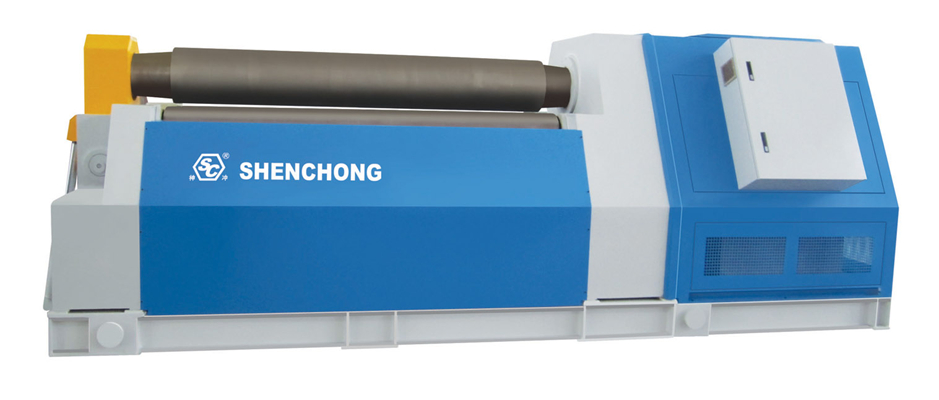
1) Is the electrical control cabinet layout standardized?
A good electrical cabinet should:
- Clear wiring
- Complete terminal labeling
- Neat wiring
- Separate strong and weak current circuits
- Reliable grounding
If the electrical cabinet is messy, the wiring harness is cluttered, and the labeling is insufficient, later maintenance will be very difficult.
2) Are the safety protections complete?
Pay attention to:
- Is the emergency stop effective?
- Is the overload protection sensitive?
- Is the limit protection reliable?
- Is the access control protection complete?
- Is the misoperation protection reasonable?
Four-roll machines are heavy equipment; if safety protection is inadequate, the risk is very high.
3) Quality of electrical components
The quality of components such as contactors, relays, circuit breakers, PLCs, and servo drives determines the long-term stability of the equipment.
Poor-quality electrical systems often exhibit:
- Contact erosion
- Control failure
- Frequent tripping
- Program malfunction
9. Inspection of Manufacturing Process
The same drawings, different processes lead to completely different results. Many plate rolling machines look similar, but their actual precision varies greatly, mainly due to differences in processing technology.
1) Are key components precision-machined?
Focus on:
- Roller grinding precision
- Shaft hole boring precision
- Guide rail machining precision
- End face perpendicularity and parallelism
If key parts are poorly machined, the assembled equipment will be difficult to achieve true precision.
2) Is the assembly process rigorous?
High-quality equipment pays special attention to:
- Frame alignment
- Roller parallelism adjustment
- Left and right synchronization debugging
- No-load/load testing
- Long-term trial run
Machines with poor assembly processes, even with good parts, may still experience assembly problems.
3) Is actual material testing performed before shipment?
Ideally, it’s not just a no-load test, but a test roll using real material.
Observe the following:
- Can thick plates be continuously formed?
- Are narrow plates prone to deviation?
- Can different diameters be stably produced?
- Does continuous rolling exhibit drift?
10. Look At Case Studies, Not Only Brands
Actual case studies reveal the equipment’s real production capacity. The most convincing way to judge the quality of a plate rolling machine is not through advertising claims, but through actual case studies.
1) Check for similar industry usage cases
For example:
- Pressure vessel industry
- Wind turbine tower industry
- Steel structure industry
- Pipeline manufacturing industry
- Boiler and storage tank industry
Long-term operation in these industries indicates greater reliability in the equipment’s stability.
2) Check for real user feedback on the same specifications and plate thickness
Be sure to ask:
- Can the same plate thickness be rolled?
- Can the same length be rolled stably?
- How many shifts of continuous production?
- What is the failure rate?
- How often are vulnerable parts replaced?
This is more valuable than verbal promises from salespeople.
11. Acceptance and Testing
During on-site acceptance, the following tests are recommended.
To practically assess the 4-roll plate bending machine quality, it is recommended to perform the following tests on-site:
1) No-load Test
Observe:
- Whether each movement is smooth
- Whether there are abnormal noises
- Whether the operation is stable
- Whether the left and right sides are synchronized
2) Light-load Test
Test with thin plates or conventional materials:
- Whether it can clamp properly
- Whether there is slippage
- Whether the control is accurate
- Whether the forming is stable
3) Heavy-load Test
Test with materials close to the machine’s rated capacity:
- Whether the frame vibrates
- Whether the hydraulic system is strained
- Whether synchronization drifts
- Whether the forming accuracy decreases
4) Repeatability Test
Roll multiple pieces continuously with the same parameters and compare the results of each piece.
If there is a significant difference between the previous and subsequent rolls, it indicates insufficient equipment stability.
5) Long-Term Operation Test
After continuous operation for a period of time, check:
- Oil temperature
- Pressure
- Bearing temperature rise
- Operating noise
- Precision drift
12. What are the common signs of a "poor quality" 4-roll plate bending machine?
This part is very important. Many problems are not visible on the surface, but will be exposed during use.
1) Large straight edges after rolling
Indicates weak pre-bending capacity and poor edge control.
2) Poor roundness and obvious eccentricity
Indicates insufficient synchronization, rigidity, and precision.
3) Slippage during rolling
Indicates insufficient clamping force or poor roller surface condition.
4) Inconsistency between left and right sides
Indicates problems with mechanical synchronization and control systems.
5) Loud operating noise and obvious vibration
Indicates problems with bearings, installation, and fit precision.
6) Rapid heating of the hydraulic system
Indicates low efficiency, improper sealing, or design.
7) Significant decrease in precision after a period of use
Indicates insufficient frame rigidity, rapid wear of key components, and unstable assembly precision.
13. Key Points Easily Overlooked During Procurement
1) Don't Just Look at the Maximum Rollable Thickness
The stated rollable thickness of the equipment does not represent its long-term stable rollable thickness.
Consider whether it can consistently achieve this capacity during continuous production, not just “occasionally.”
2) Don't Just Ask About the Price
A low price may mean:
- Poor roller material
- Simplified hydraulic system
- Outdated control system
- Rough processing technology
- Weak after-sales service
3) Don't Just Look at Tonnage or Power
These are merely input conditions, not the quality of the finished product itself.
What truly matters is the output effect: how well it rolls, how stable it is, and how durable it is.
4) Don't Ignore After-Sales Service and Spare Parts
A plate rolling machine is not a disposable piece of equipment.
The ability to repair oil seals, bearings, valve assemblies, sensors, and rollers in the long run will all affect long-term quality evaluation.
14. A Directly Usable "Quality Judgment Standard Framework"
You can divide the judgment into seven items, each scored:
- Structural Rigidity: Are the frame, rollers, and bearing supports sturdy?
- Motion Precision: Are lifting, clamping, synchronization, and positioning accurate?
- Pre-bending Capacity: Is the edge bending adequate? Are the straight edges small?
- Finished Product Quality: Roundness, straightness, end alignment, surface quality
- Control System: Is operation convenient? Is the feedback accurate? Are the alarms clear?
- Hydraulic System: Is the pressure stable? Is the pressure holding reliable? Is the temperature rise controllable? Are there any leaks?
- Long-Term Stability: Does the performance decline after continuous operation? Is the failure rate low?
If a four-roll plate bending machine performs excellently in most of the above seven items, it can generally be judged as a high-quality machine. Conversely, if two or three of these items are significantly weak, it indicates that the machine is not suitable for long-term high-intensity production.
15. Summary
The core of judging the 4our-roll plate bending machine quality is not “whether it looks like a good machine,” but rather whether it possesses these four capabilities: accurate rolling, stable pressing, long service life, and low maintenance.
- Accurate rolling: Good roundness, straightness, and pre-bending effect of the finished product.
- Stable pressing: Stable clamping, forming, synchronization, and pressure holding.
- Long service life: Precision does not easily decline after long-term use.
- Low maintenance: Reasonable structure, few failures, simple maintenance, and readily available spare parts.
Purchasing personnel’s final judgment formula:
- First, look at the rollers
- Second, look at the frame
- Third, look at the hydraulics
- Fourth, look at the precision
- Fifth, look at the pre-bending
- Sixth, look at the system
- Seventh, look at the test rolls
- Eighth, look at the service
A truly high-quality four-roll plate bending machine should not only be able to roll round shapes, but more importantly, it should be able to maintain stable precision, low failure rate, and long service life under long-term heavy-load conditions. From the perspective of the total life cycle cost of equipment, although a high-quality four-roll plate bending machine has a purchase price that is 10% to 30% higher, it often brings a higher return on investment in terms of precision maintenance, maintenance costs, production efficiency, and service life.
For enterprises engaged in pressure vessel manufacturing, wind turbine tower manufacturing, shipbuilding, and large steel structure manufacturing, the key focus should be on the quality of the rollers, the rigidity of the frame, the hydraulic system, and the rolling precision. These four indicators basically determine the overall 4-roll plate bending machine quality.
 English
  Spanish
  Portuguese
  Russian
  Arabic
  French
  Italian
  German
  Polish
  Thai
Thai  Vietnamese
  Lithuanian
  Czech
Czech  Japanese
  Chinese