

Table of Contents
Tube fiber laser cutting technology has become a crucial process in the metal processing industry, widely used in steel structures, fitness equipment, construction machinery, automotive parts, furniture manufacturing, agricultural machinery, elevators, medical devices, oil pipelines, and architectural decoration.
Compared to traditional sawing, plasma cutting, and flame cutting, pipe laser cutting offers advantages such as high precision, high speed, flexible processing, high automation, and high material utilization.
However, to truly maximize the performance of a pipe laser cutting machine, simply knowing how to operate the equipment is far from sufficient. Mastering techniques in equipment debugging, parameter setting, clamping methods, material properties, cutting sequence, quality control, and maintenance is also essential.
The following section will comprehensively introduce various practical techniques for pipe laser cutting from a real-world production perspective.
1. Basic Principles of Tube Fiber Laser Cutting
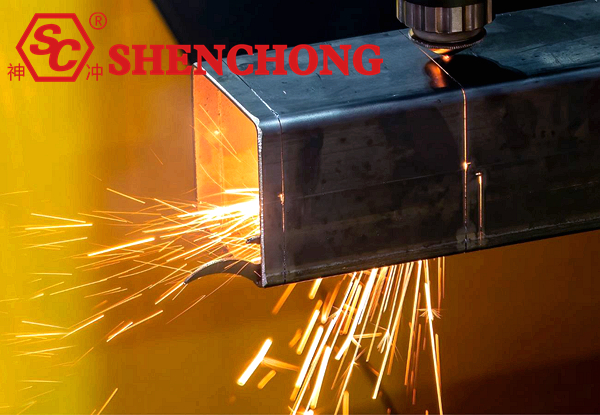
A fiber laser generates a high-energy laser beam, which is focused into an extremely small spot by a focusing lens.
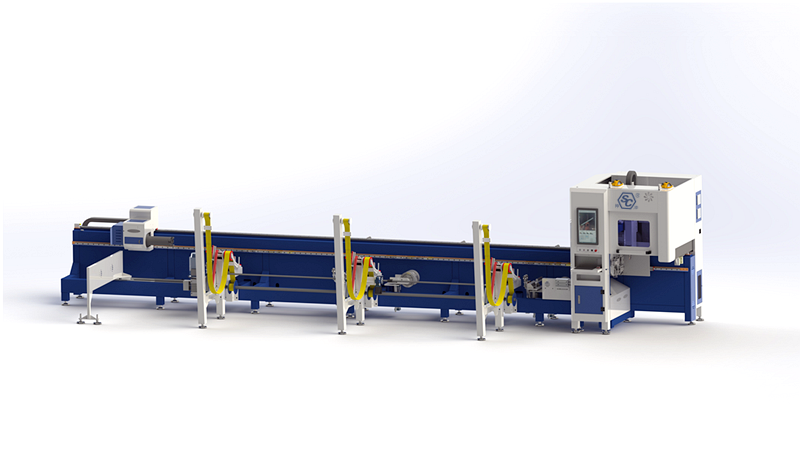
The power density at the focal point can reach:
10⁶~10⁸ W/cm²
The material undergoes the following instantaneous processes:
- Melting
- Vaporization
- Oxidation
- Melting and blowing
Subsequently, auxiliary gas blows the molten slag away from the cut, thus forming a complete cut.
The entire processing is coordinated and completed by:
- X-axis
- Y-axis
- Z-axis
- Chuck rotation axis
- Tublefeeding axis
2. Cutting Techniques for Different Materials
1) Carbon Steel Pipe
Features:
- Easy to cut
- Stable molten pool
- Lowest cost
Techniques:
When using oxygen, advantages:
- Increased cutting speed
- Can cut thicker materials
Note:
Optimal oxygen purity: ≥99.95%
Otherwise:
- Slag buildup
- Increased burrs
- Blackened cut
Recommendation:
Use oxygen for medium to thick walls.
For thin walls: Air or nitrogen.
2) Stainless Steel Pipe
Features:
High reflectivity.
Techniques:
Recommendation: Use high-pressure nitrogen exclusively.
Advantages:
- No oxidation
- Bright cut
- Good weldability
Avoid:
Oxygen cutting.
Otherwise:
Easily produces: Black edges, oxide layer, difficult welding
3) Aluminum Pipe
Features:
High reflectivity.
Recommendation:
- Use a high-reflectivity protective laser
- Keep the lens clean
- Slightly negative focus
- Do not cut too fast.
Otherwise:
Easy: Melting edges, burrs
4) Copper tube
Characteristics: Strongest reflectivity.
Tips:
Must:
- Use an anti-reflective laser
- Reduced power appropriately
- Ensuring nozzle concentricity
Otherwise: Extremely easy to burn the lens.
5) Galvanized tube
Tips:
Avoid: Continuous long-term stay.
Otherwise:
- Zinc layer volatilization
- Easy to splatter
- Increased smoke and dust
- Lens contamination
Recommendation:
Increase the auxiliary gas pressure.
3. Pipe Clamping Techniques
Clamping determines pipe laser cutting accuracy.
Excellent clamping should meet the following requirements:
- No slippage
- No deformation
- High coaxiality
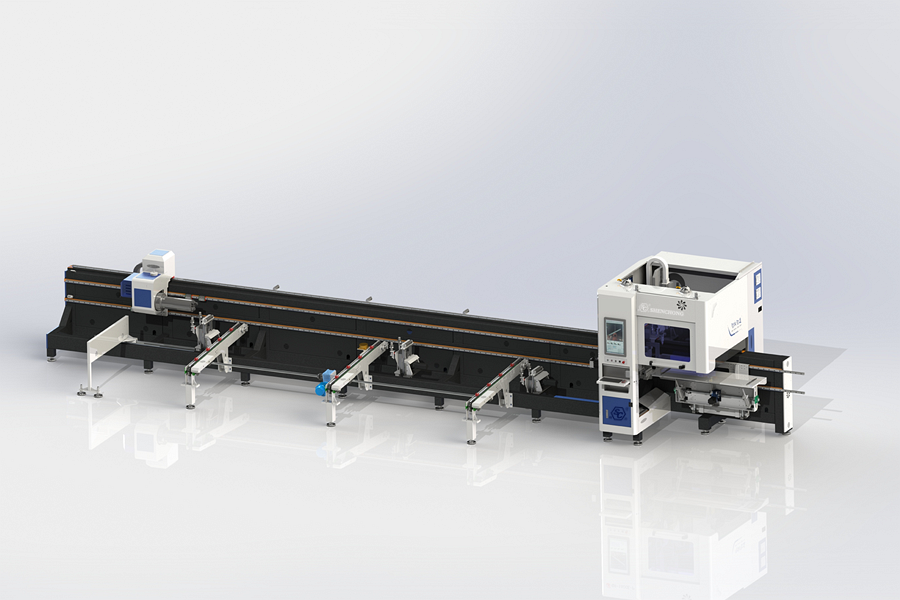
1) Long pipes
Exceeding: 6 meters
Recommendation:
- Add intermediate follow-up supports.
- Prevent pipe sagging.
Otherwise:
- Easily leads to changes in roundness
- Decrease in accuracy
2) Thin-walled pipes
Recommendation:
Reduce chuck clamping pressure.
Avoid: Deformation.
Especially for: 0.8~2mm wall thickness
3) Small diameter pipes
For example:
Φ10~30mm
Recommendation:
Use dedicated jaws.
Otherwise, eccentricity is likely.
4) Large diameter pipes
Recommendation:
Appropriately reduce rotation speed.
Avoid: Centrifugal vibration.
4. Focus Position Adjustment Techniques
The focus determines the cut quality.
Generally:
- Positive focus: The focus is located on the plate surface.
- Negative focus: The focus enters the material.
- Positive focus is suitable for: Thin-walled tubes.
- Negative focus is suitable for: Thick-walled tubes.
- Experience: The thicker the wall, the more negative the focus.
5. Nozzle Adjustment Techniques
The nozzle center must be:
- Strictly coaxial.
Otherwise, it is prone to:
- Off-center blowing
- Bursts
- Slag buildup
Recommendation: Check coaxiality daily.
Nozzle distance is typically: 0.8~1.2mm
Too close: Impact on the plate.
Too far: Airflow divergence.
6. Auxiliary gas selection techniques
Gases | Features | Applications |
Oxygen | Fast cutting | Thick-walled carbon steel |
Nitrogen | No oxidation | Stainless steel |
Air | Low cost | General machining |
Gases | Fast cutting | Aluminum, titanium, etc. |
7. Techniques to Improve Cutting Quality
1) Control Drilling Time
Do not drill for too long, otherwise it is easy to burn.
Recommendation: Progressive drilling.
2) Arrange the Cutting Path Reasonably
Principle: Inner hole first.
Outer contour later.
Prevent parts from falling off.
3) Avoid Continuous High Temperatures
For long-term continuous cutting, it is recommended to: Process in sections.
Reduce: Thermal deformation.
4) Keep Materials Clean
For oil stains and rust, it is recommended to:
Treat them first.
Otherwise, it is easy to:
Affect light absorption.
8. Round Tube Cutting Techniques
Round tubes are most prone to:
Vibration.
Recommendation: Appropriately reduce the rotation speed.
For large holes:
Recommendation: Multi-segment cutting.
Avoid: Deformation.
9. Square Tube Cutting Techniques
Characteristics: Heat is concentrated at the four corners.
Recommendation: Appropriately reduce speed at corners.
Improve: Corner accuracy.
10. Rectangular Tube Fiber Laser Cutting Techniques
Rectangular tubes: Long sides are prone to vibration.
Suggestion: Add support.
Avoid cutting offset.
11. Irregular Tube Cutting Techniques
Including:
- Elliptical tubes
- D-shaped tubes
- H-shaped tubes
- Channel steel
- I-beams
- Angle steel
Suggestion:
- Create a 3D model in advance.
- Use automatic edge finding.
- Ensure accurate positioning.
12. Methods to Reduce Burrs
Burrs are usually caused by the following factors:
- Insufficient power
- Excessive speed
- Focus error
- Insufficient air pressure
- Nozzle wear
- Nozzle misalignment
Improvement measures:
- Adjust power and speed matching.
- Correct focus position.
- Increase auxiliary gas pressure.
- Replace worn nozzles.
- Check nozzle coaxiality.
13. Methods to Improve Cutting Efficiency
Overall production efficiency can be improved through the following measures:
- Optimize layout to improve material utilization.
- Use automatic feeding and unloading systems.
- Batch process pipes of the same specifications to reduce changeover time.
- Establish a parameter library based on material thickness for one-click access.
- Regularly calibrate equipment to reduce rework and downtime.
- Adopt high-power lasers and intelligent cutting processes (such as flying cut, leapfrog cut, intelligent lead wire).
14. Common Tube Laser Cutting Problems And Solutions
Tube Fiber Laser Cutting Q&A Form:
Problems | Causes | Solutions |
Severe burrs | Insufficient power, excessive speed, low air pressure | Increase power, decrease speed, increase air pressure |
Incomplete cut | Focus error, insufficient power | Adjust focus, increase power |
Slag residue | Insufficient air pressure, nozzle wear | Increase air pressure, replace nozzle |
Yellowed cut surface | Insufficient nitrogen purity | Increase gas purity |
Excessively wide kerf | Focus misalignment, excessive nozzle distance | Adjust focus and nozzle height |
Diameter deformation | Excessive speed, excessive heat input | Decrease rotation speed, optimize cutting path |
Pipe vibration | Insufficient support, unstable clamping | Add follow-up support, adjust chuck clamping force |
15. Equipment Maintenance Techniques
Good maintenance can significantly extend equipment life and maintain pipe cutting quality.
Daily Maintenance:
Clean nozzles, protective lenses, and the working area.
Check auxiliary gas pressure and pipeline leaks.
Clean dust and slag from the chuck and guide rails.
Weekly Maintenance:
Check the cooling system, water level, and water quality.
Lubricate moving parts such as guide rails, lead screws, and bearings.
Check chuck jaw wear and positioning accuracy.
Monthly Maintenance:
Calibrate the laser path and cutting head coaxiality.
Check the working status of cables, gas pipes, and sensors.
Back up cutting process parameters and update and optimize the database.
16. Safe Operation Techniques
Operators must wear compliant laser safety goggles.
It is strictly forbidden to open the safety doors or enter hazardous areas while the equipment is running.
Maintain the fume extraction and dust removal system in normal operation to prevent fume accumulation.
Regularly check the cooling and electrical systems to prevent overheating and electrical leaks. When processing highly reflective materials such as copper and aluminum, ensure the laser has high-reflection protection.
When processing long tubes, ensure no personnel remain in the tailings area to prevent injury from high-speed rotation or material drop.
17. Summary
High-quality tube fiber laser cutting relies not only on high-performance equipment but also on the comprehensive optimization of multiple aspects, including equipment parameters, clamping methods, focus control, auxiliary gas, cutting path, material properties, and routine maintenance.
By establishing a standardized process parameter library, implementing standardized maintenance, and intelligent production management, the following goals can be effectively achieved:
- Improve cutting accuracy and kerf quality.
- Reduce burrs, slag, and thermal deformation.
- Increase processing efficiency and material utilization.
- Reduce gas consumption, power consumption, and maintenance costs.
- Extend the lifespan of the laser, cutting head, and transmission system.
- Meet the demands of modern tube processing for high-volume, high-precision, and flexible applications.
For modern tube fiber laser cutting production lines equipped with automatic feeding, automatic unloading, intelligent chucks and vision positioning systems, the combination of digital process management and MES system can further improve the level of production automation and achieve high-efficiency and high-stability intelligent manufacturing.




 English
  Spanish
  Portuguese
  Russian
  Arabic
  French
  Italian
  German
  Polish
  Thai
Thai  Vietnamese
  Lithuanian
  Czech
Czech  Japanese
  Chinese