
Table of Contents
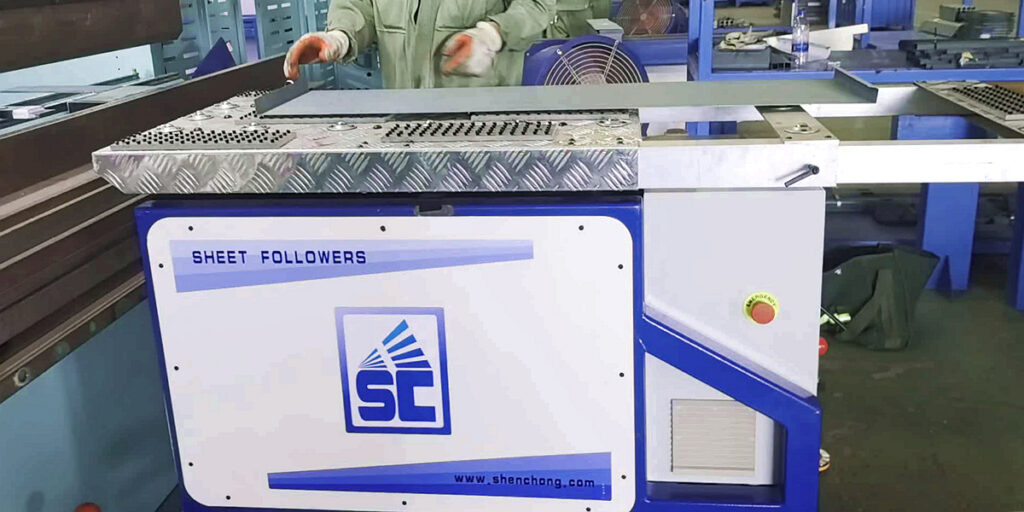
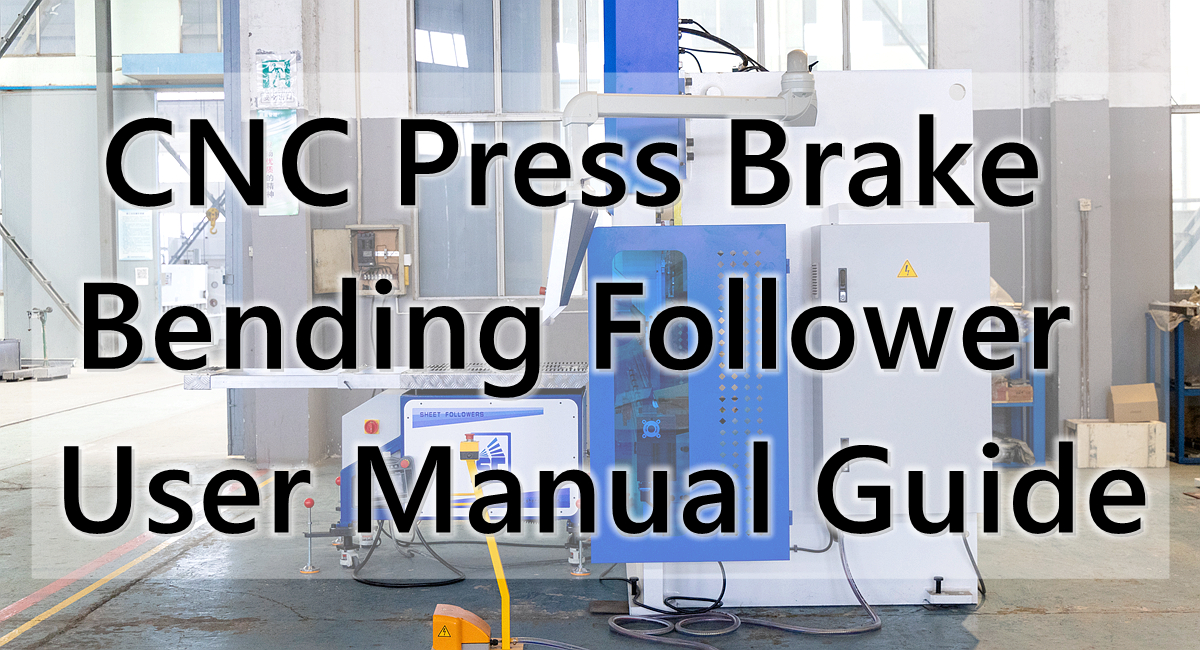
Pacific Containers has purchased SC 200KG sheet follower for container bending. In the production of metal containers, storage cabinets, filing cabinets, electrical control cabinets, tool cabinets, distribution cabinets, and large sheet metal enclosures, bending follower devices are crucial auxiliary equipment for improving bending quality, production efficiency, and operational safety.
1. Why are sheet followers need in container bending process?
Container-type sheet metal products typically have characteristics such as large dimensions, thin sheet metal, numerous bending cycles, and high appearance requirements.
For example, when producing large electrical cabinets, storage cabinets, or industrial tool cabinets, the common sheet metal thickness is 0.8–3.0 mm, and the length of some large cabinet sheet metal can reach 2500–4000 mm, or even longer.
These sheet metals are prone to the following problems during the bending process:
Processing Challenges | Impact on container production | Functions of follow-up devic |
Large sheet area | Difficult to lift manually | Automatic support of sheet metal |
Thin sheet material | Prone to sagging and deformation | Reducing deflection caused by its own weight |
Long bending edge | Sheets are prone to swaying | Improving motion stability |
High surface quality requirements | Easily scratched or dented | Reducing dragging and improper contact |
Multiple bending processes | Repeated manual lifting required | Easing operator workload |
Long board bending | Uneven support at both ends | Dual follow-up synchronous material support can be used |
Mass production | High labor intensity | Improving processing cycle time |
It’s important to note that the follow-up device cannot directly eliminate bending springback, nor can it replace the deflection compensation system of the bending machine. It primarily improves the stability of the processing by enhancing the support of the sheet metal.
2. Working Principle of the Bending Follow-up Device
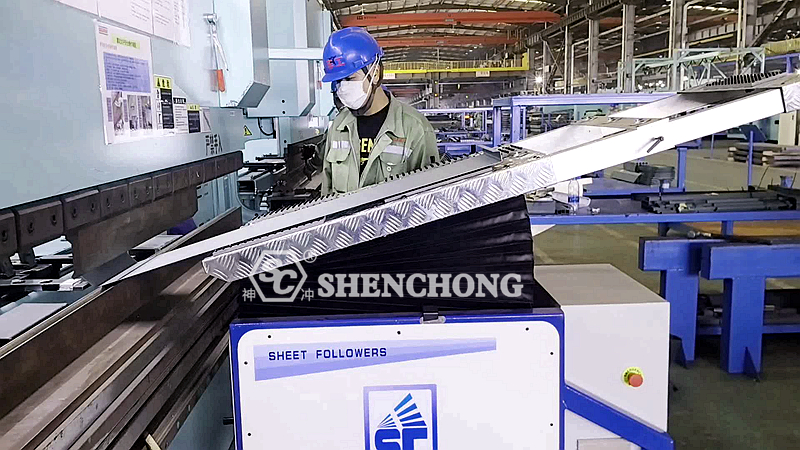
The bending follow-up device is typically installed in front of the CNC bending machine and consists of a servo drive mechanism, a material support platform, a transmission mechanism, a position detection device, and a control system.
During the bending process, the sheet metal rotates as the upper die moves downward and the bending angle changes. The follow-up material support platform follows the sheet metal’s movement based on the set motion trajectory or feedback from the control system, providing continuous and appropriate support.
The follow-up material support platform rises and falls with the rotation of the sheet metal, reducing sagging and swaying that occurs when a large area of sheet metal is suspended in the air. The actual trajectory depends on the bending method, workpiece geometry, and the control system.
Its typical workflow is as follows:
1) Sheet metal positioning
Place the sheet metal on the bending machine’s worktable and the servo-driven material support platform.
2) Bending start
The CNC system executes the bending program, and the upper die moves downwards.
3) Servo-driven material support
The material support platform follows the sheet metal along the set trajectory.
4) Bending completion
The platform resets in coordination with the workpiece, preparing for the next process.
3. Key technical parameters of servo-driven bending for large containers
Taking the servo-driven material support device in large container sheet metal processing as an example, the following parameters should be given special attention during procurement.
Technical Items | Selection Considerations |
Rated Material Handling Capacity | Verify based on maximum sheet weight, center of gravity, and dynamic load |
Material Handling Platform Dimensions | Should be compatible with sheet width and contact position |
Follow-up Motion Range | Should cover actual bending angles and sheet movement trajectories |
Follow-up Speed | Should match the actual processing speed of the bending machine |
Control Method | Prioritize integration with CNC bending programs |
Positioning and Synchronization Accuracy | Should meet sheet support and dual-follower synchronization requirements |
Scratch Prevention Measures | Select contact materials suitable for the sheet surface |
Safety Protection | Includes emergency stop, limit, clamping point protection, and fault handling |
Installation Compatibility | Check for interference between the machine tool front space, mold, and workpiece |
Maintenance Ease | Facilitates inspection of the transmission mechanism, servo system, and material support surface |
4. Ten Core Roles of Sheet Follower For Container Bending Processing
1) Supporting Large Metal Sheets and Preventing Sagging
Large container side panels, doors, and back panels typically have a large area. Without a follow-up device, the sheet metal may sag under its own weight, affecting positioning and the bending process.
The follow-up support platform provides support for the sheet metal, reducing the overhang length and thus minimizing deformation due to its own weight.
2) Improving Bending Angle Consistency
The sheet follower for container bending reduces uncontrolled swaying of the sheet metal during bending, making processing conditions more stable.
For mass-produced doors, side panels, and outer shells, it helps improve bending consistency between different workpieces.
However, the final bending angle still depends on the material, mold, springback compensation, machine precision, and process parameters.
3) Reducing Surface Scratches on Container Sheets
Container exterior parts typically require powder coating, painting, or other surface treatments; some products use pre-coated sheets or stainless steel sheets.
A well-designed follow-up support platform can reduce relative slippage between the sheet metal and fixed supports, lowering the risk of surface scratches.
For pre-coated sheets or mirror-finish stainless steel, appropriate scratch-resistant contact materials should be used, and the support surface should be cleaned regularly.
4) Reduce manual support and lower labor intensity
Traditional bending of large container sheets may require two or more operators to support the sheet metal.
The follow-up device can bear part of the sheet metal weight, reducing the need for continuous manual lifting.
Under the conditions of meeting the requirements for workpiece weight, size, center of gravity stability, and risk assessment, some processes can be completed by a single person, but it cannot be assumed that all large sheet bending can be automated by a single person.
5) Improve the stability of long sheet bending
For container sheets longer than 3000 mm, a dual follow-up device can be considered based on the actual load and center of gravity distribution.
Dual follow-up support can improve the balance of support on both sides of the sheet metal, reducing swaying caused by asynchronous manual support.
6) Improve Container Bending Production Efficiency
The follow-up device reduces the time spent manually adjusting material handling posture and repeatedly supporting sheet metal, making it particularly suitable for batch, multi-pass bending production.
The extent of efficiency improvement needs to be verified through actual processing cycle time, and cannot be judged solely based on the presence or absence of a follow-up device.
7) Reduce the Risk of Unexpected Sheet Metal Swinging
Large, thin sheets may experience significant rotation during bending.
The follow-up device can reduce the direct bearing of sheet metal movement loads by manual labor, but it also introduces new clamping points and movement areas, necessitating the use of safety protection, standardized personnel positioning, and a reliable control system.
8) Improve Container Assembly Quality
For cabinet doors, side panels, and reinforcements, stable bending processes help improve edge alignment, hole fit, and cabinet shape consistency during subsequent assembly.
9) Suitable for Container Processing of Various Materials
Bending follow-up devices can be used for materials such as cold-rolled steel, galvanized steel, stainless steel, and aluminum alloy.
The support method needs to be adjusted according to the weight, rigidity, surface condition, and bending process of different materials.
10) Creating Conditions for Automated Production of Containers
The follow-up device can be integrated with CNC bending machines, automatic back gauges, robotic loading and unloading systems, and sheet metal conveying systems.
It is an important auxiliary unit for the automation of flexible bending of containers, but achieving complete automation still requires solving problems such as sheet metal gripping, flipping, positioning, avoidance, and process connection.
5. Application of Bending Follow-up Devices in Different Container Products
1) Electrical Control Cabinets and Distribution Cabinets
Mainly used for processing cabinet doors, side panels, top panels, and bottom panels. The follow-up device can improve the support state of large-area thin sheets and improve processing stability.
2) Filing Cabinets and Office Storage Cabinets
Suitable for batch processing of long-side sheets, reducing manual material handling and improving the cycle time of repetitive bending operations.
3) Industrial Tool Cabinets and Equipment Housings
Suitable for bending larger cabinet panels and reinforcing plates, helping to reduce sheet metal sway and deformation caused by improper support.
4) Stainless Steel Display Cases and Kitchen Equipment Cabinets
The key is supporting the large panels and protecting the surface appearance. Special attention must be paid to the contact materials and cleanliness of the follow-up platform.
6. Precautions for Using Bending Follow-up Devices in Container Processing
- Avoid excessive material support. The support platform should not excessively press upwards on the sheet metal, otherwise it may affect the bending formation.
- Set the follow-up trajectory correctly. Adjustments should be made in conjunction with the bending angle, workpiece shape, and mold position to avoid motion interference.
- Check the center of gravity of the sheet metal. Large or irregularly shaped cabinet panels may have a center of gravity offset; the support stability must be confirmed.
- Protect the surface of the sheet metal. Regularly clean metal debris and oil stains from the support platform.
- Beware of interference from multiple bends. For workpieces with existing flanges, the space between the follow-up platform, flange, and machine tool needs to be checked.
7. Summary: The Value of Bending Follower Devices To Container Manufacturers
For manufacturers of display cases, control cabinets, storage cabinets, and other large sheet metal enclosures, sheet follower for container bending is not only auxiliary material support mechanisms but also important equipment for improving the stability of the bending process.
Its core value can be summarized as follows: supporting large sheet materials, reducing manual material handling, minimizing sheet sagging, improving bending consistency, protecting the sheet material surface, increasing production efficiency, and creating conditions for intelligent bending production of containers.
Especially when processing large container sheets on 125T×3200 mm, 160T×3200 mm, and 200T×4000 mm CNC press brake machines, the proper configuration of dual follow-up devices typically has high practical application value.
 English
 Spanish
 Portuguese
 Russian
 Arabic
 French
 Italian
 German
 Polish
 Thai
 Vietnamese
 Lithuanian
 Czech
 Korean
 Japanese
 Chinese