
Table of Contents
In high-intensity sheet metal production environments, the stability of equipment performance directly determines product quality and delivery efficiency. A hydraulic sheet shearing machine is not just a piece of equipment, but also the “precision core” and “efficiency center” of the production system.
Below is a hydraulic plate shearing machine maintenance guide applicable to common nc hydraulic shearing machines, CNC hydraulic shearing machines, and conventional hydraulic shearing machines. It includes daily maintenance, periodic maintenance, key component maintenance, fault prevention, and management recommendations.
1. Core Objectives of Hydraulic Sheet Shearing Machine Maintenance
Maintaining a hydraulic guillotine plate shearing machine is not simply about “repairing when it breaks down,” but about ensuring the following over the long term:
- Stable Shearing Accuracy: Ensuring consistent dimensions, good straightness, minimal burrs, and controllable beveling after shearing.
- Reliable Hydraulic System:Preventing overheating, unstable pressure, oil leaks, pump damage, and valve jamming.
- Longer Blade Life:Reducing chipping, dulling, blade misalignment, and abnormal wear.
- Safer Equipment Operation:Preventing risks such as malfunctions, crushing, material spillage, oil pipe rupture, and limit switch failure.
- Reduced Downtime and Maintenance Costs:Preventing minor problems from becoming major failures through preventative maintenance.
2. Main Maintenance Items of a Hydraulic Shearing Machine
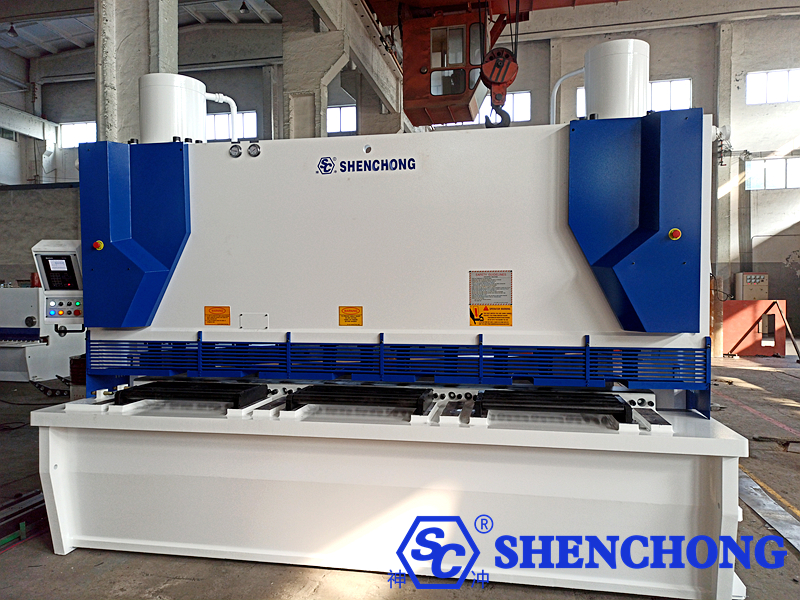
Shearing machine maintenance generally revolves around the following systems:
1) Mechanical Structure
- Frame
- Pressure device
- Tool holder
- Back gauge mechanism
- Guide rails, sliders, connecting rods, bearings, pins
- Machine base and feet
- Transmission components, synchronization mechanism
2) Hydraulic System
- Hydraulic pump
- Motor
- Oil tank
- Solenoid valves, proportional valves, directional valves
- Oil cylinders
- Oil pipes, connectors
- Oil filter
- Oil level gauge, pressure gauge, thermometer
- Seals
3) Electrical Control
- Control cabinet
- PLC/CNC system
- Emergency stop button
- Limit switches, proximity switches, photoelectric protection
- Contaminators, relays, circuit breakers
- Motor control and overload protection
- Operating panel, foot switch
4) Cutting Tools and Shearing Process
- Upper blade, lower blade
- Blade clearance
- Shearing angle
- Straightness and parallelism
- Pressure force
- Return motion
3. Sheet Shearing Machine Maintenance Principles
1) Inspect Before Starting
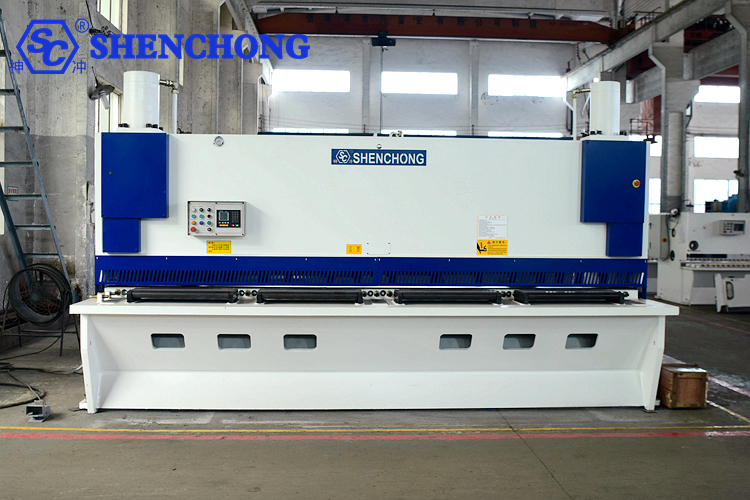
Before each startup, check:
- For oil leaks
- For loose blades
- For intact protective devices
- For jammed back gauge
- For effective emergency stop
- For normal hydraulic oil level
2) Lubricate Before Running
All sliding, guiding, hinged, and lead screw parts must be lubricated regularly. Dry friction operation is prohibited.
3) Clean Before Precision
Keep the equipment surface, guide rails, blade edges, and oil tank area clean. Iron filings, sludge, and dust will affect precision and lifespan.
4) Record Before Analyzing
Record each abnormality:
- Abnormal Phenomenon
- Time of Occurrence
- Handling Method
- Replaced Parts
- Result After Handling
Long-term recording is essential to understanding the true condition of the equipment.
4. Routine Maintenance
Routine maintenance is recommended to be performed by the operator before the start of each shift, during operation, and after the shift.
1) Pre-start Inspection
Visual Inspection:
- Check the hydraulic sheet shearing machine tool surface for abnormal deformation, cracks, or looseness.
- Check the protective cover, door panel, and guardrail for integrity.
- Check the cutting edge area for any leftover scrap, tools, bolts, or washers.
- Check the floor for oil or water stains to prevent slipping.
Hydraulic System Inspection:
- Check if the hydraulic oil level is above the center line of the oil gauge.
- Check if the oil color is normal.
- Normal: Generally clear or slightly yellowish.
- Abnormal: Blackened, emulsified, cloudy, foamy, or with a noticeable burnt smell.
- Check for oil leaks from oil pipes, joints, and cylinder ends.
- Listen to the pump sound after startup to see if it is stable.
- Abnormal noise is commonly caused by: insufficient oil suction, oil contamination, pump wear, or air ingress.
Electrical System Inspection:
- Check if the emergency stop button functions properly.
- Check if the foot switch rebounds normally.
- Check if the control panel displays any alarms.
- Check for any damage, loosening, or burning marks on the wiring.
- Check the sensitivity of all sensors and limit switches.
Mechanical Inspection:
- Check the upper and lower blades for obvious nicks, chipping, or cracks.
- Check if the blade pressure plate bolts are loose.
- Check if the back gauge runs smoothly.
- Check if the pressure cylinder operates synchronously and without jamming.
- Check for abnormal noises or impacts from the frame and worktable.
2) In-operation Inspection
When the equipment is running, focus on observing the following items:
Shearing Quality:
- Is the cut straight?
- Are the burrs too large?
- Are there any oblique cuts?
- Are there any obvious deformations in the sheet metal?
- Are there any phenomena such as “pulling,” “blade biting,” or “tearing”?
Operating Sounds:
Under normal conditions, the hydraulic pump and blade holder should produce a smooth and continuous sound.
If the following sounds occur, stop the sheet shear machine and check:
- Sharp whistling: May indicate insufficient oil, poor oil suction, or cavitation.
- Metallic impact sound: May indicate abnormal blade clearance, improper limit switch, or loose bolts.
- Periodic abnormal noise: May indicate dry friction of the guide rail, abnormal cylinder piston rod, or bearing wear.
Temperature:
Excessively high hydraulic oil temperature can lead to seal aging, unstable pressure, and sluggish operation.
If the oil temperature remains consistently high, check the cooling system, radiator, oil contamination, valve assembly overheating, and prolonged continuous high-load operation.
Operation Cycle:
- Is the upper blade return stroke normal?
- Is the material clamping position reached in advance?
- Is the back gauge positioning accurate?
- Is repeated shearing consistent?
3) Post-Shift Maintenance
At the end of each shift, it is recommended to perform at least the following:
Cleaning:
- Clean the workbench, metal filings, and waste near the blade edge.
- Remove debris from the back gauge mechanism.
- Clean the control panel and foot pedal area of
- Wipe away oil leaks and oily areas.
Inspect the Blades:
- Check the blade edge for chipping, rolling, or cracks.
- Check for loose bolts.
- Check for impact marks near the blades.
Shut Down Hydraulic Sheet Shearing Machine:
- First, stop the blade holder in a safe position.
- Turn off the hydraulic system and power.
- Release residual pressure.
- Clean the site according to specifications.
Record Abnormalities:
Record whether the following occurred during this shift:
- Oil leakage
- Abnormal noise
- Increased shearing burrs
- Positioning deviation
- Control alarm
5. Periodic Maintenance Of Hydraulic Plate Shear
Below is a suggested periodic maintenance schedule, which you can directly use in your workshop procedures.
Cycle | Maintenance Focus | Main contents |
Per shift / Daily | Appearance, oil level, blade edge, abnormal noise | Check for oil leaks, clean, and ensure proper operation. |
Weekly | Lubrication, tightening, basic accuracy | Add oil to sliding parts and check bolt and blade clearance. |
Monthly | Hydraulic, electrical, positioning mechanisms | Check filter element, valve assembly, limit switches, and back gauge accuracy. |
Quarterly | Comprehensive system inspection | Check oil quality, pressure, temperature rise, and blade wear. |
Semi-annually | Deep maintenance | Replace filter element, adjust accuracy, and check seals as needed. |
Yearly | Major maintenance | Change hydraulic oil, perform comprehensive testing, electrical checks, and accuracy calibration. |
6. Hydraulic System Maintenance Points
The hydraulic system is a key aspect of sheet shearing machine maintenance and also the most prone to failure.
1) Hydraulic Oil Management
The Role of Hydraulic Oil:
Hydraulic oil is not only a “power medium,” but also:
- Lubricant
- Cooling medium
- Rust-preventing medium
- Sealing auxiliary medium
Signs of Hydraulic Oil Deterioration:
- Blackening
- Pungent burnt smell
- Emulsification and whitening
- Large amount of foam in the oil
- Significantly increased impurities
- Slower operation, unstable pressure
Common Problems:
- Oil contamination can cause valve core sticking and pump wear.
- Insufficient oil can cause cavitation, cavitation, and increased noise.
- Excessive oil can lead to overheating and oil spill risks.
- Mixing oil brands may result in performance degradation or sedimentation.
Recommendations:
- Use the hydraulic oil grade specified in the equipment manual.
- Avoid mixing different brands and base oils. Filter the oil before adding it.
- Use clean, dedicated oil drums, funnels, and refueling tools.
2) Hydraulic Oil Temperature Control
Hazards of excessively high oil temperature:
- Accelerated aging of seals
- Oxidation and deterioration of the oil
- Decreased pump efficiency
- Slow valve operation
- Unstable system pressure
Common causes:
- Prolonged continuous high-load operation
- Cooler blockage
- Poor heat dissipation in the oil tank
- Excessive return oil back pressure
- Severe internal leakage in the valve assembly
- Oil contamination
Solutions:
- Clean the radiator and fan.
- Check oil level and quality.
- Run the equipment intermittently as needed.
- Check if the system pressure setting is too high.
- Troubleshoot internal leaks in the valve assembly and pump.
3) Hydraulic pump and oil pump maintenance
Key checks:
- Abnormal noise during startup.
- Air leakage at the suction port.
- Is the pump body overheating too quickly?
- Is the output pressure stable?
- Is the coupling loose or eccentric?
- Is the motor overloaded?
Common causes of failure:
- Dirty oil
- Clogged suction filter
- Low oil level
- Pump wear
- Incorrect motor rotation
- Poor coupling coaxiality
4) Valve assembly maintenance
Valve assembly jamming is one of the common problems in hydraulic sheet shearing machines.
Typical Phenomena:
- Slow movement of the cutter head
- Asynchronous material feeding
- Unsmooth return stroke
- Large pressure fluctuations
- Intermittent impact during certain actions
Maintenance Methods:
- Keep the oil clean.
- Regularly clean or replace the filter element.
- Check if the electromagnet coil is overheating or burnt out.
- Check if the valve core is stuck due to impurities.
- Check if the plug and wiring are loose.
5) Cylinder and Seal Maintenance
Common Cylinder Problems:
- Piston rod scoring
- Aging seals
- Internal leakage in the cylinder
- End cover leakage
- Asynchronous movement
Maintenance Points:
- Keep the piston rod clean, avoiding the adhesion of iron filings and sludge
- Prevent hard objects from scratching the piston rod surface
- Replace aging seals promptly
- Immediately investigate any abnormal movement of a single cylinder. Do not operate with defects for extended periods.
7. Shearing Blade Maintenance and Adjustment
Blades are the “core consumable parts” of a hydraulic sheet shearing machine.
1) Signs of Blade Wear
- Increased burrs on the shearing surface
- Whitening and tearing of the cut
- Requires greater pressure to cut
- Duller and heavier shearing sound
- Curling and chipping of the blade edge
2) Blade Maintenance Methods
- Regularly clean the oxide scale, oil, and debris adhering to the blade edge.
- Check the tightness of the blade bolts.
- Check the parallelism and gap between the upper and lower blades.
- Replace, sharpen, or replace the blades as needed based on wear condition.
- If localized chipping is found, stop the machine and check if hard foreign objects were being cut.
3) Importance of Blade Clearance
Excessive blade clearance:
- Increased burrs
- Rough cut surface
- Poor shearing quality
Insufficient blade clearance:
- Accelerated blade wear
- Heat generation
- Increased load
- Easier blade chipping
4) Blade Adjustment Principles
- Adjust according to plate thickness and material.
- Thin plates and soft materials generally require more reasonable clearance control.
- High-strength materials should have a slightly increased clearance.
- After adjustment, a test cut must be performed and the dimensions and cut surface rechecked.
Specific clearance values should primarily refer to the equipment manual and blade supplier’s recommendations, as there are significant differences between different steel grades, thicknesses, and blade materials.
8. Back gauge System Maintenance
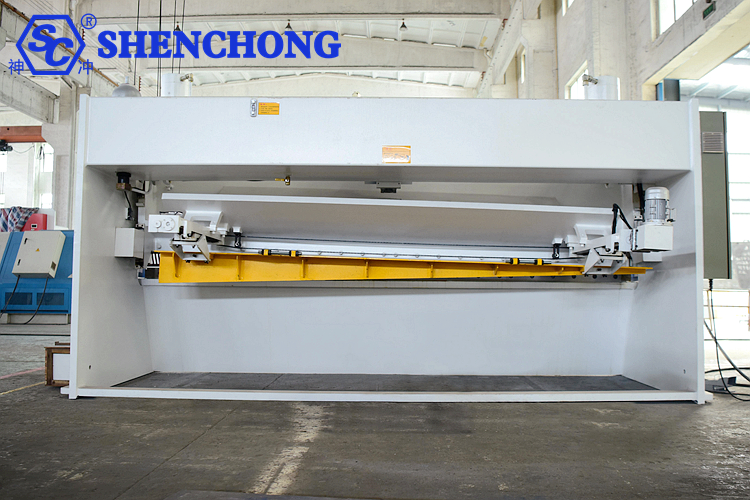
The back gauge is responsible for positioning the cutting length and is a crucial component affecting dimensional accuracy.
1) Common Problems
- Inaccurate positioning dimensions
- Jack-on/jam jamming
- Guide rail wear
- Increased lead screw backlash
- Motor or encoder malfunction
2) Maintenance Points
- Keep guide rails and lead screws clean
- Regular lubrication
- Check for loose synchronous transmission mechanism
- Check backgauge collision limiters
- Regularly verify positioning accuracy
3) What to Check First When Accuracy Abnormalities Occur
- Is there mechanical looseness?
- Is there dust or metal shavings jamming the guide rail?
- Is there a change in encoder parameters?
- Is there motor step loss or transmission slippage?
- Is there inconsistency in workpiece contact method?
9. Electrical System Maintenance
1) Control Cabinet Maintenance
- Keep the cabinet dry and clean.
- Clean dust promptly.
- Inspect the fan and radiator.
- Prevent oil mist and moisture from entering the control cabinet.
2) Wiring and Components
- Check for loose terminals.
- Check for contactor contact erosion.
- Check for relay aging.
- Check for circuit breaker and fuse functionality.
- Check for emergency stop circuit reliability.
3) Sensors and Limit Switches
- Check for limit switch position deviation.
- Check for proximity switch looseness.
- Check for foot switch cable damage.
- Check for safety door interlock effectiveness.
4) Common Electrical Abnormalities
- Sudden equipment malfunction.
- Display alarm.
- Back gauge not returning to zero.
- Abnormal material pressing or tool holder movement.
- Motor overload tripping.
When troubleshooting electrical problems, it is recommended to first check:
- Is the power supply normal?
- Is the emergency stop reset?
- Is the safety circuit closed?
- What is the alarm code?
- Are the relevant sensors and output points normal?
10. Mechanical Structure Maintenance
1) Guide Rails and Sliding Surfaces
- Keep clean. Lubricate regularly.
- Prevent metal shavings from being pressed into the guide rails.
- Inspect for wear and scoring.
2) Fasteners
- Anchor bolts
- Blade bolts
- Pressure plate bolts
- Motor fixing bolts
- Coupling bolts
- Back gauge fixing bolts
These bolts should be retightened regularly, as they are prone to loosening after prolonged impact and vibration.
3) Frame
- Inspect for abnormal cracks.
- Inspect for deformation after long-term heavy loads.
- Check for levelness.
- Check for foundation settlement.
11. Lubrication Maintenance
Lubrication is key to the “lifespan difference” of many pieces of equipment.
1) Parts Requiring Lubrication
- Guide rails
- Lead screws
- Slider
- Hinges
- Bearing housings
- Back gauge transmission mechanism
- Pressure mechanism connection points
2) Lubrication Requirements
- Use the specified grade of grease or lubricating oil.
- Do not use excessive amounts to avoid dust accumulation.
- Do not use insufficient oil to avoid dry friction.
- Clean away old oil and impurities before lubrication.
3) Common Mistakes
- Misusing mixed grease and machine oil.
- Adding too much lubricant, causing splashing and contamination.
- Adding oil without cleaning.
- Missing lubrication points.
12. Precision Maintenance and Calibration
After prolonged use, the precision of a shearing machine will naturally drift, requiring periodic calibration.
1) Precision Items to be Checked
- Shearing Perpendicularity
- Shearing Straightness
- Backgauge Positioning Repeatability
- Upper and Lower Blade Parallelism
- Blade Gap Consistency
- Pressure Clamping Uniformity
2) Troubleshooting Sequence for Precision Issues
- First check blade wear
- Then check blade gap
- Then check backgauge positioning
- Then check the pressure mechanism
- Then check hydraulic pressure stability
- Finally check the frame and foundation
Often, poor precision is not due to a “broken machine,” but rather a problem with one of the following components: blades, gap, positioning, or pressure clamping.
13. Common Faults and Troubleshooting Of Plate Shearing Machine
1) Large Burrs During Shearing
Possible Causes:
- Dull blade
- Excessive blade clearance
- High sheet material hardness
- Unstable clamping
Solutions:
- Inspect and sharpen or replace the blade
- Readjust the blade clearance
- Check the clamping cylinder pressure
- Verify the sheet material thickness and material
2) Excessive Equipment Noise
Possible Causes:
- Hydraulic pump cavitation
- Insufficient oil
- Contaminated oil
- Eccentric coupling
- Valve assembly impact
Solutions:
- Check the oil level and suction line
- Replace or filter the oil
- Check pump and motor alignment
- Clean the valve assembly
3) Weak Shearing
Possible Causes:
- Insufficient system pressure
- Pump wear
- Valve leakage
- Overheating oil
- Abnormal motor speed
Troubleshooting:
- Check pressure setting
- Check pump and valve
- Check oil temperature and cooling
- Check motor and power supply
4) Inaccurate back gauge positioning
Possible Causes:
- Wearing lead screw
- Dirty guide rail
- Abnormal motor parameters
- Encoder problem
- Loose mechanical parts
Troubleshooting:
- Clean and lubricate
- Tighten the mechanism
- Recalibrate
- Check encoder and drive
5) Severely overheating hydraulic oil
Possible Causes:
- Prolonged overload
- Internal valve leakage
- Oil circuit blockage
- Cooling failure
- Improper oil level
Troubleshooting:
- Reduce continuous working intensity
- Clean the cooling system
- Replace the filter element
- Investigate internal leakage points
14. Safety Requirements for Hydraulic Sheet Shearing Machine Maintenance
Safety must always be the top priority during maintenance.
1) Power Off and Shutdown
- Power must be disconnected before any repairs, blade replacements, adjustments, or cleaning.
- The hydraulic system must be depressurized.
- Prevent accidental triggering and sudden drop of the blade holder.
2) Blade Holder Support
- When the blade holder is in the upper position for maintenance, reliable mechanical support must be used.
- Do not rely solely on hydraulic pressure to maintain its position.
3) Preventing Injuries
- Do not put your hands into the blade edge, material pressing area, or back gauge movement area.
- Prevent accidental triggering when inspecting the foot switch.
4) Preventing Oil Damage
- High-pressure hydraulic oil spray is extremely dangerous.
- Do not touch the high-pressure oil pipes directly with your hands when checking for leaks.
- Stop the machine immediately if oil spray is detected.
5) Blade Replacement Safety
- Use hoisting or auxiliary tools. The blade is heavy
- Do not attempt to lift or pry it.
- Prevent the blade edge from chipping or breaking during installation.
15. Long-Term Shutdown & Restart Maintenance
If the equipment needs to be shut down for a period of time, it is recommended to do the following:
Before shutdown:
- Clean the equipment.
- Apply anti-rust oil to exposed metal surfaces.
- Void or pressurize as required.
- Disconnect the power supply.
- Cover with a dust cover.
During shutdown:
- Regularly check for oil leaks.
- Prevent moisture and dust from entering.
- Keep the site dry.
Before restarting:
- Check the hydraulic oil quality.
- Check electrical insulation.
- Check all lubrication points.
- Manually jog to confirm normal operation.
- Run at low load first, then resume normal production.
16. Practical Suggestions for Extending Lifespan
- Avoid over-specification shearing
Prolonged shearing of excessively thick plates or high-strength materials will significantly shorten the lifespan of the blades and hydraulic system.
- Avoid frequent idle pedaling
Too many ineffective movements will exacerbate mechanical shock and valve wear.
- Avoid prolonged operation with malfunctions
Oil leaks, abnormal noises, large burrs, and inaccurate positioning will worsen over time.
- Keep hydraulic fluid clean
Many hydraulic failures are essentially contamination issues.
- Always test-cut after blade replacement
Test with a short piece first, then with a normal length. Only proceed with mass production after confirming no abnormalities.
- Regularly calibrate accuracy
Don’t wait until there are serious dimensional deviations before addressing the problem.
- Establish a maintenance responsibility system
Operators are responsible for daily inspections, maintenance workers for weekly and monthly inspections, and supervisors for recording and reviewing.
17. Summary
Shearing machine maintenance = Hydraulic cleaning + Blade management + Precision control + Prevention mechanism
The core of hydraulic sheet shearing machine maintenance is “cleaning the oil circuit, protecting the blades, maintaining accuracy, controlling temperature, tightening lubrication, and timely recording.”
Doing these 6 things well will significantly reduce equipment failure rates and ensure more stable shearing quality and lifespan.
Core Objectives:
- Ensure shearing accuracy
- Extend equipment lifespan
- Reduce failure rate
- Ensure safe operation
Basic Principles:
- Prevention first
- Combined regular inspections
- Lubrication priority
- Cleaning is maintenance
- Traceable records



 English
  Spanish
  Portuguese
  Russian
  Arabic
  French
  Italian
  German
  Polish
  Thai
Thai  Vietnamese
  Lithuanian
  Czech
Czech  Japanese
  Chinese