
Table of Contents
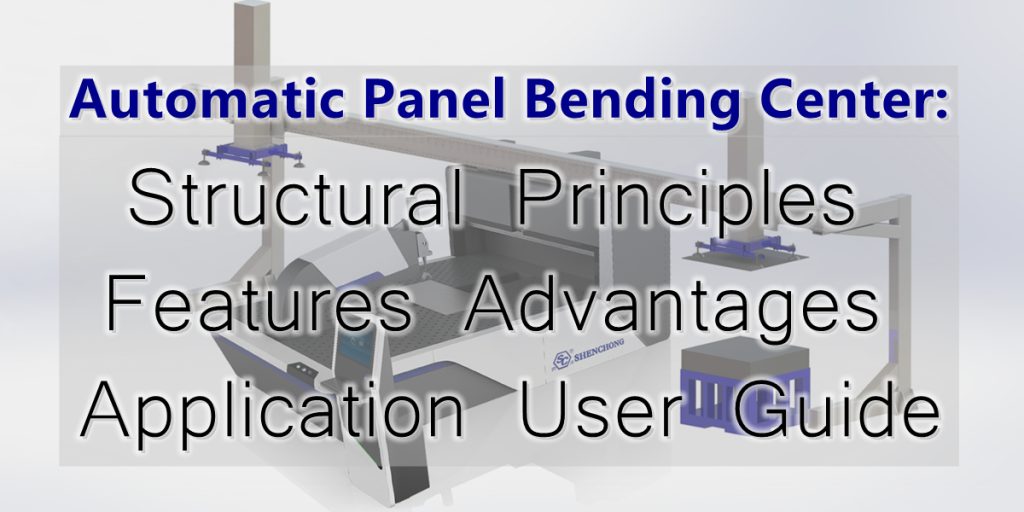
An automatic panel bending center is a high-end CNC machine used for edge forming of sheet metal. It primarily uses a servo drive system to control the flanging rollers, pressure device, and feeding mechanism to automatically perform flanging, folding and reinforcing rib forming processes on sheet metal edges.
As the sheet metal manufacturing industry develops towards intelligence, automation, and high precision, traditional manual flanging or ordinary hydraulic flanging equipment is gradually failing to meet the efficiency, precision, and consistency requirements of modern manufacturing. Fully automatic servo bending centers, with their high-precision servo control system, automated feeding system, and intelligent CNC technology, are widely used in automotive manufacturing, kitchenware, elevator manufacturing, ventilation ducts, home appliances, electrical cabinets, new energy equipment, aerospace, and construction machinery.
Especially in mass production, fully automatic servo panel benders can significantly improve production efficiency, reduce labor costs, and enhance product consistency, thus becoming one of the essential pieces of equipment in modern sheet metal processing workshops.
1. Introduction to panel bending process
Automatic panel bending center machines are a crucial type of automated equipment in modern sheet metal forming, automotive manufacturing, kitchenware and home appliances, ventilation ducts, enclosure shells, and precision metal parts processing. Their core function is to flanging, pressing, shaping, or reinforcing the edges of stamped, cut, stretched, or formed sheet metal, resulting in higher structural strength, better appearance quality, more stable assembly accuracy, and safer edge treatment.
Compared to traditional manual flanging, semi-automatic flanging, and hydraulic flanging equipment, fully automatic servo flanging machines offer significant improvements in control precision, motion stability, cycle time efficiency, flexible production, product consistency, and intelligence. It is not merely a machine that “folds the edges,” but a complete precision forming system integrating servo drive, CNC system, automatic feeding, positioning and clamping, flanging forming, parameter memory, online detection, and safety protection.
In today’s increasingly prevalent high-speed, mass-production, and standardized manufacturing, fully automatic servo flanging machines have gradually transformed from “auxiliary equipment for improving efficiency” into “key equipment that determines product quality and production line efficiency.” Especially in industries such as automotive body panels, home appliance panels, metal enclosures, medical equipment housings, kitchen utensils, sheet metal door panels, and lighting fixture housings, flanging quality directly affects subsequent assembly, welding, edging, riveting, sealing, and overall appearance; therefore, the importance of this equipment is growing.
1) What is flanging?
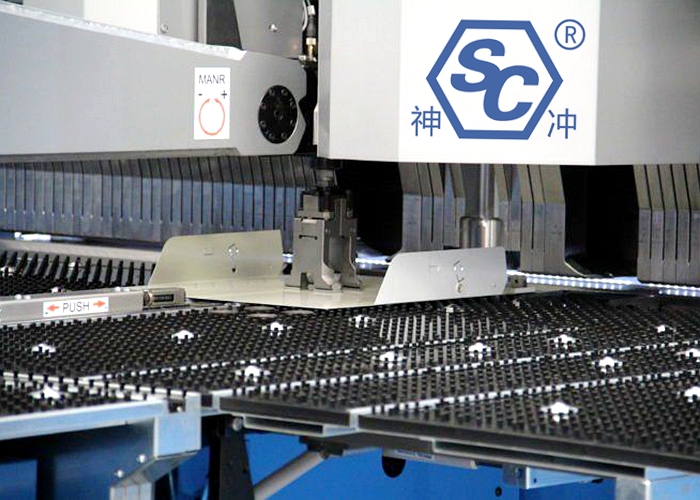
Flanging is a processing technique that bends the edge of a sheet material upwards or downwards at a certain angle to form a flange.
Common flanging forms:
– 90° flanging (Most common process)
Applications: Electrical cabinets, distribution boxes, control cabinets, sheet metal enclosures
– Rounded flanging (Forms rounded edges)
Applications: Automotive body panels, kitchenware panels, medical equipment
– Rolled flanging (Edges rolled into a rounded shape)
Applications: Door panels, appliance housings, stainless steel products
– Reinforced flanging (Improves structural rigidity)
Applications: Air ducts, enclosures, energy storage cabinets
2) What is a Servo Fully Automatic Panel Bending Center?
A fully automatic servo panel bender machine, as the name suggests, is a metal sheet edge forming machine that uses a servo motor as the main drive source and achieves automatic positioning, clamping, flanging, and resetting through CNC programming.
It is typically used to gradually fold the edges of sheet metal from a flat state to a specified angle, curvature, or angular shape to meet the needs of structural reinforcement, assembly fit, edge covering, welding pretreatment, or appearance shaping.
“Fully automatic” emphasizes minimizing manual intervention in the entire process from feeding, positioning, clamping, forming, unloading to resetting. “Servo” emphasizes high motion control precision, fast response speed, strong position controllability, and high repeatability. “Flanging” is its essential process, involving the plastic deformation of the workpiece edge.
In summary, the value of this type of equipment lies in obtaining more consistent flanged products with fewer people, less time, and a more stable method.
From a technological perspective, flanging is not simply a “folding” process.
It may include the following processing methods:
- Straight edge flanging: Suitable for straight edges such as cabinets, door panels, and frames.
- Curved edge flanging: Suitable for curved parts, irregularly shaped parts, and lamp covers.
- Partial flanging: Used to reinforce or wrap edges only in certain areas.
- Rolling/rounding: Used to eliminate sharp edges, improving safety and appearance.
- Edge pressing and shaping: Used to correct edge deviations formed in previous processes.
- Compound flanging: Completes the forming of multiple angles or sections in one operation.
2. Basic Working Principle of Servo Automatic Panel Bending Center
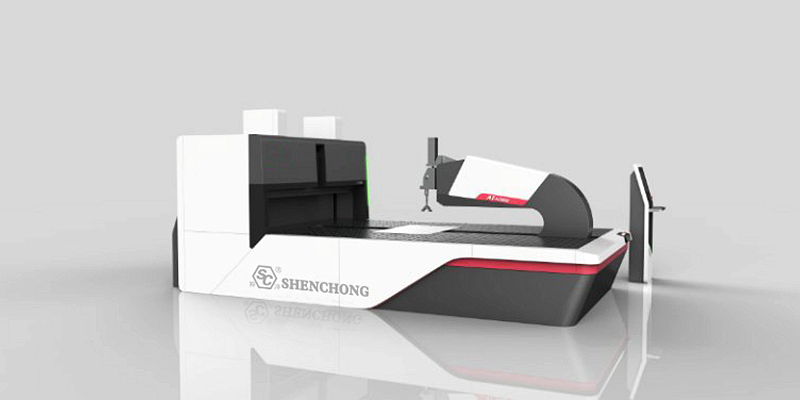
The core working principle of a fully automatic servo bending center machine is “precise control of the force and displacement at the edge of the sheet metal, allowing the material to gradually take shape within a controllable plastic deformation zone.”
Generally, the equipment’s workflow is as follows:
1) Workpiece Loading
Sheet metal or pre-formed workpieces are fed into the flanging station manually, by a robotic arm, robot, conveyor line, or automatic loading mechanism. High-end equipment can typically be linked with upstream stamping lines, laser cutting lines, servo feeding lines, and robotic arm loading/unloading systems to achieve unmanned continuous production.
2) Precise Positioning
The workpiece is positioned accurately using positioning blocks, clamping mechanisms, visual recognition, sensor detection, or mechanical positioning pins. Positioning accuracy directly affects the consistency of flanging; therefore, modern equipment is often very sophisticated in its positioning structure, requiring both reliability and ease of quick changeover.
3) Automatic Clamping
After the workpiece is in place, the clamping device fixes the sheet metal, preventing slippage, offset, and warping during processing. Clamping methods can be pneumatic, servo, electric, hydraulic, or a combination of both. Fully automatic servo models typically emphasize controllable clamping force, synchronized movements, and protection of the workpiece surface from damage.
4) Servo-Driven Forming
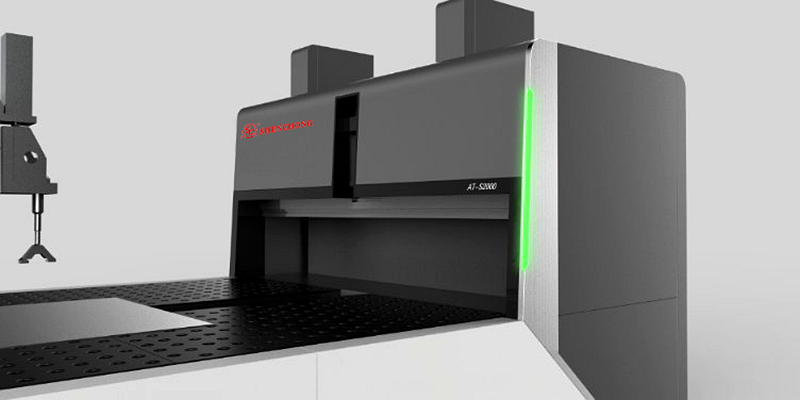
A servo motor drives the flanging head, pressure rollers, forming die, or swing arm mechanism to perform flanging according to a preset trajectory and speed. Compared to traditional hydraulic presses, servo systems can more precisely control the speed curve, displacement position, pressure changes, and return motion, making the forming process smoother and reducing material cracks, wrinkles, tearing, and springback.
5) Multi-Segment Forming Control
For thicker plates, hard materials, or high-precision parts, the equipment does not flanging the edge to the correct position in one go, but uses multi-segment progressive forming. This significantly reduces local stress concentration, improves edge quality, and is more suitable for processing complex shapes.
6) Online Inspection and Compensation
High-end fully automatic servo panel bening center machines are equipped with displacement sensors, pressure monitoring, encoder feedback, or vision inspection systems, which can monitor the forming status during processing and automatically compensate according to the program to minimize batch variations.
7) Automatic Unloading and Resetting
After the flanging is completed, the equipment automatically releases the clamp and unloads the material, preparing it for the next workpiece. The entire cycle time can be adjusted according to the workpiece size and process requirements.
3. Panel Bender Machine Structure
1) Frame System
Adopts:
Integral welded structure, gantry frame
Features:
High rigidity, deformation resistance, long service life
Processes:
Annealing treatment, vibration aging, stress relief.
2) Servo Drive System
Core Components:
Includes:
- Main servo motor
- Feeding servo motor
- Positioning servo motor
Features:
- Fast response speed
- High precision
- Energy saving
Positioning accuracy: ±0.05mm
Repeatability: ±0.02mm
3) Flanging Forming Mechanism
This is the part directly involved in forming, including flanging wheels, forming die, swing arm, pressure head, roller assembly or combination mechanism.
The flanging mechanism needs to be optimized according to the plate thickness, material, flanging angle, and workpiece shape.
4) Clamping Device
The clamping system determines the stability of the workpiece during processing. It typically includes grippers, pressure plates, cylinders, servo clamping mechanisms, and anti-scratch surface materials. Different products can employ different clamping methods to balance efficiency and surface protection.
5) Automatic Feeding System
Achieves: Automatic feeding, automatic positioning, automatic conveying, and improved efficiency.
6) CNC Control System
Main functions: Graphical programming, automatic compensation, data storage, parameter retrieval
Supports: CAD import, network communication, MES integration
7) Safety Protection System
Includes light curtains, emergency stop buttons, interlocking doors, limit switches, pressure protection, overload protection, and fault alarms.
Since the flanging machine itself involves clamping and forming actions, safety protection is a crucial aspect.
8) Lubrication and Maintenance System
Good lubrication reduces friction, extends lifespan, and maintains smooth operation. An automatic lubrication system reduces the frequency of manual maintenance and improves the long-term stability of the equipment.
4. Core Technological Advantages of Fully Automatic Servo Panel Bending Machines
1) High-Precision Machining
For industries with high requirements for edge dimensions and appearance, such as automotive, medical, home appliance, and high-end enclosures, servo flanging machines can better meet precision requirements.
- Traditional flanging error: ±1mm or more
- Servo flanging machine: ±05mm
- A improvement of more than 10 times.
Smooth control during the flanging process reduces scratches, indentations, and deformation, especially valuable for materials with high surface requirements such as stainless steel, painted plates, coated plates, and aluminum alloy plates.
2) High-Efficiency Production
- Manual flanging: 20-50 pieces per hour
- Fully Automatic flanging: 200-600 pieces per hour
A 3-10 times increase in efficiency
Through highly efficient automatic actions and line-connection capabilities, the processing time per piece is significantly shortened, making it especially suitable for large-volume orders.
3) Extremely High Consistency
The biggest concern with flanged products is “one batch is good, the next batch has large deviations.” Servo flanging machines, through precise control of every motion parameter, ensure greater stability in flanging angle, edge height, edge radius, and forming length, thereby improving the consistency of the entire batch of products.
- Manual processing is prone to: Inconsistent height; Angle errors.
- Automated equipment: Achieves consistent batch production.
Common problems in traditional flanging include cracking, wrinkling, dents, uneven angles, excessive springback, and edge wavy edges. Servo equipment, through segmented forming and speed optimization, effectively reduces these problems and lowers the scrap rate.
4) Labor Savings
A highly automated machine can replace manual operation at multiple workstations, significantly reducing labor costs in the long run and reducing reliance on skilled workers.
- Traditional: 3-5 people to operate.
- Automated flanging: 1 person to manage multiple machines.
Labor costs reduced by over 60%.
5) Energy Saving and Environmental Protection
Compared to hydraulic equipment: Saves 30%-60% on electricity.
No continuous hydraulic overflow loss.
5. Equipment Features Analysis
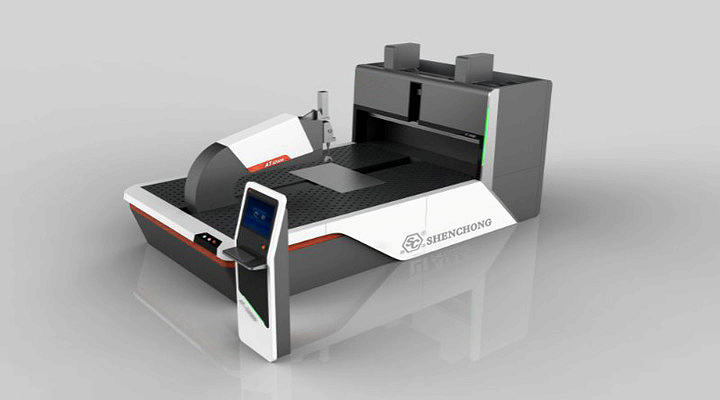
1) High-Precision Forming
Servo control enables precise control of displacement, angle, and speed, resulting in more stable flanging dimensions and higher repeatability. This is especially important for products requiring tight assembly, consistent edges, and standardized appearance.
2) High Degree of Automation
From loading to unloading, the entire process is highly automated. Human intervention is limited to monitoring, changeover, and inspection, significantly reducing operational dependence.
3) Fast Cycle Time
The servo system’s fast response, combined with automatic feeding and rapid clamping, significantly increases single-piece processing speed, making it suitable for continuous and batch production.
4) Adaptable to Multiple Materials
It can process various materials including carbon steel, stainless steel, aluminum plate, galvanized plate, copper plate, and alloy plate. Through parameter adjustments, it can also accommodate the forming needs of materials with different thicknesses and strength grades.
5) Stable Flanging Quality
Automated control reduces human error, resulting in higher consistency between product batches and lower rework and scrap rates.
6) Reduced Labor Intensity
Traditional manual flanging often requires significant physical strength and skilled techniques, while automated servo equipment frees workers from high-intensity, repetitive labor.
7) Suitable for Flexible Production
Product models can be switched via program calls, adapting to production methods involving multiple varieties, small batches, and frequent model changes.
8) Easier Integration with Production Lines
It can connect to stamping lines, laser cutting lines, robotic workstations, welding lines, assembly lines, and MES systems, forming a complete intelligent manufacturing closed loop.
6. Main Application Areas Analysis
Applicable Processing Materials
- Aluminum Plate: 0.5-3.5mm
- Carbon Steel Plate: 0.5-2mm
- Stainless Steel Plate: 0.5-1.5mm
1) Automotive Manufacturing Industry
Application Components:
- Car Doors
- Engine Hood
- Trunking Lid
- Battery Box
Advantages: Improved appearance quality.
2) New Energy Industry
Applications:
- Energy Storage Cabinets
- Battery Trays
- Battery Boxes
Features: Ensures sealing performance.
3) Elevator Manufacturing Industry
Processing:
- Door Panels
- Decorative Panels
Requirements: High flatness.
4) Electrical Cabinet Industry
Products:
- Distribution cabinets
- Control cabinets
- Switch cabinets
Requirements: Flanged edges to improve overall strength.
5) Home Appliance Industry
Applications:
- Refrigerators
- Washing machines
- Air conditioner housings
Requirements: Improve product quality.
6) Kitchen Equipment Industry
Products:
- Stainless steel workbenches
- Sinks
- Ovens
Requirements: Achieve a design without sharp edges.
7) Ventilation Equipment Industry
Applications:
- Air ducts
- Flanges
- Fan housings
Requirements: Enhance structural strength.
8) Aerospace Field
Used for:
- Lightweight structural components
- Aluminum alloy assemblies
Requirements: Extremely high precision.
7. Comparison with traditional panel bending equipment
Comparison table:
Project | Traditional bending machine | Servo Automatic Panel Bending Center |
Efficiency | Low | High |
Automation | Low | High |
Energy Consumption | High | Low |
Labor Dependence | High | Low |
Product Consistency | Generally | Excellent |
Maintenance Costs | High | Low |
8. What should be the key considerations when selecting panel benders?
1) Processing Materials and Thickness Range
First, confirm whether the equipment is suitable for your commonly used materials, maximum thickness, minimum thickness, and material strength grade. Different materials have different requirements for forming force and control methods.
2) Workpiece Size Range
Confirm whether the equipment can cover the maximum length, maximum width, minimum edge distance, and special irregular contours of the product.
3) Panel Bending Accuracy Requirements
If the product has high requirements for edge angle, flatness, rounded corner transition, and surface quality, you need to pay attention to the positioning accuracy, repeatability, and control system performance of the equipment.
4) Automation Interface
Does it support robot loading and unloading, conveyor line docking, MES system communication, barcode recognition, automatic form change, etc.?
5) Form Change Efficiency
In multi-variety production scenarios, the ease of mold change, the simplicity of program calling, and the speed of fixture adjustment directly affect production line efficiency.
6) Molds and Consumables
The mold material, wear resistance, versatility, customization capabilities, and subsequent costs are all important. A well-designed mold is essential for long-term stable use.
7) Equipment Rigidity and Stability
Insufficient frame rigidity leads to decreased flanging accuracy, increased equipment vibration, and shortened mold life. Equipment stability directly impacts long-term quality.
8) Control System Usability
A clear user interface, convenient parameter settings, intuitive alarm information, and flexible program storage all directly affect the user experience.
9) After-Sales Service and Technical Support
Flanging equipment is not just a purchase, but a long-term operational necessity. Installation and commissioning, training, spare parts supply, process support, and remote diagnostic capabilities are all crucial.
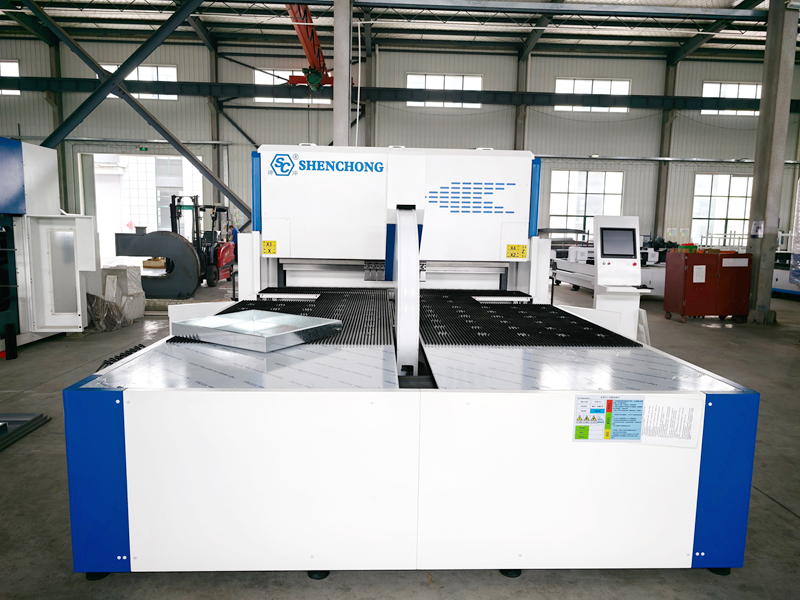
9. Operation and Usage Guide
1) Pre-start Inspection
Check:
Power supply, air supply, lubrication system, servo system – are they normal?
2) Parameter Setting
Input:
Board thickness, material type, flange height, flange angle
3) Trial Run
Process a sample first.
Confirm:
Dimensions, appearance, accuracy – meet requirements.
4) Batch Production
Start automatic mode.
Monitor:
Feeding status, flange quality, equipment status
5) Shutdown Operation
Shut down in sequence:
CNC system, servo system, main power supply
10. Maintenance Guide
1) Daily Maintenance
Inspect:
- Guide rails
- Lead screw
- Flanging wheel
Clean metal shavings.
2) Weekly Maintenance
Inspect:
- Servo motor
- Gearbox
- Sensors
Operating status.
3) Monthly Maintenance
Inspect:
- Electrical wiring
- Connectors
- Hydraulic system
Check for abnormalities.
4) Semi-annual Maintenance
Perform:
- Precision calibration
- Software upgrade
- System testing
11. Future Development Trends
Future servo automatic pane bending center will develop in the following directions:
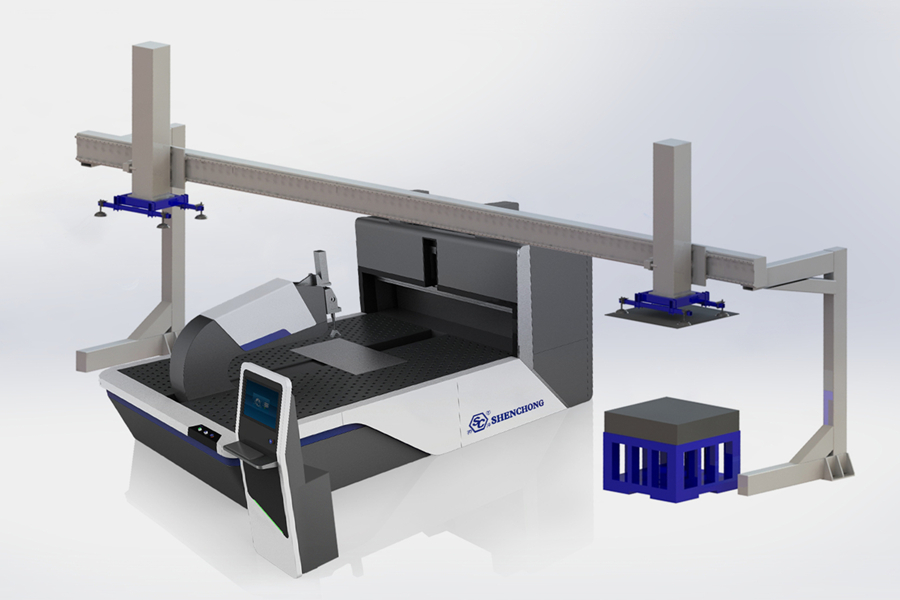
1) Higher Automation
Combined with: Robots and AGV logistics vehicles to form unmanned production lines.
2) Higher Intelligence
AI automatically identifies workpieces and automatically generates flanging programs.
3) Higher Precision
Processing accuracy improved to ±0.02mm level.
4) Digital Factory
Achieving: Cloud management, remote operation and maintenance, big data analysis, and full integration with the intelligent manufacturing system.
12. Summary
Fully automatic servo panel benders are important forming equipment in modern sheet metal manufacturing, integrating high precision, high efficiency, high automation, low energy consumption, and flexible production.
Compared to traditional hydraulic press brake bending equipment, they have significant advantages in processing accuracy, production efficiency, product consistency, and intelligence. Especially in the fields of new energy vehicles, electrical cabinets, kitchen equipment, elevator manufacturing, ventilation engineering, and high-end equipment manufacturing, they have become key equipment for enhancing enterprise competitiveness and achieving intelligent manufacturing upgrades.
For enterprises pursuing high quality, mass production, and intelligent factory construction, CNC automatic panel bending center is not only a processing device, but also an important basic equipment for reducing costs and increasing efficiency, enhancing product added value, and moving towards Industry 4.0.

 English
  Spanish
  Portuguese
  Russian
  Arabic
  French
  Italian
  German
  Polish
  Thai
Thai  Vietnamese
  Lithuanian
  Czech
Czech  Korean
  Japanese
  Chinese