
Table of Contents
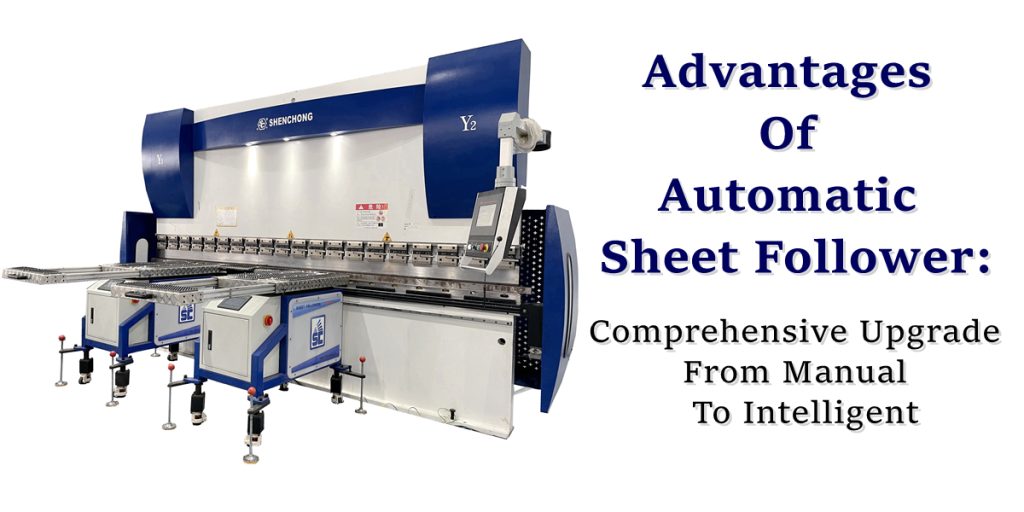
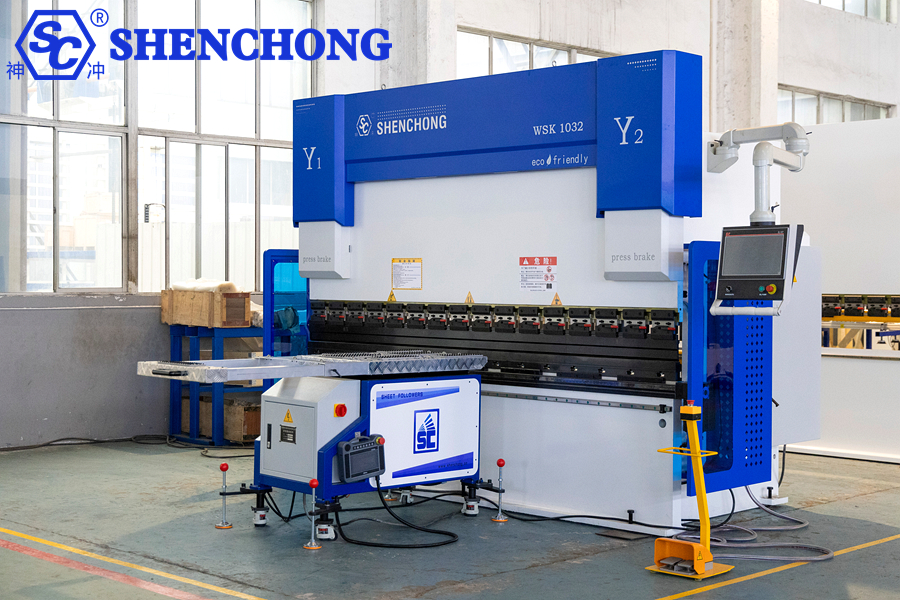
Automatic sheet follower for bending machines, also known as a follow-up material support device, bending follow-up support, sheet metal follow-up material support system, or bending sheet metal follower, is an auxiliary device installed in front of the bending machine that moves synchronously with the slide block, providing continuous support to the sheet metal during the bending process.
For thin sheets, large-sized sheets, long sheets, and heavy metal workpieces, one of the biggest challenges in the bending process is not “whether it can be bent,” but rather how to maintain the stability of the sheet metal during bending, reduce sagging, reduce manual labor, and ensure bending accuracy.
Traditional bending typically requires operators to manually support the material in front of the machine:
The longer the sheet metal → the heavier it is → the more difficult it is to manually support the material → the more pronounced the sagging → the greater the positioning error → the less stable the bending quality.
The follow-up device, through mechanical, hydraulic, servo, or CNC synchronous control, makes the material support platform move automatically with the bending action, providing continuous support to the sheet metal throughout the entire bending process.
Therefore, it is not just a simple “material support frame”, but can be regarded as an important auxiliary system for press brake bending machines to achieve high efficiency, high precision, low labor and automated production.
1. What is Bending Machine Follow-up Device?
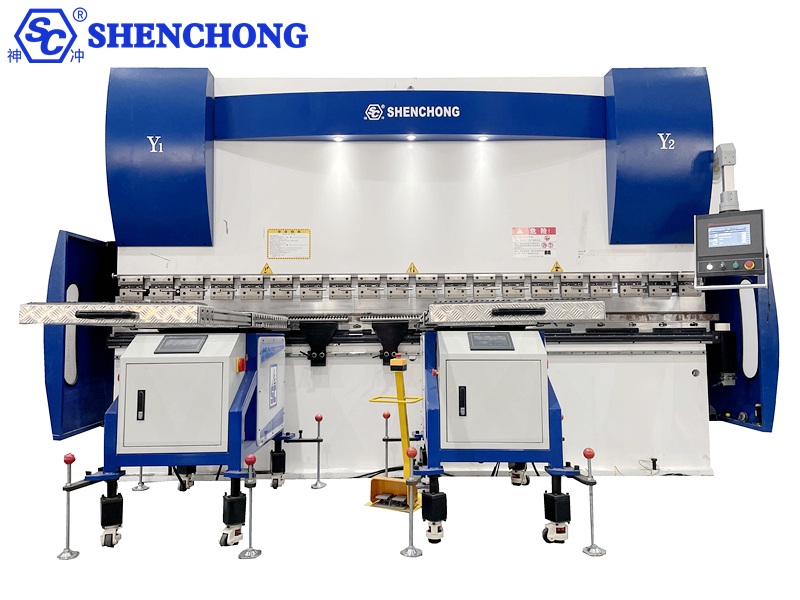
The core function of an automatic sheet follower device can be summarized in one sentence:
It allows the material support device to move along with the sheet metal, ensuring the sheet metal receives proper support throughout the bending process.
The main problems with traditional fixed front supports are:
- The sheet metal’s position is essentially fixed after it’s placed on the support.
- When the bending angle changes, the sheet metal’s trajectory changes.
- The sheet metal is prone to friction with the support.
- Large sheets may sag due to their own weight.
- Constant manual adjustment is required during bending.
- It’s particularly unsuitable for long, thick, and large workpieces.
The bending follow-up device, on the other hand, simulates the bending trajectory of the sheet metal through a motion mechanism.
Simply put:
The bending machine slide descends → the sheet metal begins to bend → the follow-up support adjusts its height/angle synchronously → the sheet metal receives constant support → the slide returns → the follow-up device returns synchronously.
This is the core meaning of the term “follow-up.”
2. Main Structure of Automatic Sheet Follower
A complete follow-up device for a bending machine typically includes the following parts:
1) Material Support Platform
This platform directly contacts the sheet metal and supports the workpiece.
Common forms include:
- Platform-type support
- Roller-type support
- Spherical support
- Multi-point support
- Adjustable support arm
- Dedicated tooling support structure
2) Swing Arm or Support Arm
This is a crucial moving component of the follow-up system.
As the sheet metal bends, the support arm performs the following actions:
- Rising
- Lowering
- Swinging
- Following
- Returning
Through a reasonable motion trajectory, the support point is made as close as possible to the actual motion trajectory of the sheet metal.
3) Drive System
Depending on the equipment level, the following may be used:
- Hydraulic drive
- Servo motor drive
- Motor + reducer
- Pneumatic assistance
- Mechanical linkage
- CNC linkage drive
High-end equipment typically employs servo control for better dynamic response.
4) Control System
The control system coordinates the motion relationships between:
the bending machine main unit → slide block → follower device → back gauge → other auxiliary axes.
More advanced follower systems can directly link with the bending machine’s CNC system.
5) Guide Rails and Motion Mechanisms
These ensure the following during the follower device’s movement:
- Smooth movement
- Low friction
- High repeatability
- Low noise
- Long-term stability
3. Why do bending machines especially need a follow-up device?
This is key to understanding the value of a automatic bending follower device.
Consider a steel plate:
4000 × 1500 × 4 mm
to be bent.
The steel plate itself already has considerable weight.
If relying entirely on manual support, the plate will exhibit significant:
sag → slip → rotate → shift during the bending process.
This is especially noticeable during:
- The first bend
- Long-side bends
- Large workpieces
- Multiple bends
- Thick plate bends
these processes are even more pronounced.
Therefore, the follow-up device essentially solves a very important problem:
how to control the spatial position of the plate during the bending process.
4. 1 major advantage: Reduced manual material handling
This is the most direct advantage.
Traditional bending:
- Operator A: Controls the bending machine
- Operator B: Holds the sheet metal
- Operator C: Assists with positioning
- Especially for large sheets, often requiring two or more people to work together.
With a automatic sheet follower device:
Operator
↓
Positions the sheet metal
↓
Starts the bending program
↓
Follow-up device automatically supports the material
↓
Bending completed
Manual personnel no longer need to constantly bear the weight of the sheet metal.
Direct benefits:
- Reduced number of operators.
- Reduced labor intensity.
- Reduced need for multiple people working together.
- Reduced worker fatigue.
- Reduced manual material handling errors.
- Improved production continuity.
This advantage is particularly significant for mass production companies.
5. 2 major advantage: Reduced sagging of large sheets
The longer the sheet metal, the more pronounced the sagging problem.
For example:
- 2500mm sheet metal
- 3200mm sheet metal
- 4000mm sheet metal
- 5000mm sheet metal
- 6000mm or even longer sheet metal
Without proper support, the sheet metal will deform under its own weight.
Especially for:
- Stainless steel sheet
- Aluminum sheet
- Carbon steel sheet
- Galvanized sheet
- Long, thin sheets
Sagging issues are more pronounced in these areas.
The follow-up device can provide continuous support, thereby reducing:
Sheet metal weight → Deflection → Positioning changes
This chain reaction.
6. 3 major advantage: Improved bending angle consistency
This is a crucial aspect where the follow-up device truly demonstrates its technological value.
Bending accuracy depends not only on:
- Bending machine rigidity
- Hydraulic system
- CNC system
- Linear ruler
- Die accuracy
It is also closely related to the stability of the sheet metal during the bending process.
If the sheet metal continuously sinks, slides, or twists during bending, even with a high-precision bending machine, the final product accuracy may be affected.
A follow-up support device can keep the sheet metal in a more stable state.
Therefore, it helps improve:
- Bending angle consistency
- Workpiece size consistency
- Multi-process repeatability accuracy
- Height consistency at both ends
- Long-side bending stability
7. 4 major advantage: Reduced sheet metal slippage
During bending, the sheet metal is not stationary.
As the upper die presses down:
Sheet metal contact point → Force → Rotation → Position change.
If the support is insufficient, the sheet metal is prone to:
- Forward and backward slippage
- Left and right offset
- Rotation
- Sagging
The automatic sheet folloer, by following the movement of the sheet metal, provides more reasonable support.
Therefore, it can significantly reduce abnormal movement of the sheet metal during bending.
8. 8 major advantage: Reduced operator workload
This point is often underestimated.
For example, a sheet metal weighing approximately 100kg.
If materials are manually supported:
The operator is essentially performing repeated “handling + lifting + positioning”.
After processing dozens or even hundreds of pieces a day, the labor intensity is extremely high.
In the long run, this may cause:
- Shoulder fatigue
- Lower back fatigue
- Arm fatigue
- Decreased operator concentration
- Reduced worker efficiency
With the follow-up device bearing a large weight of the sheet metal, the operator’s main responsibilities are:
Loading → Positioning → Starting the program → Retrieving the material.
The work method is significantly easier.
9. 6 major advantage: Improved production efficiency
The automatic sheet follower not only reduces manual labor, but it also reduces:
- Manual waiting
- Manual adjustments
- Repeated positioning
- Multiple communication
- Mid-process downtime
Therefore, it is particularly suitable for mass production.
For example, the traditional method:
Loading → Manual support → Positioning → Bending → Adjustment → Repositioning.
Automatic Follow-up Mode:
Loading → Positioning → Program Execution → Automatic Follow-up → Completion.
As production volume increases, the efficiency advantage will become increasingly apparent.
10. 7 Major Advantage: Particularly Suitable for Bending Long Plates
For:
3000mm, 4000mm, 5000mm, 6000mm and even longer bending machines, the value of the follow-up device becomes even more prominent.
The core problem with long plates is:
As the plate length increases, the bending and swaying caused by its own weight become increasingly pronounced.
For example:
A 3200mm bending machine can significantly improve the material support problem for long plates.
A 4000mm bending machine The value of the follow-up material support is further enhanced.
A 5000-6000mm bending machine Without a proper material support system, the difficulty of manual operation increases significantly.
Therefore:
The longer the working length of the bending machine, the greater the necessity of configuring a follow-up device.
11. 8 Major Advantage: Particularly Suitable for Bending Thin Plates
Many people believe that only thick plates need material support.
In fact, thin plates also greatly benefit from follow-up devices.
The reason is that thin plates:
- have lower rigidity
- Easier to bend
- Easier to sag
- Easier to cause localized deformation
- Easier to scratch
Especially:
0.8–2mm thin sheets
Manual support is very difficult when the sheet is large.
The automatic sheet follower bending device can provide continuous, flexible support for the sheet.
12. 9 major advantage: Reduced surface scratches
If using a traditional fixed support:
The sheet may rub against the support surface during bending.
Especially:
- Stainless steel
- Aluminum sheet
- Galvanized sheet
- Mirror-finish sheet
- Painted sheet
- Brushed sheet
High surface protection requirements.
If the follow-up device uses:
- Rollers
- Spherical supports
- Low-friction materials
- Special protective pads
It can reduce dragging friction between the sheet and the support.
Therefore, it is particularly valuable for products with high surface quality.
13. 10 Major Advantage: Improved Safety of Large Workpieces
During the bending process of large sheet metal, without proper support, the following may occur:
- Sudden drop
- Sudden overturning
- Sheet metal swaying
- Operator losing balance
Sheet metal edges colliding with personnel or equipment.
The automatic sheet follower device can support part of the sheet metal’s weight.
Therefore, it can reduce the risk of manually lifting large sheet metal.
It should be noted that:
The follow-up device is an auxiliary support device and cannot replace complete safety protection and correct operating procedures.
14. 11 Major Advantage: Improved Stability of Multiple Bending Steps
Complex workpieces often require:
4, 6, 8, or even more bends.
After the first bend, the shape of the workpiece changes.
If manual support is still relied upon at this point:
- The workpiece becomes increasingly difficult to handle.
- The center of gravity shifts.
- Positioning becomes more difficult.
- Operator needs to constantly change posture.
The follow-up device can continuously provide support according to the processing process.
Therefore, it is particularly suitable for:
- Boxes
- Door panel
- Rack
- Electrical cabinet
- Sheet metal frame
- Large enclosure
15. 12 Major Advantage: Improving the Machining of Asymmetrical Workpieces
Some workpieces have different weights on their left and right sides.
For example:
One side is already bent.
One side has a hole.
One side has a reinforcing rib.
One side is larger.
In this case, the workpiece’s center of gravity will shift.
Manual material handling easily results in:
One side being higher than the other.
A well-designed follow-up system can improve this situation through multiple support points.
16. 13 Major Advantage: Linking with CNC Bending Machines
The biggest upgrade direction for modern high-end bending follow-up devices is:
From mechanical material handling → CNC follow-up.
It can coordinate with the CNC bending machine control system.
Automatically control according to the program:
- Material handling height.
- Material handling angle.
- Follow-up speed.
- Return position.
Actions for different bending steps. This means operators don’t need to manually adjust each time.
17. 14 Advantage: Reduced Human Error
Manual material handling involves significant human variation.
For example:
- Operator A:Handling material at a high position.
- Operator B:Handling material at a low position.
- Operator C:Handling the left side high, the right side low.
Ultimately, this may lead to:
Different products produced by different operators using the same procedure.
Automatic follow-up devices can standardize a large number of actions.
Therefore, they are particularly suitable for:
Standardized, batch, and large-scale production.
18. 15 Advantage: Increased Automation Level
If the follow-up device is combined with:
- CNC bending machines
- Automatic back gauge
- Laser safety protection
- Robot loading and unloading
- Automatic feeding system
- Automatic mold changing system
This creates a more complete automated bending unit.
For example:
Intelligent warehousing
↓
Automatic feeding
↓
Robot/robotic arm
↓
CNC bending machine
↓
Follow-up material support
↓
Automatic bending
↓
Robot unloading
↓
Finished product conveying
At this point, the follow-up device is no longer simply an “auxiliary material support”.
It becomes an important component of the entire automated bending system.
19. The Value of Using Follow-up Devices on Different Plate Materials
Analysis Table:
Materials | Need Level | Main reasons |
Q235 carbon steel | ★★★★☆ | Heavy weight, long boards sag |
Q355 steel plate | ★★★★☆ | High strength, heavy weight |
Stainless steel | ★★★★★ | Weight + surface protection |
Aluminum plate | ★★★★★ | Low rigidity, easily deformed |
Galvanized plate | ★★★★☆ | Surface protection required |
Thin plate | ★★★★★ | Prone to sagging |
Thick plate | ★★★★★ | Heavy weight |
Long plate | ★★★★★ | Significant bending |
Large size plate | ★★★★★ | Difficult to support manually |
20. The Impact of Follow-up Devices on Plates of Different Thicknesses
1) Thin Plates
Key Issues to Address:
- Sagging
- Deformation
- Surface Scratches
- Unstable Positioning
2) Medium-Thick Plates
Key Issues to Address:
- Weight
- Operator Labor Intensity
- Workpiece Stability
3) Thick Plates
Key Issues to Address:
- Plate Weight.
- Difficulty in Manual Handling.
- Changes in Center of Gravity During Bending.
Therefore, it cannot be simply assumed that:
“Follow-up devices are only suitable for thin plates.”
In reality: Both thin and thick plates require them, but the problems they address are different.
21. How to Judge the Quality of a Follow-up Device?
It is recommended to focus on checking the following 10 items:
1) Load-Bearing Capacity
Must meet the actual maximum workpiece weight.
2) Movement Smoothness
The following should not occur:
- Jitter
- Sudden Jumping
- Stuttering
- Left-Right Asynchrony
3) Follow-up Response Speed
The follow-up system should not lag significantly when the bending machine is moving at high speed.
4) Repeatability Positioning Accuracy
Consistency should be maintained when continuously processing the same product.
5) Material Support Height Range
It should meet the needs of different molds and different sheet materials.
6) Material Support Width
The longer and larger the workpiece, the higher the support range requirement.
7) Surface Protection
Check if the material support surface is suitable for:
Stainless steel, Aluminum, Galvanized sheet, Painted sheet
8) Control System Compatibility
Ideally, it should be linked with the bending machine’s CNC system.
9) Safety Protection
Consider:
Limit switches, Anti-pinch, Emergency stop, Overload protection, Abnormal alarm.
10) Maintenance Ease
Check:
Guide rails, Bearings, Lead screws, Hydraulic system, Sensors, Motors
Are they easy to maintain?
22. The greatest value is not "saving one person"
This is a very important point.
Many salespeople, when introducing servo drives, only emphasize: “It can reduce labor.” In reality, this is only the first layer of value.
The true value chain is:
Servo drive material handling
↓
Reduced manual material handling
↓
Reduced sheet metal sagging
↓
Improved workpiece stability
↓
Reduced positioning errors
↓
Improved bending consistency
↓
Reduced rework
↓
Improved production efficiency
↓
Reduced overall manufacturing costs
↓
Increased automation level
Therefore, servo drives should be viewed from the perspective of “improving production system efficiency,” not simply from the perspective of “auxiliary equipment.”
23. The impact on overall enterprise costs
Although adding servo drives will increase the initial purchase cost of the equipment, the following should be calculated:
Total Cost of Ownership (TCO)
Instead of just looking at the equipment purchase price.
The following factors need to be considered comprehensively:
- Labor costs
- Production efficiency
- Rework costs
- Scrap costs
- Production consistency
- Operator training
- Long-term labor intensity
- Automation upgrade capability
If a servo system can reduce labor and improve production efficiency in the long run, its return on investment may far exceed the initial purchase price difference.
24. Summary of the core technological advantages
These can be summarized into the following 12 points:
1) Automatic material support
Reduces continuous manual lifting.
2) Automatic following
Moves synchronously with bending actions.
3) Stable support
Reduces sheet metal sagging and swaying.
4) Improved precision
Improves the stability of the bending process.
5) Increased efficiency
Reduces manual assistance time.
6) Reduced labor intensity
Especially suitable for large sheets.
7) Workpiece protection
Reduces dragging and scratches.
8) Adaptability to long sheets
Suitable for workpieces 3200-6000mm or even longer.
9) Adaptability to thin sheets
Reduces deformation of thin sheets.
10) Supports multiple bends
More stable processing of complex workpieces.
11) Supports automation
Can be integrated with CNC and robotic systems.
12) Improves production standardization
Reduces differences between operators.
25. Why are more and more high-end bending machines equipped with follow-up devices?
From the perspective of the overall development trend of sheet metal manufacturing, bending machines have gradually shifted from simply pursuing “bending smoothly” to “bending accurately, bending quickly, bending stably, requiring less manpower, and automation.”
The follow-up device precisely solves a very core problem in the bending process of large sheet metal: how to keep the sheet metal stable during the bending motion.
Therefore, its value can be summarized as follows:
- For operators: Reduces material handling, transportation, and repetitive labor.
- For equipment: Reduces the risk of abnormal stress and workpiece collisions.
- For products: Improves dimensional, angle, and appearance consistency.
- For production: Increases efficiency, reduces waiting time and rework.
- For enterprises: Reduces reliance on manual labor and improves overall production efficiency.
- For automation: Provides fundamental support for robotic bending, flexible bending, and intelligent sheet metal production.
The final result is:
“Manual material handling” → “Automatic sheet follower material handling” → “CNC linkage material handling” → “Robotic flexible bending” → “Intelligent sheet metal factory”
This is a complete technological upgrade path.
From an equipment procurement perspective, the follow-up device is not simply an additional configuration, but rather one of the crucial functional modules determining the efficiency, stability, and automation level of large sheet metal bending.
 English
  Spanish
  Portuguese
  Russian
  Arabic
  French
  Italian
  German
  Polish
  Thai
Thai  Vietnamese
  Lithuanian
  Czech
Czech  Korean
  Japanese
  Chinese