
Table of Contents
Three-roller sheet bending machine is key pieces of equipment in sheet metal forming, operating under heavy loads, impacts, friction, vibration, and frequent adjustments for extended periods. The stability of the equipment not only determines the rolling accuracy, forming efficiency, and surface quality, but also directly affects the roller life, hydraulic system reliability, and overall machine safety.
Proper maintenance ensures the rolling machine maintains high pressing accuracy, synchronization, and repeatability over extended periods. Inadequate maintenance can easily lead to problems such as roller surface scratches, uneven roller wear, hydraulic leaks, abnormal transmission noises, elliptical rolling, misalignment, and non-rounded forming.
This guide, from a field maintenance perspective, systematically explains the daily inspection, lubrication, hydraulic system maintenance, mechanical transmission maintenance, accuracy checks, fault prevention, long-term downtime maintenance, and overhaul recommendations for three-roll sheet metal forming machines. It is applicable to mechanical, hydraulic, and CNC three-roller sheet rolling machines and can also serve as a foundational document for workshop equipment management, training, and maintenance procedures.
1. Core Objectives Of Three-Roller Sheet Bending Machine Maintenance
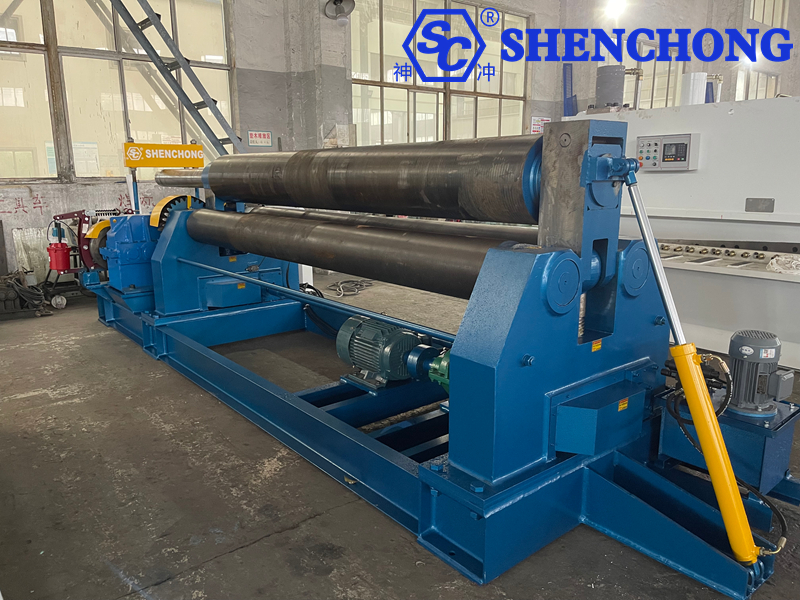
The core of 3-roll plate rolling machine maintenance is not “repairing only when it breaks,” but rather ensuring the long-term achievement of the following 5 objectives through continuous condition management:
1) Ensure stable rolling accuracy
Focus on controlling the parallelism of the upper roll, the center distance of the lower roll, the synchronization of left and right pressing, roll surface wear, guide clearance, and return consistency.
2) Ensure safe three-roller sheet bending machine operation
Prevent pinching, entanglement, overload, power failure malfunctions, hydraulic pressure loss, workpiece slippage, and roll shaft malfunction.
3) Extend the lifespan of key components
Including the main roll shaft, reducer, bearings, hydraulic pump station, seals, couplings, gears and racks, cylinders, and electrical control components.
4) Reduce downtime and rework
Reduce oil leaks, abnormal noises, overheating, inaccuracies, and sudden malfunctions through preventative maintenance.
5) Maintain a clean appearance and 5S on-site practices
Cleanliness, tightness, clear labeling, clean oil lines, and tools in their proper places are also part of maintenance.
2. Basic Principles Established Before Maintenance
1) Safety First
Before any inspection, disassembly, wiping, tightening, oil change, or parts replacement, the following must be done:
- Disconnect the main power supply and lock/tag it.
- Release residual pressure in the hydraulic system.
- Completely stop the upper roller, lower roller, and side rollers.
- Remove the workpiece and lifting device.
- Do not put your hands between the rollers or into the transmission parts.
- Wear protective gloves, non-slip shoes, and safety glasses.
2) Observe First, Then Act
If the equipment malfunctions, do not force it to operate immediately.
First check:
- Whether there is oil leakage, seepage, or insufficient oil.
- Whether there are obvious abnormal noises, impact sounds, or vibrations.
- Whether there are foreign objects, indentations, or adhered metal shavings on the roller surface.
- Whether the electrical control panel is alarming.
- Whether the hydraulic pressure and temperature are abnormal.
- Whether the rolling process shows deviation, taper, ellipticity, or uneven opening.
3) Maintenance Must Be Recorded
The following should be recorded for each maintenance:
- Date
- Operator
- Inspection Content
- Description of Abnormality
- Handling Result
- Replacement Part Model
- Oil Batch
- Next Maintenance Plan
Unrecorded maintenance makes it difficult to track equipment deterioration trends and hinders responsibility allocation and fault analysis.
4) Maintenance Should Be Hierarchical
Maintenance of a three-roll plate bending machine is recommended to be divided into:
- Daily Inspection
- Weekly Maintenance
- Monthly Maintenance
- Quarterly Maintenance
- Annual Maintenance
- Overhaul-level Maintenance
Different levels correspond to different levels of complexity and should not be confused.
3. Main Maintenance Components of Three-Roll Plate Rolling Machine
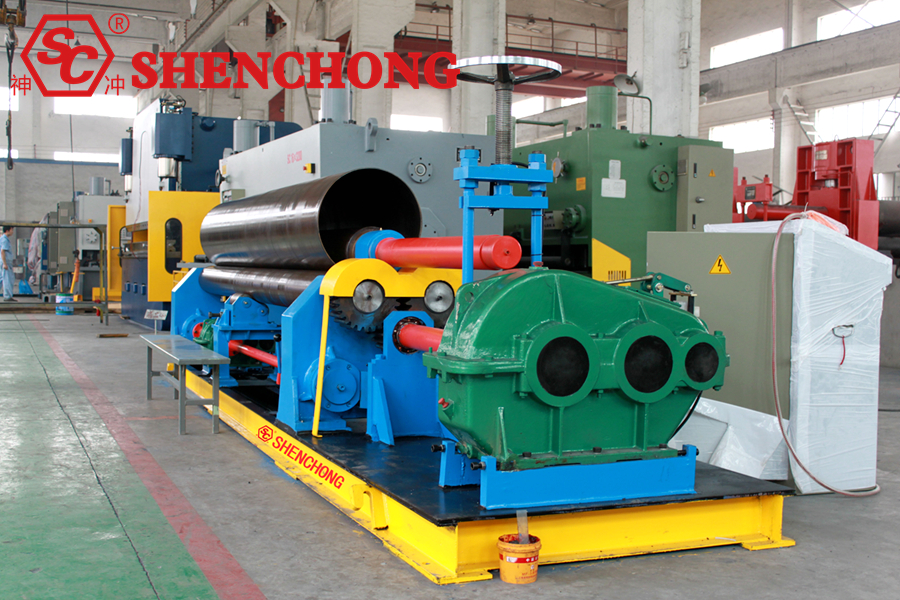
A three-roller sheet bending machine typically consists of the following systems, which should be checked item by item during maintenance:
1) Mechanical Transmission System
Includes the main motor, reducer, coupling, gears, chain, gearbox, drive shaft, and bearing housing.
Maintenance focus: Tightness, lubrication, coaxiality, backlash, and wear.
2) Roller and Roll Surface System
Includes the upper roller, lower roller, side rollers, roller shaft, roller surface hardening layer, and roller shaft end support structure.
Maintenance focus: Surface cleanliness, indentation inspection, runout inspection, parallelism, and wear uniformity.
3) Hydraulic System
Includes the oil pump, oil tank, oil filter, hydraulic valves, cylinders, oil pipes, connectors, pressure gauges, and cooler.
Maintenance focus: Oil level, oil temperature, oil quality, pressure stability, leakage, and valve core operation flexibility.
4) Electrical Control System
Includes distribution cabinet, relays, contactors, PLC, frequency converter, push-button station, sensors, and limit switches.
Maintenance focus is on: secure wiring, cabinet cleaning, heat dissipation, insulation, alarm codes, and aging wiring.
5) Frame and Foundation System
Includes bed, uprights, base, anchor bolts, and leveling blocks.
Maintenance focus is on: loose foundation, deformation, cracks, misalignment, and vibration.
6) Safety Protection System
Includes protective covers, emergency stop buttons, guardrails, interlocking devices, photoelectric protection (if applicable), and warning signs.
Maintenance focus is on: sensitivity and reliability, no malfunctions, and no unauthorized removal.
4. Daily Maintenance: Mandatory Inspection Items for Each Shift
Daily maintenance is the most important and easily overlooked aspect. Many major malfunctions of the three-roller sheet bending machine can often be detected early during daily inspections.
1) Pre-Start Inspection
Before starting each shift, complete at least the following checks:
- Are there any debris, tools, or scrap steel plates around the equipment?
- Is the roller surface clean, free of iron filings, oil stains, and welding slag?
- Is the hydraulic oil level within the specified range?
- Observe the oil pipes, joints, and cylinders for oil leaks.
- Check that the emergency stop button is effective.
- Check that the protective cover is intact.
- Check that the power supply voltage is normal.
- Check that the control panel has any alarms.
- Check that there is an oil film or grease at the lubrication points.
- Check for loose mounting feet or signs of abnormal vibration.
2) In-Run Inspection
During equipment operation, pay close attention to the following:
- Does the motor start smoothly?
- Does the reducer make any abnormal noise?
- Is the pressing action synchronized?
- Is the contact between the upper and lower rollers smooth?
- Is there any slippage, jamming, or shaking during the plate rolling process?
- Is the hydraulic cylinder movement uniform and without creeping?
- Check for material adhesion on the roller surface.
- Check for lateral workpiece shifting.
- Check for abnormal drift in control parameters.
3) Post-Stop Inspection
Immediately after shutdown:
- Clean the roller surface and machine body.
- Clean the guide rails, base, and remove oil stains.
- Check for workpiece residue and indentations.
- Check for loose bolts and pins.
- Check for new leaks.
- Reset all actuators.
- Turn off the main power supply.
- Fill out the equipment inspection record.
4) Daily Maintenance Points
- Do not wipe rotating parts directly with your hands.
- Do not strike the roller surface with hard objects.
- Do not start under load or force down.
- Do not pile workpieces on the equipment.
- Do not use equipment with excessive thickness, width, or hardness.
- Do not repeatedly “force” mismatched sheet metal to round it.
5. Lubrication And Maintenance: The Key To Plate Rolling Machine Lifespan
Inadequate lubrication is one of the main causes of accelerated wear, increased noise, and decreased efficiency in plate rolling machines.
1) Lubrication Points
Common lubrication points include:
- Upper roller bearing
- Lower roller bearing
- Side roller guide rail and slider
- Press-down nut and lead screw
- Gear meshing parts
- Chain drive parts
- Drive shaft connection
- Internal oil of the reducer
- Surface of the cylinder piston rod (maintain according to equipment requirements)
- Open guide rails and sliding surfaces
2) Lubrication Principles
- Use the manufacturer-specified type of grease or hydraulic oil.
- Do not mix different brands or base oils.
- Lubricate “appropriately”; excessive lubrication will attract dust and form abrasive slurry.
- Clean old oil stains and metal powder before lubrication.
- Shorten the lubrication cycle under high temperature and high load conditions.
3) Lubrication Recommendations
– Bearing Lubrication
Bearings are one of the most critical friction pairs in a plate rolling machine.
Recommendations:
- Regularly replenish with high-temperature extreme pressure lithium-based grease or the grease specified by the equipment.
- Clean the grease fitting before replenishing.
- Do not inject excessive grease to avoid overheating of the bearing cavity.
- If a significant increase in bearing temperature, increased noise, or stiffness is observed, check immediately.
– Gear Lubrication
Open gears and chains should be regularly coated with special grease or gear oil:
- Ensure even coverage of the tooth surface.
- Do not apply excessively dirty old oil.
- If pitting, peeling, or abnormal wear marks are found on the tooth surface, check the meshing condition.
– Guide Rail Lubrication
Guide rails and sliders should be kept clean, flat, and free of particles:
- First wipe away metal shavings.
- Then apply oil or grease as specified.
- Worn guide rails will affect the accuracy of the side roller movement, causing taper and out-of-roundness.
– Gearbox Lubrication
The gearbox oil level must be changed or checked regularly according to the instruction manual:
- Low oil level will cause gear and bearing failure.
- Oil emulsification indicates water intrusion.
- Black, smelly, or containing metal powder oil indicates severe internal wear.
- When changing the oil, the old oil should be completely drained, and the oil chamber should be cleaned if necessary.
4) Recommended Lubrication Frequency
Specific recommendations are subject to the equipment instruction manual, but can generally be referenced as follows:
- Daily: Clean visible sliding surfaces, guide rails, and roller surfaces.
- Weekly: Replenish grease at major lubrication points.
- Monthly: Check the gearbox oil level and quality, and replenish or adjust as needed.
- Quarterly: Conduct a comprehensive inspection of the lubrication system.
- Annually: Replace critical oils and thoroughly clean the system.
6. Hydraulic System Maintenance: The Foundation of Stability and Rolling Accuracy
In a hydraulic 3-roll plate bending machine, the stability of the hydraulic system directly affects the pressing speed, synchronization, forming consistency, and overall machine lifespan.
1) Hydraulic Oil Maintenance
Hydraulic oil is the “blood” of the hydraulic system.
Inspection Items:
- Is the oil level normal?
- Is the oil clear?
- Is it emulsified, whitened, or foaming?
- Is there any unusual odor, discoloration, or sediment?
- Is there any metal shavings or moisture mixed in?
Common Problems:
- Blackened oil: Oxidation, overheating, or severe contamination.
- Whitened or emulsified oil: Water ingress or excessive condensate.
- Foaming oil: Air suction, poor oil return, or air mixing.
- Overheated oil: Cooler failure, valve blockage, or significant system leakage.
2) Oil Pump and Motor
The oil pump and motor are the power source.
Maintenance focuses on the following:
- Is the starting sound smooth?
- Is there any screeching, idling, or vibration?
- Is the motor temperature rise abnormal?
- Is the coupling concentric?
- Is the pump body leaking oil?
- Is the pump inlet filter clogged?
3) Hydraulic Valve Assembly
Valve assembly malfunctions often manifest as slow operation, unstable pressure, and abnormal return stroke.
Maintenance Focus Of Three-Roller Sheet Bending Machine:
- Keep the valve body clean.
- Regularly check the solenoid valve wiring and operation.
- Check the relief valve set pressure.
- Check the throttle valve and directional valve for flexible operation.
- Do not force high-pressure impact if the valve core is stuck.
- Disassemble and clean it.
4) Hydraulic Cylinder and Seals
The hydraulic cylinder is the actuator.
Common problems include:
- Piston rod scratches.
- Aging of the seals.
- Oil leakage from the cylinder port.
- Piston creep.
- Asynchronous operation of the left and right cylinders.
Maintenance Requirements:
- Keep the piston rod surface clean to prevent dust from abrading the seals.
- Address any minor leaks as soon as possible.
- When replacing seals, check the cylinder inner wall for scoring.
- Dual-cylinder equipment requires regular synchronous checks.
5) Hydraulic Oil Change Recommendations
- Change the oil according to the instruction manual after the initial period of operation.
- Thereafter, change the oil regularly according to operating conditions.
- In frequent high-temperature and high-dust environments, shorten the oil change interval.
- When changing the oil, the filter element must be replaced or cleaned simultaneously; do not change the oil without changing the filter.
7. Mechanical Transmission System Maintenance: Preventing Abnormal Noise, Clearance, and Instability
Wearing in the mechanical transmission system directly manifests as increased winding errors, unstable operation, and decreased efficiency.
1) Reducer Maintenance
Common reducer problems include:
- Shaft seal leakage
- Bearing wear
- Gear pitting
- Insufficient oil level
- Overheating
- Increased noise
Solution Recommendations:
- Ensure the correct oil type.
- Change the oil according to specifications.
- Regularly check the vent cap for blockage.
- Loose anchor bolts can cause the reducer to resonate. Tighten them promptly.
- Do not continue overloading if continuous abnormal noise occurs.
2) Coupling Maintenance
The coupling is responsible for transmitting torque. Common problems include:
- Poor alignment
- Aging of the elastomer
- Loose keyway
- Loose fasteners
Inspection Points:
- Does the coaxiality meet the requirements?
- Is there any eccentric oscillation?
- Is there any wear on the rubber blocks, spline washers, or elastic sleeves?
- Is there any impact noise during operation?
3) Gear and Chain Maintenance
- Check if the gear meshing is uniform.
- Are there any burrs, pitting, or peeling on the tooth surface?
- Is the chain tension appropriate?
- Is the sprocket properly aligned?
- Is the grease applied evenly? Do not dry grind.
4) Fastener Maintenance
The plate rolling machine is subjected to long-term impact.
The most prone to loosening are:
- Anchor bolts
- Bearing housing bolts
- Gearbox mounting bolts
- Frame connecting bolts
- Protective cover fasteners
- Internal wiring terminals of the electrical box
It is recommended to establish a “key bolt re-inspection system,” especially in the first month of equipment operation and under heavy load conditions.
8. Roller Shaft, Roller Surface And Forming Accuracy Maintenance
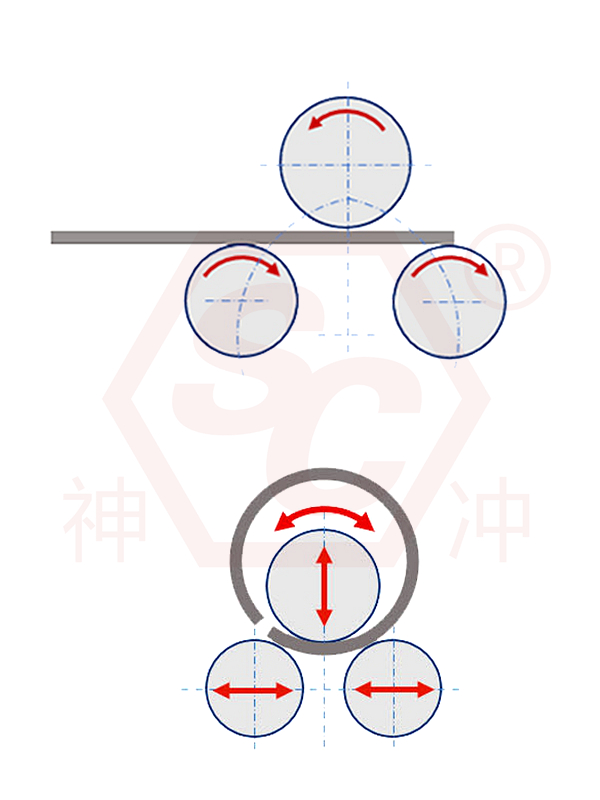
The most critical factors for the rolling quality of a three-roller sheet bending machine are the condition of the roller surface and the accuracy of the roller shaft.
1) Roller Surface Cleaning
Iron filings, welding slag, sand particles, and oxide scale remaining on the roller surface will lead to:
- Roller surface scratches
- Steel plate surface imprints
- Surface tearing
- Increased pitting on the roller surface
- Uneven forming
The roller surface should be wiped clean after each use, using a soft cloth and suitable cleaning agent if necessary.
2) Roller Surface Wear Inspection
Pay attention to:
- Local dents
- Longitudinal tearing
- Roller surface runout
- Surface hardening peeling
- Roller shoulder wear
When the roller surface shows significant wear, it will cause plate slippage, rolling deviation, and decreased roundness.
3) Roller Shaft Parallelism and Gap
Regularly check:
Whether the left and right lower rollers are parallel.
Whether the upper roller presses down evenly.
Are the guides on both sides synchronized?
Is the gap exceeded?
Parallelism deviation will lead to:
- One side of the workpiece is tight while the other is loose.
- Tapered rolling.
- Rolled into an ellipse.
- Inconsistent opening size of the workpiece.
4) Maintenance and Judgment of Abnormal Rolling Accuracy
If the following situations occur, troubleshooting should be done from a maintenance perspective, not just an operational issue:
- The arc is not round.
- The straight edges at both ends are too long.
- Workpiece misalignment.
- Tapered rolling.
- Inconsistent dimensions during repeated rolling.
- Fluctuations in forming effect under the same parameters.
Possible causes include:
- Roller surface wear.
- Excessive bearing clearance.
- Unstable hydraulic pressure.
- Synchronization misalignment.
- Changes in bed level.
- Oil stains or hard spots on the sheet metal surface.
9. Electrical System Maintenance: Ensuring Stable Control and Accurate Operation
1) Distribution Cabinet Cleaning
- Regularly clean dust.
- Inspect fans and filters.
- Keep the cabinet dry.
- Do not pile up miscellaneous items.
- Deal with pests and moisture immediately.
2) Wiring and Terminals
- Check terminals for looseness.
- Check cables for aging or damage.
- Ensure wire numbers are complete.
- Ensure grounding is reliable.
- Ensure control lines and power lines are laid out separately.
3) Control Components
- Buttons, knobs, emergency stop switches, and foot switches should operate reliably.
- Sensors, limit switches, and proximity switches should be in the correct positions.
- PLC, inverter, and servo drive alarms should be handled promptly.
- Do not arbitrarily change display parameters; original valuesmust be recorded.
4) Electrical Fault Prevention
- Do not leave the cabinet open for extended periods in humid environments.
- Do not plug or unplug non-designated modules while the circuit is hot.
- Limit switches or shielding protections must not be arbitrarily connected.
- Metal dust must not be allowed to enter the control cabinet.
- Grounding and insulation must be checked regularly.
10. Equipment Leveling, Foundation, and Installation Maintenance
1) Anchor Bolts
Loose anchor bolts will cause:
- Increased equipment vibration.
- Slight shift of the frame.
- Changes in roller parallelism.
- Increased forming error.
The tightness of the anchor bolts should be checked regularly, especially for heavy-duty equipment.
2) Foundation Settlement
Long-term heavy loads may cause uneven foundation settlement, manifested as:
- Inconsistent pressure on the left and right sides.
- Drift in rolling dimensions.
- Changes in equipment level.
- Workpiece misalignment.
It is recommended to regularly check the level of the machine bed with a level and make adjustments.
3) Equipment Location
The area around the equipment should be:
- Flat ground.
- No standing water.
- No vibration sources.
- Sufficient space for loading and unloading.
- No obstructions for heat dissipation and maintenance.
11. Maintenance Recommendations for Different Cycles
1) Daily Maintenance
- Clean the equipment and roller surfaces.
- Check oil level, oil pressure, abnormal noise, and leaks.
- Check emergency stop and protection devices.
- Record operating status.
2) Weekly Maintenance
- Add grease to major lubrication points.
- Check the tightness of transmission components.
- Clean guide rails and sliding surfaces.
- Check bolt tightness.
- Check hydraulic joints and hoses.
3) Monthly Maintenance
- Check hydraulic oil quality.
- Check filter elements, vent caps, and oil tank contamination.
- Check electrical cabinet heat dissipation.
- Check roller accuracy and consistency of movement.
- Check reducer oil level and temperature rise.
4) Quarterly Maintenance
- Conduct a comprehensive inspection of the hydraulic system.
- Check the temperature rise and clearance of each bearing.
- Check couplings, gears, and chain wear.
- Check control components and sensors.
- Perform a precision check.
5) Annual Maintenance
- Replace hydraulic oil and filter element.
- Check gearbox oil.
- Check bearings and seals.
- Check cables, relays, and contactors.
- Check bed level and main accuracy.
- Perform preventative replacement of wear parts.
12. Long-Term Shutdown and Storage Maintenance
If the equipment is not used for an extended period, it must be stored and maintained; otherwise, rust, oil deterioration, and component adhesion may occur.
Pre-Storage Procedures:
Thoroughly clean the machine body, roller surfaces, guide rails, and remove oil stains.
Apply rust-preventive oil to all exposed metal surfaces.
Return the hydraulic system to the required safe position.
Turn off the power and disconnect the main switch.
Perform dust removal and moisture-proofing treatment on the distribution cabinet.
Record the storage date and status.
During Storage:
Check the rust prevention status monthly.
Prevent moisture from entering the control cabinet.
Prevent rodent, insect, and dust accumulation.
Rotate key components regularly to prevent jamming.
Before Reactivation:
- Check electrical insulation.
- Check for hydraulic oil deterioration.
- Check for roller surface rust.
- Check for bearing and transmission component seizure.
- Perform low-speed no-load operation for confirmation before resuming formal production.
13. Common Faults and Maintenance Diagnosis
1) Out-of-round Rolling
Possible Causes:
- Roller surface wear.
- Poor roller parallelism.
- Inaccurate pressing amount.
- Uncompensated elastic rebound of sheet material.
- Unstable hydraulic pressure.
2) Inconsistent Rolling Between Left and Right Sides
Possible Causes:
- Asynchronous pressing between left and right sides.
- Uneven gap between side rollers.
- Worn guide rails.
- Foundation level deviation.
- Loose mechanical connections.
3) Abnormal Equipment Noise
Possible Causes:
- Insufficient or damaged bearings.
- Worn gears in the reducer.
- Misaligned coupling.
- Loose bolts.
- Chain too loose or too tight.
4) Slow Hydraulic Response
Possible Causes:
- Low oil temperature or abnormal oil viscosity.
- Clogged filter element.
- Worn pump.
- Sticky valve core.
- Insufficient oil or air suction.
5) Oil Leakage
Possible Causes:
- Aging seals.
- Loose joints.
- Broken oil pipes.
- Ineffective oil seals.
- Excessive pressure.
6) Electrical Control Malfunction
Possible Causes:
- Emergency stop not reset.
- Loose wiring.
- Sensor malfunction.
- Burned relay contacts.
- PLC or frequency converter alarm.
14. Maintenance Taboos
When maintaining the three-roller sheet bending machine, some incorrect practices will directly shorten the equipment’s lifespan and must be avoided:
- Do not disassemble hydraulic joints under pressure.
- Do not forcibly straighten the rollers by hammering.
- Do not repeatedly wipe the roller surface with a dirty cloth, causing secondary scratches.
- Do not use substandard oil.
- Do not ignore small leaks, abnormal noises, or minor vibrations.
- Do not roll beyond specifications.
- Do not remove safety devices without authorization.
- Do not perform internal maintenance while the power is on.
15. Recommended On-site Maintenance System
To ensure effective maintenance, the workshop is advised to establish the following system:
1) Inspection Responsibility System
Identify the responsible person for each piece of equipment, ensuring “whoever uses it, inspects it, and records it.”
2) Maintenance Record Form
The form should include:
- Date.
- Shift.
- Equipment Number.
- Inspection Items.
- Whether it is abnormal.
- Handling Method.
- Spare Parts Replacement.
- Re-inspection Results.
- Signature Confirmation.
3) Spare Parts Management
Commonly used spare parts should include at least:
- Sealing Rings.
- Bearings.
- Filter Elements.
- Oil Pipe Connectors.
- Buttons and Emergency Stop Devices.
- Relays and Contactors.
- Lubricating Grease and Hydraulic Oil.
- Limit Switches.
- Flexible Couplings.
4) Tiered Maintenance Management
- Operators are responsible for daily inspections.
- Team Leaders are responsible for weekly inspections.
- Equipment operators are responsible for monthly inspections.
- Maintenance personnel are responsible for quarterly and annual maintenance.
5) Fault Review System
Each fault must be analyzed:
- Is it an operational problem?
- Or a maintenance problem?
- Or a design/selection problem?
- Is there a tendency for recurrence?
- Does the maintenance cycle need adjustment?
16. Maintenance Conclusion
The maintenance of a three-roller sheet bending machine is essentially the continuous management of six major systems: precision, lubrication, cleaning, fastening, hydraulics, electrical, and safety.
Truly efficient maintenance is not about waiting for the equipment to break down before repairing it, but about identifying problems during daily inspections, eliminating potential hazards during weekly maintenance, controlling deterioration trends during monthly and quarterly maintenance, and restoring the equipment to its optimal condition during annual major maintenance.
By doing the following, the stability and service life of the plate rolling machine will be significantly improved:
- Keep the roll surfaces clean and undamaged.
- Ensure timely and standardized lubrication.
- Keep the hydraulic oil clean and at a stable temperature.
- Ensure transmission components are securely fastened.
- The electrical system is clean, sensitive, and alarm-free.
- The basic level is consistently maintained.
- Inspection and record-keeping systems are consistently implemented.
For workshops with high-load, high-frequency production, the plate rolling machine is not “equipment to be maintained,” but rather “equipment to be managed.” Whoever performs meticulous maintenance can simultaneously control forming quality, delivery efficiency, and equipment lifespan.
If needed, I can further compile this content into a “Three-Roller Sheet Bending Machine Inspection Checklist,” “Quarterly Maintenance Checklist,” or “Complete Equipment Maintenance Manual,” which can be directly printed and distributed to the workshop.

 English
  Spanish
  Portuguese
  Russian
  Arabic
  French
  Italian
  German
  Polish
  Thai
Thai  Vietnamese
  Lithuanian
  Czech
Czech  Korean
  Japanese
  Chinese