
Table of Contents
An automatic feeding shearing machine is a crucial piece of equipment for upgrading traditional shearing machines to high-efficiency, less-manned, and automated sheet metal production. It’s not simply adding a feeding device to a regular shearing machine. It integrates loading, positioning, feeding, shearing, continuous processing, and, in some cases, retrieving into a single system.
Currently, the market offers automatic feeding shearing machines ranging from relatively simple CNC front-feeding machines to complete automated shearing units featuring “gantry loading + automatic feeding + shearing + automatic retrieving.”
When purchasing, don’t just look at the words “automatic feeding.” Focus on factors such as the feeding method, sheet metal specifications, feeding accuracy, repeatability, shearing accuracy, control system, degree of automation, and overall machine rigidity. Some front-feeding systems use servo drives, lead screw/rack or roller mechanisms, and achieve continuous automatic shearing through clamping and positioning.
For industries such as steel structures, sheet metal processing, ventilation ducts, automobile manufacturing, home appliances, construction machinery, electrical cabinets, doors and windows, and shipbuilding, selecting a suitable automatic feeding shearing machine is not simply a matter of comparing “price” and “degree of automation.” Instead, it requires a comprehensive consideration of sheet metal specifications, shearing capacity, feeding method, positioning accuracy, production cycle time, level of automation, control system, and subsequent maintenance costs.
The following is a systematic analysis of how to select a shearing machine with auto feed from a practical purchasing perspective.
1. How to Choose Automatic Feeding System?
First, you need to figure out: What kind of “automatic feeding” do you need? This is the first step in the selection process, and also the most easily overlooked point.
The so-called “automatic feeding shearing machines” on the market may actually correspond to several completely different structures.
CNC Backgauge Shearing Machine
This is the most basic form of automatic positioning.
The working process is usually:
Manual loading → Sheet metal moves to the backgauge → CNC positioning → Shearing → Manual handling
The backgauge is driven by a servo motor and can move automatically according to the program.
Strictly speaking, it belongs to:
Automatic positioning, not fully automatic feeding.
Suitable for:
- Small batch production
- Regular sheet metal dimensions
- Sufficient operators
- Sheet metal workshops with low automation requirements
If the company only wants to reduce manual measurement and adjustment of dimensions, this configuration can meet its needs.
2. What is a true automatic feeding shearing machine?
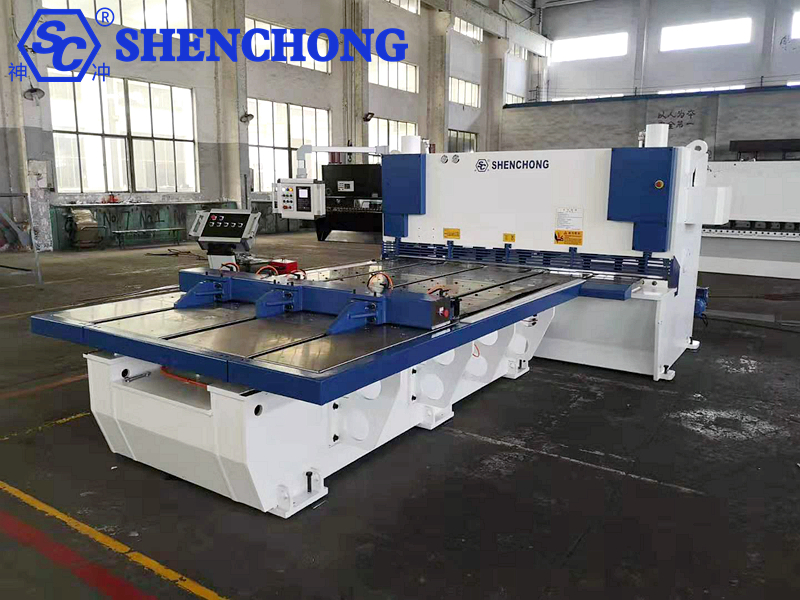
A true automatic feeding system typically adds the following to the front of the shearing machine:
- Feeding platform
- Servo feeding mechanism
- Roller or conveyor mechanism
- Pneumatic/hydraulic clamping mechanism
- CNC control system
- Positioning and detection mechanism
The basic process is:
Loading → Centering → Clamping → Automatic feeding → Automatic positioning → Shearing → Refeeding → Re-shearing
Therefore, it is particularly suitable for:
- Batch fixed-length cutting
- Continuous segmentation of long plates
- Narrow strip processing
- Continuous cutting of multiple sizes
- Repetitive orders
- High-volume sheet metal production
Some industrial automatic feeding equipment uses pneumatic clamps to hold the sheet metal, then advances it step by step according to the program, and automatically triggers the shearing action after reaching the correct position.
3. Selecting the Automatic Feeding Method Based on Production Mode
This is a crucial factor when purchasing.
Solution 1: Front-Feed Shearing Machine
This is currently a worthwhile option.
The sheet metal is placed on the feeding platform in front of the shearing machine, and a servo system controls its movement towards the shearing area.
Typical Structure:
Sheet metal → Front feeding platform → Clamping mechanism → Shearing area
Advantages:
- High degree of automation
- Reduces manual repetitive pushing of the sheet
- Suitable for continuous shearing
- More suitable for processing narrow strips and short parts
- Suitable for batch production
Some front-feed shearing machines can achieve automatic positioning, clamping, feeding, and continuous shearing, and control multiple shearing steps through programming.
Especially suitable for:
Production modes where “a large sheet needs to be continuously cut into many smaller sheets of different lengths.”
For example:
Original sheet material:
2500 × 6000 mm
Program settings:
1000 mm × 2
800 mm × 3
500 mm × 2
300 mm × several
The equipment can automatically complete continuous feeding and shearing according to the program.
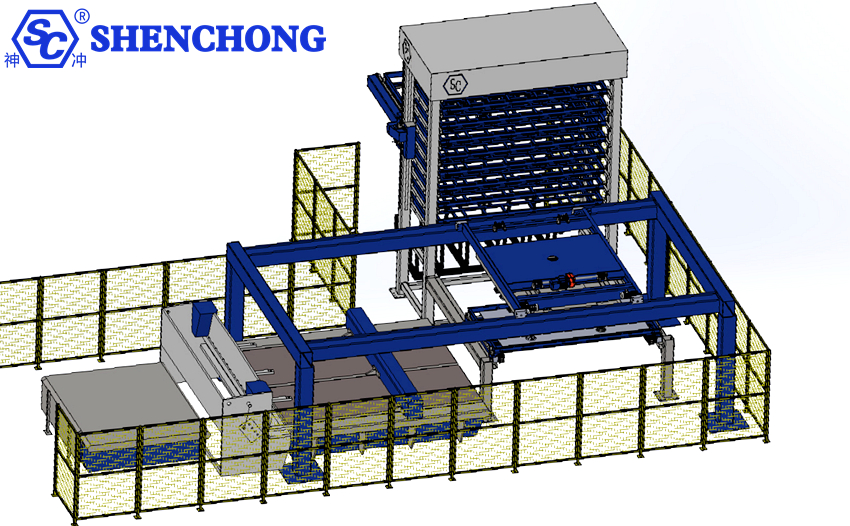
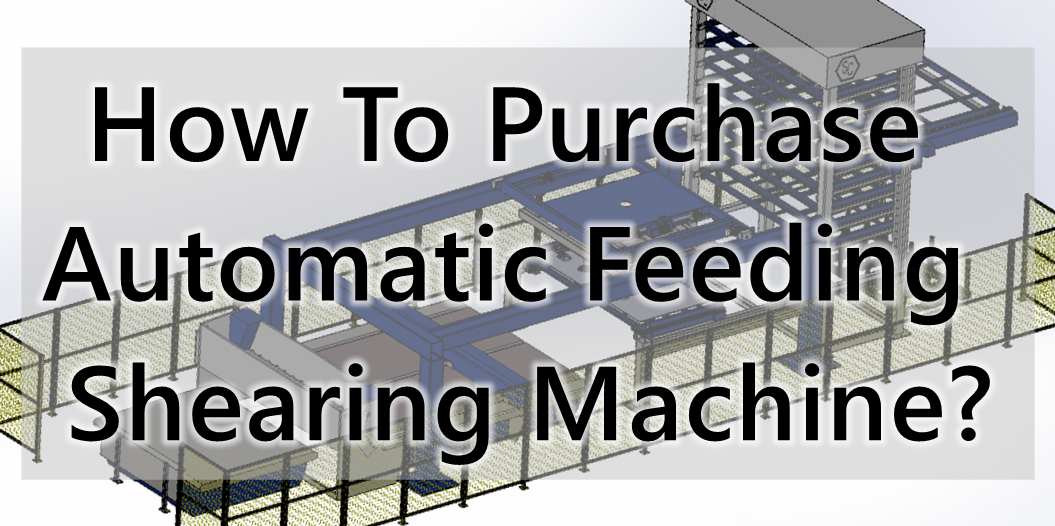
Solution 2: Automatic truss feeding + CNC shearing machine
This method is closer to an automated production line.
Basic process:
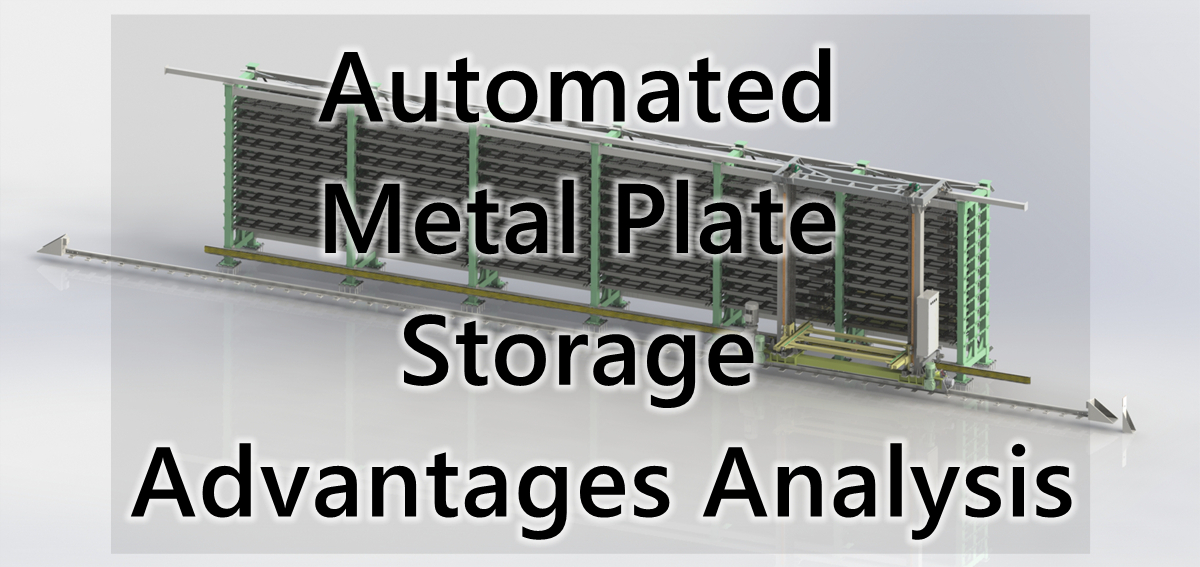
Intellignet sheet metal storage system → Automatic feeding → Centering → Shearing machine → Back gauge positioning → Shearing → Receiving
If combined with a truss robot, it can further achieve:
Automatic material handling → Automatic feeding → Automatic positioning → Automatic shearing → Automatic receiving
Currently, there are solutions that integrate truss feeding, front feeding, shearing, and automatic unloading, which can achieve continuous automation from sheet material feeding to shearing and receiving.
If your company is building:
- Intelligent sheet metal factory
- Automated production line
- Unmanned workshop
- Intelligent sheet metal warehousing
- MES production management system
Then it is recommended to consider this solution directly, rather than simply purchasing a “shearing machine with feeding mechanism”.
4. Select Shearing Machine Specifications Based on Sheet Thickness
Even the most advanced automatic feeding system is meaningless if the shearing machine itself lacks sufficient capacity.
When selecting equipment, first determine:
1) Maximum Shearing Thickness
For example:
4 mm
6 mm
8 mm
10 mm
12 mm
16 mm
20 mm
25 mm
30 mm
It is also crucial to clarify:
What material does the maximum shearing thickness correspond to?
Because:
Q235 ≠ 304 Stainless Steel ≠ Aluminum Plate
Even with the same nominal thickness of 16 mm, the shearing capacity required to cut different materials may vary significantly.
2) Determine the Maximum Shearing Width
Common specifications include:
Cutting Length | Applications and Features |
2500 mm | Small to medium-sized sheet metal work |
3000/3200 mm | Conventional sheet metal processing |
4000 mm | Medium to large-sized sheet metal |
5000 mm | Large structural components |
6000 mm | Long plates, steel structures, heavy equipment manufacturing |
8000 mm and above | Specialized processing of large sheet metal |
For example:
A 6×3200 mm automatic feeding shearing machine
This can generally be understood as:
Under specified material conditions, the maximum shearing thickness is approximately 6 mm, and the maximum shearing length is 3200 mm.
However, when purchasing, you should not only look at the model number, but also ensure that the manufacturer provides complete technical parameters.
5. One of the most important indicators of an automatic feeding system: Feeding accuracy
This is a crucial indicator for judging the quality of the equipment.
Many manufacturers emphasize: “High-precision servo feeding.”
However, buyers shouldn’t just listen to the advertising claims.
You should specifically ask:
What is the feeding positioning accuracy?
For example:
±0.5 mm
±0.2 mm
±0.1 mm
You should also ask:
Under what material type, length, and speed was this accuracy tested?
Because:
Theoretical positioning accuracy ≠ Actual machining accuracy.
Factors that truly affect feeding accuracy include:
- Servo motor
- Encoder
- Ball screw
- Linear guide
- Rack and pinion
- Clamping mechanism
- Sheet flatness
- Mechanical clearance
- Platform rigidity
- Control system
- Sheet weight
Some automatic feeding platforms use linear guides and precision ball screws, offering high position control accuracy, but the actual accuracy still needs to be verified under specific working conditions
6. Don't Ignore "Repeatability"
For mass production:
Repeatability is often more important than single-shot accuracy.
For example, the requirement is:
1000 mm
100 consecutive cuts.
If each cut is:
999.5
1000.2
999.8
1000.4
999.6…
The average size may seem fine, but product consistency will be poor.
7. Focus on Inspecting the Feeding Mechanism
The core of a shearing machine with auto feed is not just the CNC system.
More importantly:
The mechanical feeding mechanism.
Common structures include:
1) Roller Feeding
Uses rollers to clamp and move the sheet metal.
Advantages:
- High speed
- Relatively simple structure
- Suitable for continuous production
Key considerations:
- Roller material
- Roller diameter
- Clamping force
- Anti-slip capability
- Surface scratchability (for stainless steel)
2) Servo Screw Feeding
Uses a servo motor + screw + clamp.
Advantages:
- High positioning accuracy
- Easy control
- Suitable for multi-size processing
Especially suitable for:
- High-precision dimensional cutting.
3) Rack/Pulley Feeding
Suitable for:
- Long stroke
- Large sheet metal
- Heavy-duty automation systems
Its characteristic is that it can handle both long strokes and high load capacity.
8. Clamping Mechanism
Automatic feeding systems cannot simply “push the sheet metal”.
It must be considered:
How to ensure that the sheet metal does not slip or shift during feeding?
Therefore, the following must be checked:
- Pneumatic clamps
- Hydraulic clamps
- Number of clamps
- Clamping position
- Clamping force
- Anti-slip structure
- Centering mechanism
If the clamping force is insufficient:
Correct feeding length ≠ Correct cutting size.
Because the sheet metal may slip during feeding.
9. Check for automatic centering function
This is very important for large sheet metal.
An excellent automatic feeding system usually needs to solve:
Sheet metal skew problem.
For example, after the sheet material actually enters the equipment:
- Left side: 1000 mm
- Right side: 1005 mm
Although the feeding mechanism has advanced 1000 mm, the cut sheet material already has an angular error.
Therefore, highly automated equipment can incorporate:
- Left and right centering
- Side positioning
- Front positioning
- Automatic correction
- Clamping positioning
Forming:
Feeding → Centering → Correction → Clamping → Shearing
Instead of simply “pushing forward”.
10. Inspect the Shearing Machine Frame Structure
Don’t neglect the shearing machine itself just because you’re focusing on the automatic feeding system.
Automatic feeding is only an auxiliary system.
The foundation that truly determines the shearing quality is still:
Frame + Blade Holder + Hydraulic System + Blades + Shearing Gap + Control System.
1) Frame Rigidity
Key areas to check:
- Steel plate thickness
- Welding quality
- Post-weld stress relief
- Overall frame rigidity
- Machine body machining accuracy
If the frame rigidity is insufficient:
The thicker the plate, the more obvious the problem.
2) Blade Holder Stability
The blade holder movement must be smooth.
If the blade holder moves asynchronously on both sides, the following may occur:
- One side cuts first
- One side cuts later
- Plate deformation
- Non-perpendicular cuts
- Inconsistent dimensions
11. Can the shearing gap be automatically adjusted?
This is a very important function of a high-configuration shearing machine.
Different materials and thicknesses require different blade gaps.
For example:
- Thin plates: require smaller gaps.
- Thick plates: require larger gaps.
If CNC automatic adjustment is possible:
Plate thickness input → System calculation → Automatic adjustment of shearing gap
Manual adjustments can be significantly reduced.
Some CNC shearing machine systems can control parameters such as blade gap, shearing angle, and stroke.
12. Shearing Angle Also Deserves Attention
Hydraulic guillotine shearing machines especially require careful attention to shearing angle control.
A reasonable shearing angle strikes a balance between:
shearing force, sheet deformation, and production efficiency.
If the shearing angle is too large:
it may lead to increased sheet deformation.
If it is too small:
it may increase the instantaneous shearing load.
Therefore, it is recommended to choose a CNC system that can be rationally set according to the material and thickness.
13. How to Choose a CNC Control System?
The “brain” of an automatic feeding shearing machine is the control system.
It is recommended to consider three levels when purchasing.
Basic Type
Suitable for:
Small batches, single size, low automation requirements
Key points:
Simple, stable, and easy to operate.
Mid-range
Suitable for:
- Mass production
- Multi-specification products
- Requires program storage
- Automatic feeding
Requires:
- Multiple program storage
- Multi-step programs
- Automatic feeding
- Automatic positioning
- Automatic return trip
- Parameter recall
High-end
Suitable for:
- Automated production lines
- Smart factories
- MES/ERP integration
- Robot loading and unloading
Further considerations:
- PLC
- CNC
- Industrial Ethernet
- MES interface
- Production data acquisition
- Fault alarm
- Remote diagnostics
- Production statistics
Some automated shearing systems can already be integrated with MES, production statistics, and automatic scheduling functions.
14. Automatic Feeding Speed
Consider automatic feeding speed, but don’t blindly pursue the fastest possible speed.
Manufacturers may emphasize:
High-speed feeding.
But what you should really focus on is:
Feeding speed + Positioning accuracy + Sheet material stability
Whether these three are balanced.
For example:
The feeding speed is very fast, but the inertia when stopping is large.
Ultimately, this may lead to:
Increased speed → Increased positioning error.
Therefore, a more reasonable evaluation method is:
How many qualified workpieces are completed per unit time.
Instead of:
What is the fastest speed of the feed motor in meters per minute?
15. Pay attention to the "sagging problem" of thin and large plates
This is an issue easily overlooked by automatic feeding shearing machines.
Especially:
Thin plates + wide plates + long plates
Sagging is very likely to occur.
For example:
1.5 mm × 3000 mm sheet
If the support is insufficient, the sheet may experience:
- Sagging
- Warping
- Offset
- Friction
- Scratching
Some shearing machines use pneumatic sheet support systems to reduce sagging of wide and thin plates and improve shearing stability.
Therefore, when purchasing, you should ask:
- Is there a front support?
- Is there pneumatic support?
- Is there a ball bearing worktable?
- How is sagging prevented for long plates?
16. Stainless steel sheet users should pay special attention to scratch prevention
If your company mainly processes:
- 304
- 316
- Galvanized sheet
- Color-coated sheet
- Aluminum sheet
Then surface protection of the automatic feeding system is crucial.
Recommended selection:
- Ball bearing worktable
- Scratch-resistant rollers
- Nylon rollers
- Rubber-coated rollers
- A reasonable clamping structure
Some front feeding structures use conveyor balls/ball bearing worktables to reduce sheet feeding resistance and minimize surface scratches.
17. Automation Level
Focus on the “automation level,” don’t be misled by the term “automatic feeding.”
The equipment can be divided into 4 levels:
Level | Automation Degree | Main Features |
Level 1 | ★★ | CNC back gauge |
Level 2 | ★★★ | Automatic front feed |
Level 3 | ★★★★ | Automatic loading + feeding + shearing |
Level 4 | ★★★★★ | Loading + positioning + feeding + shearing + receiving + warehousing/MES |
If the manufacturer says:
“Our equipment is a fully automatic shearing machine.”
You must continue to ask:
What exactly is automated?
18. When should truss loading system considered?
If the sheet metal is very heavy, truss loading is recommended.
For example:
6×3200 mm
The steel plate may already be very heavy.
If manual handling is still relied upon:
- High labor intensity
- High safety risks
- High labor costs
- Low loading efficiency
In this case, consider:
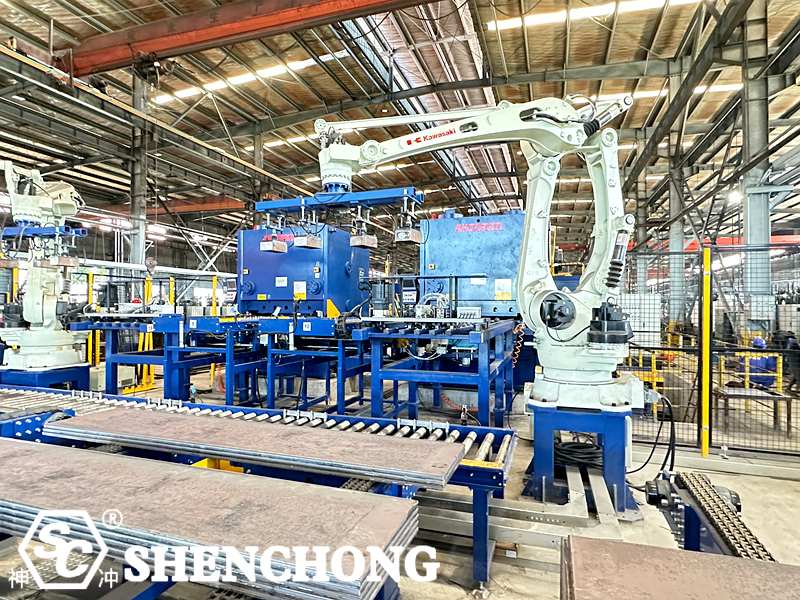
Truss robot + vacuum/electromagnetic chuck + automatic feeding shearing machine.
Complete process:
- Sheet metal storage
- Automatic identification
- Truss material handling
- Automatic loading
- Automatic centering
- Automatic feeding
- Automatic shearing
- Automatic collection
This type of solution already represents a truly automated shearing unit. Currently, there are engineering solutions that integrate truss loading, front feeding, and shearing.
19. How should different companies choose?
- Small Sheet Metal Plants
Recommendation:
Ordinary hydraulic shearing machine + CNC back gauge
Completely automatic feeding is not always necessary.
- Medium Sheet Metal Plants
Recommendation:
Hydraulic guillotine shearing machine + automatic front feed
More suitable for batch production to specific lengths.
- Large-Scale Production Enterprises
Recommendation:
Automatic feeding + CNC front feed + automatic shearing + automatic receiving
Reduces manual intervention.
- Smart Manufacturing Enterprises
Recommendation:
Smart warehousing + gantry robot + automatic feeding shearing machine + automatic receiving + MES
Achieves:
Order → Production scheduling → Automatic material handling → Automatic shearing → Automatic warehousing
Forms a complete digital production chain.
20. Summary
If your core goals are:
Improve shearing efficiency, reduce manual labor, and improve dimensional consistency.
Prioritize:
CNC hydraulic guillotine shearing machine + automatic front feed
If the goal is:
Mass automated production.
Recommended:
Automatic feeding + servo front feed + CNC shearing + automatic rewind
If the goal is:
Intelligent sheet metal factory.
Then recommended:
Intelligent warehousing + gantry robot + automatic centering + servo front feed + CNC shearing machine + automatic rewind + MES
This is the only way to truly upgrade “automatic feeding” from a single function to a complete automated shearing production unit.
Especially remember:
Don’t simply pursue “the most automated functions,” but rather choose an automation solution that matches your sheet metal specifications, order volume, and production cycle.
For most companies undergoing sheet metal automation upgrades, “servo front feed + CNC guillotine shearing machine” is usually a very practical starting point. For mass production, it can be further upgraded to a complete production unit of “gantry automatic feeding + front feed + shearing + automatic rewind.”
 English
  Spanish
  Portuguese
  Russian
  Arabic
  French
  Italian
  German
  Polish
  Thai
Thai  Vietnamese
  Lithuanian
  Czech
Czech  Japanese
  Chinese