
Table of Contents
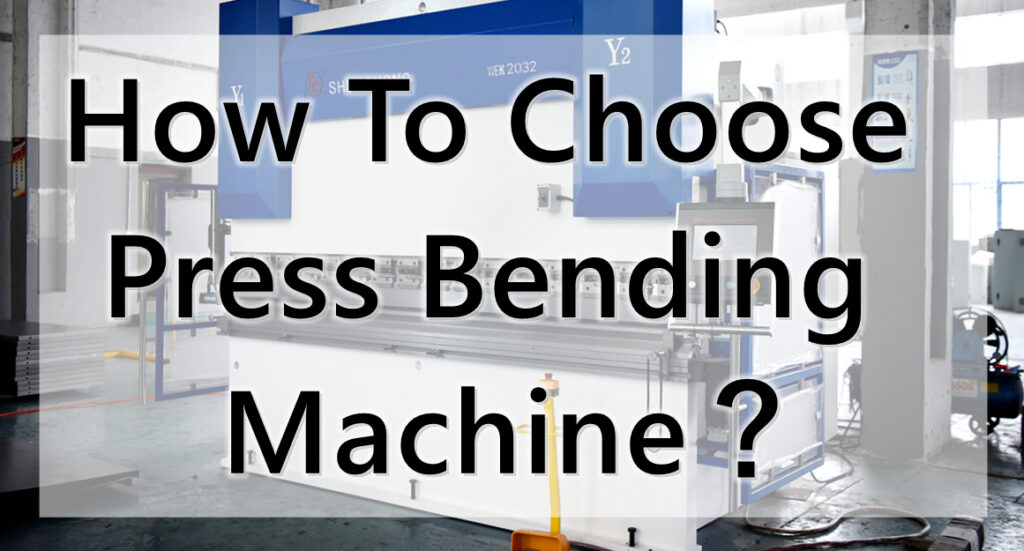
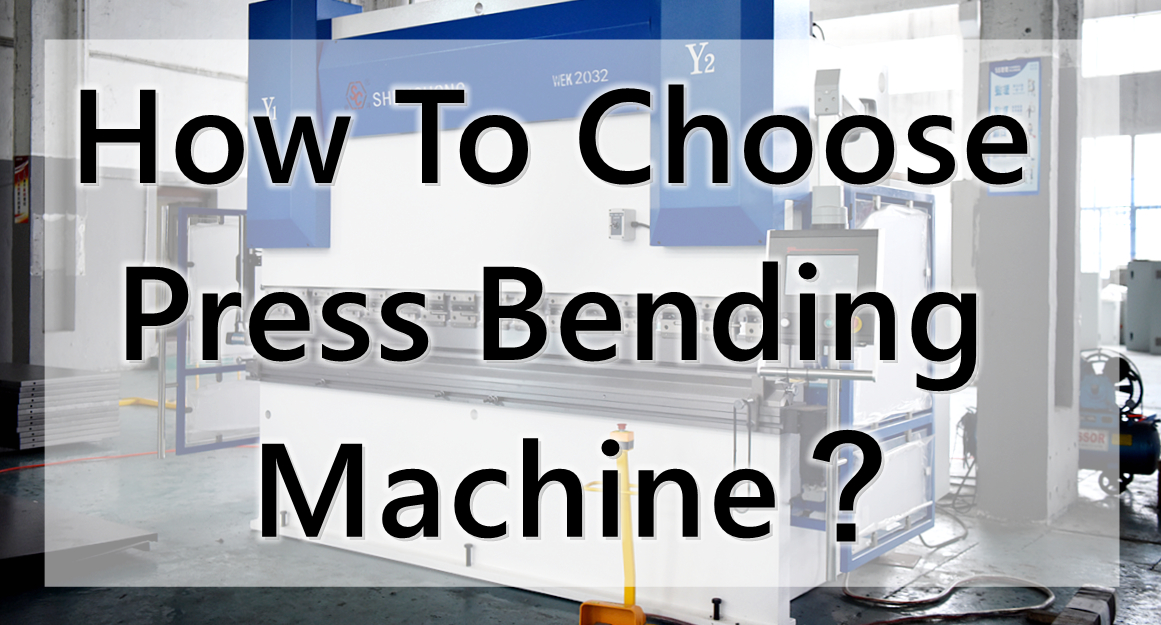
Purchasing a press bending machine may seem like simply a matter of determining the tonnage, processing length, and price, but in reality, it involves many aspects such as equipment structure, processing capacity, CNC system, hydraulic system, number of axes configuration, molds, safety protection, degree of automation, after-sales service, and long-term operating costs.
A suitable press brake bending machine must not only meet current processing needs but also adapt to product changes and capacity increases over the next 3-5 years. Inappropriate selection can lead to problems such as insufficient tonnage, unstable bending accuracy, low processing efficiency, mismatched molds, high energy consumption, or even purchasing over-configured equipment that remains idle for extended periods.
This guide, from the perspective of actual sheet metal processing and industrial equipment procurement, systematically analyzes the selection methods for bending machines, helping purchasing personnel, factory managers, technical engineers, and equipment dealers establish a complete set of selection and evaluation standards.
1. Clarify: Which type of press bending machine do you need?
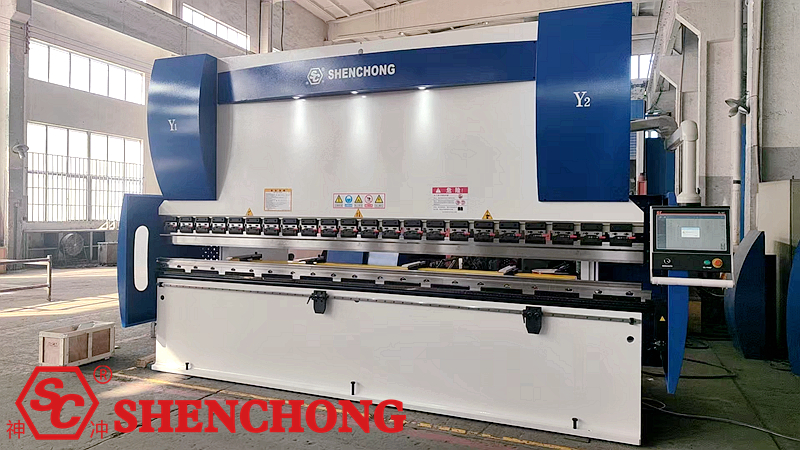
There isn’t just one type of press brake machine. Different machines differ significantly in their working principles, processing capacity, accuracy, energy consumption, and investment costs.
1) Classification by Drive Method
① Ordinary Hydraulic CNC Press Brake Machine
Drives the slide up and down via a hydraulic system, suitable for conventional bending of various metal sheets.
- Advantages: Mature technology, wide processing range, large tonnage coverage.
- Suitable for: General sheet metal processing, steel structures, cabinets, and electrical equipment manufacturing.
② Electrical Hybrid CNC Press Bending Machine
Combines servo motors, hydraulic pumps, and hydraulic control technology to provide hydraulic power as needed.
- Advantages: Fast response, good energy saving, high control precision.
- Suitable for: Mid-to-high-end sheet metal processing, mass production, and precision bending.
③ All-Electric Servo Bending Machine
Uses a servo motor and mechanical transmission mechanism to drive the slide, independent of the traditional main hydraulic system.
- Advantages: Fast response, low energy consumption, low noise.
- Suitable for: Small to medium tonnage, high precision, and high-frequency production.
④ Mechanical Bending Machine
Uses a mechanical transmission method to drive the slide; specific applications depend on the equipment structure.
- Advantages: Relatively simple structure, high efficiency under specific working conditions.
- Suitable for: Some traditional and specialized processing scenarios.
Purchase Recommendation:
Processing Requirements | Recommended Types |
General Sheet Metal Processing | |
High-Precision Batch Production | Electrical Hybrid Bending Machine |
High-Frequency, Small and Medium Tonnage Machining | All-Electric Servo Bending Machine |
Large Tonnage, Thick Plate Bending | Hydraulic or Electrical Hybrid Press Bending Machine |
Automated Continuous Production | Electro-hydraulic Hybrid or Adapted Hydraulic Press Brake |
Note:
It cannot be simply assumed that all-electric systems are always better than hydraulic systems, or that electro-hydraulic hybrid systems are suitable for all working conditions. The choice should be made considering tonnage, plate thickness, bending frequency, workpiece size, and the equipment’s total lifecycle cost.
2) Classification by degree of automation
Types | Configuration Features | Applicable Scenarios |
Standard CNC bending machine | Basic CNC control | Small to medium batch processing |
Multi-axis CNC bending machine | Multi-axis back gauge and slider control | Complex workpieces |
Bending machine with follower device | Automatic sheet metal lifting | Large-size, heavy-duty sheet metal |
Robotic bending unit | Robot loading, unloading, and flipping | Mass automated production |
Flexible bending center | Automatic positioning, bending, and shape changing | Large-volume, multi-variety sheet metal work |
If the workpiece is large and heavy, such as large electrical cabinet panels, shipping container panels, or air conditioner panels, a bending follow-up material support device should be given priority consideration.
2. How to determine the tonnage of a bending machine?
Determining the tonnage of the press bending machine is the most important step in procurement. The tonnage of the press brake directly determines the bending pressure the equipment can withstand.
Insufficient tonnage will prevent the target bending from being completed. Excessive tonnage may increase equipment investment, mold costs, and operating costs.
1) Selecting tonnage based on sheet thickness
Bending tonnage is mainly affected by the following factors:
- Sheet thickness
- Sheet material and tensile strength
- Bending length
- Lower die V-groove width
- Bending method
- Workpiece shape and bendingprocess
Common Bending Estimation Formulas
For ordinary low-carbon steel plates (tensile strength σb≈450MPa), the most classic empirical formula is:
Bending force P (tons) = (t²·L·K)/V
t: Plate thickness (unit: mm)
L: Plate bending length (unit: m)
V: Width of the V-groove of the lower die (unit: mm)
K: Material coefficient (generally around 650 for ordinary carbon steel; some factories simplify it to: plate thickness × 8 × plate length (meters))
2) Common Tonnage and Processing Capacity Reference
The following references ordinary low-carbon steel, air bending, and commonly used dies. Specific capacities need to be recalculated based on bending length and equipment parameters.
Bending machine tonnage | Common machining positioning | Typical configuration example |
30T | Small sheet metal | 1250mm |
40T | Small sheet metal | 1600mm |
63T | Medium-sized sheet metal | 2500mm |
80T | Medium-sized sheet metal | 2500mm |
100T | General sheet metal | 3200mm |
125T | Medium sheet metal | 3200/4000mm |
160T | Medium-thick plate processing | 3200/4000mm |
200T | Medium-large sheet metal | 3200/4000mm |
250T | Thicker sheet metal | 4000mm |
300T | Heavy sheet metal | 4000/5000mm |
400T | Large thick plate | 4000/5000mm Customized according to workpiece |
600T or more | Heavy industrial processing | 1250mm |
Note:
This table is a preliminary classification reference for equipment procurement and does not represent that the corresponding tonnage can process all thicknesses of plates in the table over the entire working length.
3) Differences in Bending Tonnage for Different Materials
For plates of the same thickness, different materials may require different bending forces.
Materials | Common characteristics | Procurement Considerations |
Q235 carbon steel | Conventional processing material | Serve as a basic selection reference |
Q355 high-strength steel | High strength | Increase tonnage margin is required |
304 stainless steel | Bending force is usually higher than ordinary low-carbon steel | Pay attention to springback and surface protection |
316 stainless steel | Different strength and processing characteristics | Calculate based on actual material measurement parameters |
Aluminum plate | Significant differences in strength and elongation | Pay attention to cracks and surface indentations |
Copper plate | Significant differences in material properties | Determine the manufacturing process based on the grade |
Special Reminder: Do not purchase a bending machine solely based on plate thickness. The plate material, maximum bending length, minimum bending edge, V-groove width, and bending method must all be provided.
4) How much margin should be allowed when selecting tonnage?
It is recommended to select a machine based on the most demanding processing conditions of the actual workpiece, and to allow for appropriate capacity allowance.
For example:
- Daily processing primarily requires 100 tons: A 125-ton class machine can be evaluated.
- Maximum processing time is close to 125 tons: Further calculations should be made to determine if a 160-ton class machine is needed.
- Long-term processing of high-strength steel or stainless steel: Recalculations must be made based on the actual material strength.
Do not blindly allow for excessive tonnage, as the machine’s tonnage, worktable structure, die load-bearing capacity, and allowable load per unit length all need to be matched.
3. How to determine the bending length?
The tonnage and length of CNC press bending machine must be considered simultaneously. Bending length is a crucial parameter determining whether the machine can process the target workpiece.
Common bending machine working lengths include:
- 1250mm: Small precision sheet metal.
- 1600mm: Small parts.
- 2500mm: Small to medium-sized sheet metal products.
- 3200mm: General industrial sheet metal processing.
- 4000mm: Large sheet metal and cabinets.
- 5000~6000mm: Large sheet metal, steel structures, and industrial equipment.
- 8000mm and above: Extra-long workpieces, usually requiring a dedicated or dual-machine linkage solution.
1) Which length parameters need to be checked during procurement?
Parameters | Main functions | Procurement Considerations |
Maximum bending length | Determines the maximum workpiece length | In addition to the nominal length, consider the side panel spacing |
Column spacing | Determines the effective machining space for the workpiece | Pay attention to the actual passage space for large workpieces |
Throat depth | Determines the depth to which the workpiece can enter | Especially important for deep box-shaped and complex workpieces. |
Slider stroke | Determines the vertical movement distance of the slide block | Sufficient space is required for bending and unloading |
Opening height | Determines the maximum space between the upper and lower dies | Affect the machining of tall box-shaped and complex workpieces |
Worktable height | Affects operation and loading/unloading | Should be considered in conjunction with the sheet metal dimensions and ergonomics |
2) Easily Overlooked Issue: Matching Tonnage with Bending Length
For example, when purchasing a 200T×3200mm bending machine, it’s crucial to confirm not only the total pressure of 200 tons but also:
- Whether the 200 tons can be used across the entire 3200mm length.
- Whether it meets local load requirements when bending short workpieces in concentrated sections.
- Whether the worktable and slide have sufficient rigidity.
- Whether deflection compensation is needed.
- Whether it supports off-center loading conditions.
Especially when processing short and thick workpieces, safety cannot be judged solely based on the total tonnage. It’s also necessary to verify the load per unit length, local load, and die bearing capacity.
4. How To Choose a CNC System?
1) Common Bending Machine CNC Systems
The following are some CNC system brands and models worth understanding in the market:
Brands | Representative models | Main Applications |
DELEM | DA53T, DA58T, DA66T | CNC Bending Control |
ESA | S630, S640, S650W, S875W | Multi-axis Bending Control |
CYBELEC | CT8, CT15 series, etc. | CNC Control for Bending Machines |
Shenchong | SC EL15T, EL19T, etc. | Shenchong Self-developed Bending Control System |
Note:
The specific functions, number of axes supported, software licenses, and versions for each model should be based on the configuration list provided by the manufacturer.
2) How to select different control systems?
Processing Requirements | Recommend Features |
Simple right-angle bending | Basic CNC system |
Multi-process complex bending | CNC system with graphical programming capability |
High-precision sheet metal work | Supports angle compensation and related precision control functions |
Multi-axis back gauge | Supports controllers with the corresponding number of axes |
Robotic bending | Supports automation interfaces and related program functions |
Mass production of complex products | Supports offline programming, program management, and simulation |
3) Ten Key Functions to Check When Purchasing a CNC System
- Does it support 2D graphic programming?
- Does it support automatic calculation of bending processes?
- Does it have bending sequence simulation functionality?
- Does it support multi-axis back gauge control?
- Does it support Y1/Y2 slider synchronous control?
- Does it support deflection compensation control?
- Does it support a material database?
- Does it support a mold database?
- Can it save and recall machining programs?
- Does it support offline programming or data interfaces?
Purchasing Reminder:
Don’t just look at the controller brand or model; confirm the actual software version, licensed functions, number of axes, interface, and operating language you purchase. Even the same controller may have significant functional differences due to different licenses and configurations.
5. Choosing the Number of Axes for a Bending Machine
How to choose the number of axes for a press bending machine? What are the differences between 4+1 axes, 6+1 axes, and 8+1 axes? This is a very important configuration issue when purchasing a CNC bending machine.
More axes do not necessarily mean higher precision for all workpieces. What truly matters is whether these shafts can solve practical machining problems.
1) Functions of common bending machine shafts
Shaft | Function | Function |
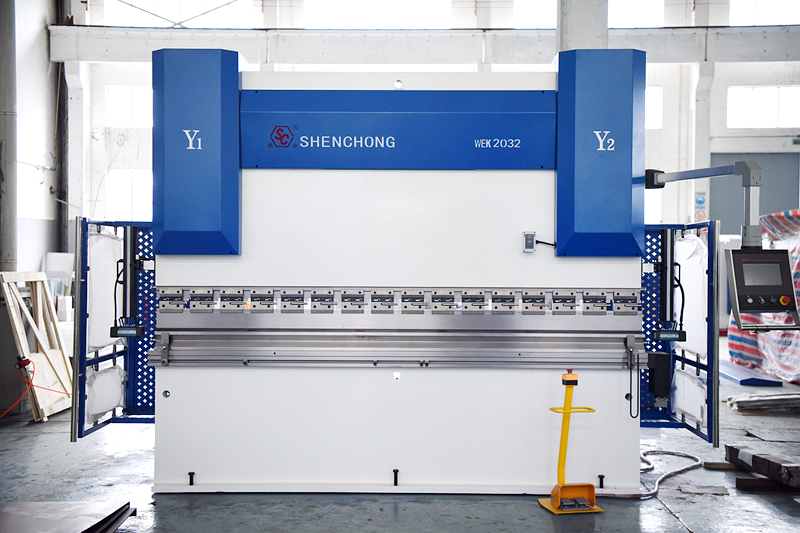
Y1 | Left slider control | Control the position of the left hydraulic cylinder |
Y2 | Right slider control | Control the position of the right hydraulic cylinder |
X | Back gauge forward/backward movement | Control bending dimensions |
R | Back gauge up/down movement | Adapt to positioning at different heights |
Z1 | Left stop finger left/right movement | Multi-station positioning |
Z2 | Right stop finger left/right movement | Adapt to special positioning and conical workpieces |
X1/X2 | Independent forward/backward movement of back gauge | Compensate for worktable deformation |
V | Deflection compensation axis | Control the position of the left hydraulic cylinder |
Note:
Different manufacturers may use different methods to label the number of axes, especially regarding whether to include the slider axis, back gauge axis, and compensation axis in the total count. Therefore, the purchase contract must clearly specify the specific function of each axis.
2) What factories are suitable for different axis configurations?
4+1 Axis Bending Machine (General Configuration)
- Common combinations: Y1, Y2, X, R, and V-axis compensation.
- Suitable for general sheet metal, cabinets, electrical boxes, and general industrial products.
- High cost-performance ratio, a practical choice for many factories.
6+1 Axis Bending Machine
- Common combinations: Y1, Y2, X, R, Z1, Z2, and V-axis compensation.
- The side stops can move independently left and right.
- Suitable for complex workpieces, multi-size, and multi-process machining.
8+1 Axis Bending Machine
- Usually adds an independent positioning axis to a multi-axis back gauge.
- Suitable for complex sheet metal, irregularly shaped workpieces, and high-flexibility production.
- The specific axes to be added should be based on the equipment configuration table.
3) Purchase Recommendations
Factory Production Status | Recommended configuration |
General Sheet Metal Processing | 4+1 axes |
Electrical Cabinet and Server Rack Processing | 4+1 or 6+1 axes |
Complex Bending of Various Products | 6+1 axes |
Irregularly Shaped Sheet Metal and Complex Workpieces | 8+1 axes or customized according to process |
Automatic Bending by Robots | Select according to robot workstation configuration |
Don’t blindly increase your budget just because of advertised multi-axis configurations. If the workpiece mainly involves simple L-shaped or U-shaped bends, a 4+1 axis configuration may be sufficient.
6. How to choose a back gauge system?
The back gauge system directly affects bending dimension positioning, repeatability, and production efficiency.
When purchasing, you need to check:
- Back gauge positioning accuracy
- Repeatability
- X-axis movement range
- R-axis vertical movement range
- Gate quantity and structure
- Gate load-bearing capacity
- Operating speed and stability
- Whether it supports independent multi-axis movement
- Whether it has an anti-collision design
- Whether it is easy to adjust and maintain
For simple workpieces, an X-axis back gauge may be sufficient. For complex workpieces, it is recommended to consider multi-axis configurations such as X, R, Z1, and Z2.
Also note:
The nominal positioning accuracy of the equipment does not equal the final workpiece dimensional accuracy. The actual processing result is also affected by sheet metal dimensional tolerances, positioning datum, molds, and bending processes.
7. Is a deflection compensation system worth purchasing?
This is a configuration that cannot be ignored when purchasing medium to large-sized bending machines.
When a press brake bending machine is operating, the slide and worktable are subjected to pressure, resulting in a certain degree of elastic deformation.
Without proper compensation, the following may occur:
The angle in the middle of the workpiece is inconsistent with that at both ends.
The bending angle of long workpieces deviates.
The straightness of the bend is not ideal.
The dimensions of the same workpiece are inconsistent at different locations.
Main types of deflection compensation:
Types | Features | Applicable Situations |
Mechanical manual compensation | Manual adjustment compensation mechanism | Small tonnage, simple processing |
Electric compensation | Motor-driven adjustment | Medium-sized bending equipment |
CNC numerical control compensation | CNC system control | Medium-to-large, high-precision processing |
Hydraulic compensation | Hydraulic mechanism generates compensation force | Specific large-scale equipment |
Recommendations:
- Small, short-length bending: Selection can be based on accuracy requirements.
- 100T×3200mm and above equipment: Prioritize evaluation.
- 200T×4000mm and above equipment: CNC compensation should generally be carefully considered.
- Large equipment such as 400T×5000mm: Compensation capability should be listed as an important technical acceptance item.
Whether specific configuration is necessary should still be based on frame rigidity, bending length, workpiece accuracy, and manufacturer’s design.
8. How to select bending dies?
Bending dies directly affect the bending angle, inner radius, minimum bending edge, and workpiece surface quality.
1) Main die types
Mold Types | Main Applications |
Straight Cut Upper Mold | General straight bending |
Gooseneck Upper Mold | Deep box-shaped and edge-returning workpieces |
Pointed Cut Upper Mold | Specific angle and narrow-edge bending |
Single V Lower Mold | Conventional sheet metal bending |
Double V Lower Mold | Processing of various sheet thicknesses |
Multi-groove Lower Mold | Multiple specification bending |
Segmented Mold | Combination of workpieces of different lengths |
Special Forming Mold | Special structures and special shapes |
2) How to choose the V-groove?
For air bending of ordinary low-carbon steel, the following approximate reference is used:
V≈8t
Where:
V: Width of the lower die V-groove.
t: Thickness of the sheet metal.
For example:
Sheet thickness | Preliminary reference V-groove |
1mm | 8mm |
2mm | 16mm |
3mm | 24mm |
4mm | 32mm |
5mm | 40mm |
6mm | 48mm |
8mm | 64mm |
10mm | 80mm |
This is just a starting point for general air bending experience and is not applicable to all materials and workpieces. Minimum bending edge, inner radius, surface indentation, and required tonnage also need to be checked.
3) What should be considered when purchasing molds?
- Mold material and heat treatment quality.
- Mold hardness and wear resistance.
- Mold load-bearing capacity.
- Mold length and segmentation method.
- Mold accuracy and straightness.
- Mold matching between upper and lower molds.
- Mold clamping method.
- Does it support quick mold change?
- Is it compatible with existing equipment?
- Does it have the capability to process special workpieces?
Pay special attention to the allowable load per unit length of the mold; do not only consider whether the mold can be installed.
9. How should the bending machine frame and hydraulic system be examined?
The stability of a bending machine is not only determined by the CNC system but also by the mechanical structure and hydraulic system.
1) Frame Structure
Key areas to examine:
- Frame steel plate thickness and material.
- Welding process and post-weld stress treatment.
- Structural rigidity of side plates, worktable, and slider.
- Guide rails and slider guiding structure.
- Machining and assembly accuracy.
- Deformation control after long-term operation.
When purchasing, do not only compare frame weight; more importantly, consider structural design, manufacturing process, rigidity, and overall machine precision.
2) Hydraulic System
Key areas to check:
Components | Key evaluation criteria |
Hydraulic pump | Brand, flow rate, pressure, and noise |
Hydraulic valve assembly | Control accuracy and response speed |
Hydraulic cylinder | Sealing performance and machining precision |
Oil pipes and fittings | Pressure rating and reliability |
Oil tank | Capacity, filtration, and heat dissipation |
Servo motor | Power and control response |
Filtration system | Filtration accuracy and ease of maintenance |
3) Dual-Cylinder Synchronous Control
CNC press bending machines typically require coordinated operation of the left and right hydraulic cylinders.
When purchasing, you should understand:
- Whether high-precision position detection is used
- Whether Y1/Y2 are independently controlled in a closed loop
- Left and right synchronous control method
- Slider repeatability accuracy
- Control performance under off-center load
It is recommended to actually test the bending results on the left and right sides and the middle position during factory acceptance, rather than just checking the no-load operation.
10. How to Select a Bending Follower Device?
If the factory frequently processes large and heavy sheet metal, a bending follower device is worth considering.
1) Main Functions of a Bending Follower Device
- Automatically support large sheet metal.
- Move synchronously with the slider bending action.
- Reduce sheet metal sagging.
- Reduce operator workload.
- Reduce the risk of sheet metal deformation and surface scratches.
- Improve the bending stability of large workpieces.
2) Which factories should install one?
Application Industries | Recommendation Level |
Electrical cabinet manufacturing | Recommended |
Container and shipping panel materials | Strongly recommended for evaluation |
Air conditioner panels | Recommended |
Elevator panels | Recommended |
Large server racks and cabinets | Recommended |
General small brackets | Normally not needed |
When selecting a follow-up device, it is necessary to confirm its load-bearing capacity, support area, stroke, synchronous control method, independent left and right control capability, and compatibility with the bending machine’s CNC system.
11. Is it necessary to purchase a robotic bending machine?
If a factory has a large number of repetitive bending tasks daily, a robotic bending unit can significantly change the way production is organized.
1) What components typically comprise a robotic bending system?
- CNC bending machine
- Industrial robot
- Automatic loading and unloading system
- Sheet metal positioning table
- Automatic flipping mechanism
- Workpiece clamping device
- Safety fence and protection system
- Robot control system
- Automated production management system
2) Advantages of robotic bending
Comparison Items | Manual bending | Robotic bending |
Labor Requirements | Higher difficulty | Reduces repetitive manual operations |
Continuous Production | Affected by personnel and shifts | More suitable for long-term operation |
Repetitive Positioning | Affected by operator | Automated repetitive positioning |
Mass Production | Reliant on manual organization | More suitable for stable batch production |
Changeover | Manual adjustment | Requires reconfiguration of program and fixtures |
Initial Investment | Relatively lower difficulty | Relatively high cost |
3) When is it worthwhile to invest?
The following situations warrant a return on investment analysis:
Large daily bending volume; Relatively stable product specifications; High labor costs; Requirement for continuous multi-shift production; Difficult product handling and flipping; Need to improve production cycle time and consistency.
If there are only a small number of workpieces per day, with many varieties and frequent changes in type, a conventional multi-axis CNC bending machine may be more economical.
12. What indicators should be considered for bending machine accuracy?
When purchasing a press bending machine, do not only look at the accuracy values advertised by the manufacturer; you should distinguish between the accuracy of the machine itself and the final machining accuracy of the workpiece.
Accuracy Indicators | Inspection Items |
Slider repeatability | Whether it can return to the same position after multiple runs |
Slider parallelism | Whether the left and right sides are coordinated |
Back gauge positioning accuracy | Whether the dimensional positioning is accurate |
Back gauge repeatability | Whether the positioning is stable after multiple runs |
Table straightness | Whether there is obvious deformation |
Bending angle consistency | Whether the angles at different positions are consistent |
Workpiece dimensional accuracy | Whether the actual processing meets the drawing requirements |
Procurement Acceptance Recommendations
It is recommended to select at least three representative workpieces for trial bending:
- Short-sized workpieces: Check local load and positioning.
- Long-sized workpieces: Check deflection compensation and angle consistency.
- Complex workpieces: Check multi-process programming, material blocking, and die interference.
- The test material should be sheet metal of the same grade, thickness, and batch conditions as the actual production material, and the measurement results before and after processing should be recorded.
13. How to select a bending machine safety system?
Safety protection is not an optional feature, but an important technical requirement for equipment procurement.
Safety configurations to be checked:
Safety Configuration | Functions |
Laser Safety Protection System | Monitor personnel entry into hazardous areas |
Photoelectric Protection Device | Provide appropriate personnel protection |
Emergency Stop Button | Stop equipment in emergencies |
Two-Hand Operation Device | Provide operational protection in applicable modes |
Safety Door and Interlock | Prevent personnel from entering hazardous areas |
Electrical Safety Circuit | Monitor safety-related functions |
Overload Protection | Prevent exceeding permissible loads |
Mechanical Protective Cover | Isolate hazardous moving parts |
For common laser protection systems, consider product lines like MSD and DSP, but verify the specific model, protection functions, and applicable conditions.
Special Reminder:
When purchasing export equipment, verify the safety design, risk assessment, and certification documents against the regulations and applicable standards of the countries where the equipment will be installed and used. Do not assume the entire machine meets all local safety requirements solely based on a CE mark or a specific laser protection device.
14. How to Choose a Bending Machine Manufacturer and Brand?
The equipment manufacturer’s technical capabilities, manufacturing quality, after-sales service, and long-term spare parts supply will all affect the future operating costs of the equipment.
1) Internationally Renowned Bending Machine Brands
- Amada: A Japanese sheet metal equipment brand, covering bending, shearing, and laser processing.
- TRUMPF: A German industrial equipment brand, offering CNC bending and other sheet metal processing equipment.
- LVD: A Belgian sheet metal equipment brand, providing bending and automation solutions.
- Bystronic: A Swiss sheet metal processing equipment brand, focusing on bending and automation solutions.
2) Chinese Press Brake Bending Machine Brands
Chinese manufacturers also possess a rich product portfolio and broad market applications.
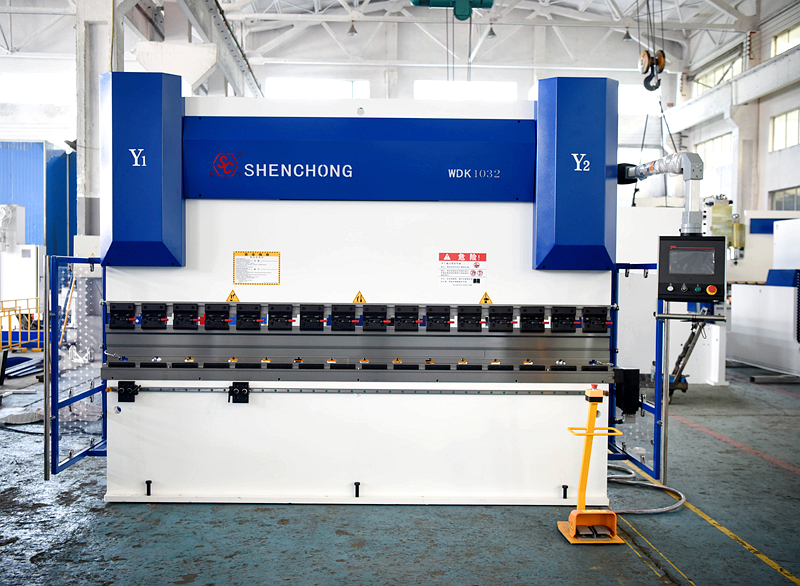
- Shenchong: Focus on their WSK, WEK, and WDK series bending machines, as well as bending centers and robotic bending units.
- Yawei: A Chinese sheet metal processing equipment manufacturer, with products covering bending, shearing, and laser processing.
- JFY: Provides CNC sheet metal processing equipment and related solutions.
3) What to Focus On When Choosing a Manufacturer?
It is recommended to consider the following dimensions:
Inspection Items | Recommended ratio |
Equipment processing capabilities and technical solutions | 20% |
Mechanical structure and manufacturing quality | 15% |
Machining accuracy and stability | 15% |
CNC system and configuration | 10% |
After-sales service and spare parts supply | 15% |
Price and total life cycle cost | 10% |
Brand reputation and customer cases | 10% |
Delivery, installation and training | 5% |
Total | 100% |
This is an internal procurement scoring suggestion, not an industry-wide ranking standard.
The most important principle: Don’t just compare brands; compare actual configurations and processing results under the same working conditions.
15. 12 Common Mistakes When Buying Bending Machines
This section deserves special attention from procurement personnel.
Serial Number | Common Procurement Mistakes | Correct Procedure |
1 | Selecting tonnage solely based on maximum plate thickness | Consider material, length, and V-groove simultaneously |
2 | Looking only at the total tonnage of the equipment | Check unit length and local load |
3 | Looking only at the bending length | Check column spacing and effective space |
4 | Assuming more axes are always better | Select shafts based on workpiece complexity |
5 | Focusing solely on the brand of the CNC system | Check specific functions and authorizations |
6 | Ignoring deflection compensation | Determine configuration based on length and precision |
7 | Ignoring mold quality | Check mold material and load-bearing capacity |
8 | Not considering plate springback | Evaluate material database and compensation functions |
9 | Ignoring workpiece weight | Configure follow-up devices if necessary |
10 | Focusing solely on equipment price | Calculate long-term operating costs |
11 | Ignoring safety precautions | Verify applicable standards and safety features |
12 | Not conducting actual trial bending | Conduct acceptance testing using actual workpieces |
16. Summary: How to Buy a Suitable Bending Machine?
The most important thing when purchasing a press bending machine is not buying the largest tonnage machine, nor choosing the one with the most configurations, but ensuring that the machine’s capacity precisely matches actual production needs.
It is recommended to keep the following eight core principles in mind:
- First, consider the workpiece, then select the tonnage: Based on the maximum actual processing conditions.
- First, consider the processing length, then select the machine model: Ensure the workpiece can be processed safely and completely.
- Select the number of axes based on product complexity: Don’t blindly pursue high configurations.
- Select the CNC system based on production efficiency: Focus on actual programming and automation functions.
- Emphasis on deflection compensation: Ensure consistent bending angles for long workpieces.
- Emphasis on molds and safety: Don’t let the machine’s capacity be mismatched with the molds and safety features.
- Assess the manufacturer’s strength: Focus on technology, delivery, after-sales service, and spare parts.
- Emphasis on long-term return on investment: Don’t just compare purchase prices.
The Final Decision-Making Process for Purchasing a Bending Machine
It is recommended to conduct the purchase in the following order to reduce selection errors and unnecessary investment.
Seven-Step Process for Purchasing a Bending Machine:
- Product Analysis
Collect workpiece drawings, material, thickness, bending length, and production quantity.
- Tonnage Calculation
Calculate bending force, die load, and equipment margin based on maximum operating conditions.
- Machine Model Selection
Select a hydraulic, electro-hydraulic hybrid, or fully electric servo structure.
- Configuration Determination
Determine the working length, CNC system, number of axes, compensation, die, and safety system.
- Manufacturer Selection
Compare the technical solutions, quotations, and after-sales capabilities of at least three manufacturers.
- Trial Run and Acceptance Testing
Conduct trial bending and accuracy tests using actual materials and representative workpieces.
- Installation and Production Launch
Complete the installation, training, process verification, and equipment maintenance plan.
Final Purchasing Recommendation:
For most ordinary sheet metal processing companies, a 100T-200T, 3200mm working length, electro-hydraulic hybrid drive, 4+1 or 6+1 axis CNC press bending machine is a configuration range worth considering. However, for enterprises producing thick plates, large plates, and automated production, equipment solutions should be redesigned based on the actual workpieces, rather than applying generic configurations.
 English
 Spanish
 Portuguese
 Russian
 Arabic
 French
 Italian
 German
 Polish
 Thai
 Vietnamese
 Lithuanian
 Czech
 Korean
 Japanese
 Chinese